
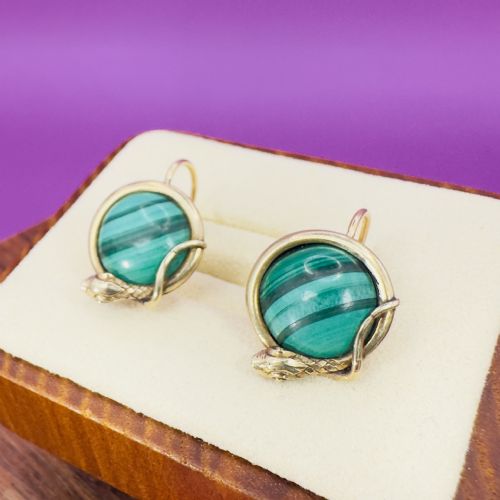


Antique Snake Motif Jewellery
Antique snake motif jewellery captures the enduring fascination with serpent symbolism across Victorian, Georgian, and Edwardian design.
Antique Snake Motif Jewellery
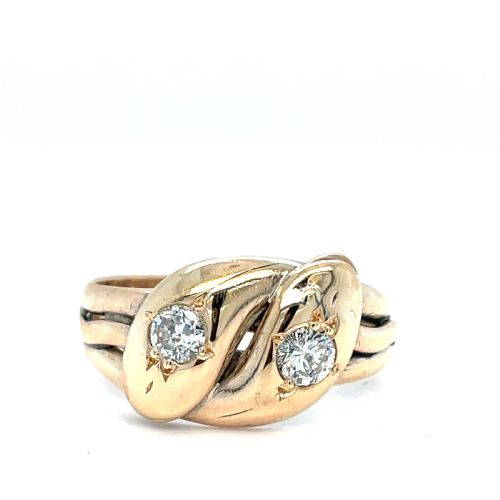
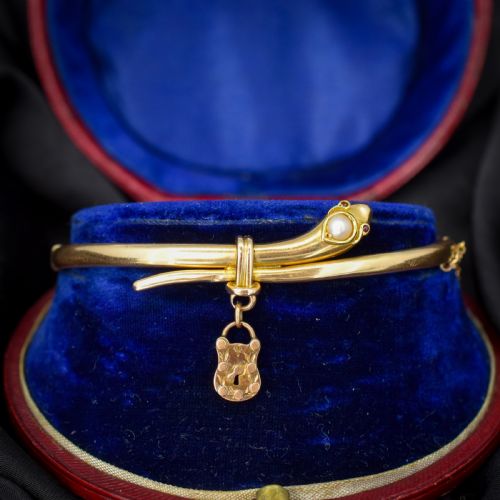
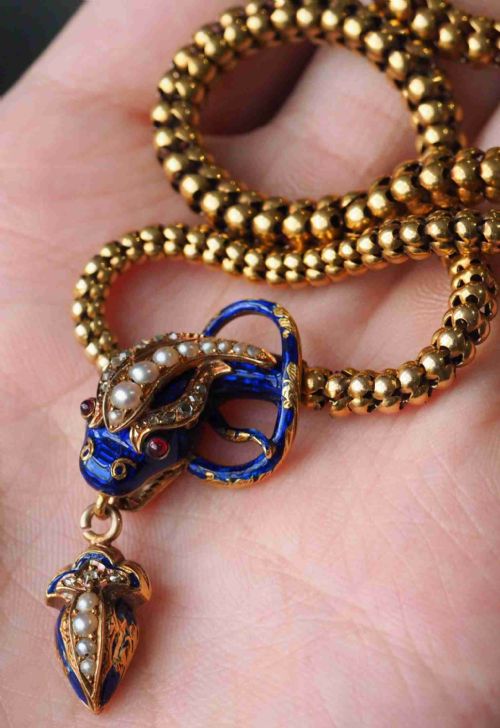
The serpent form appears coiled, sinuous, or biting its own tail, executed in gold alongside diamonds, pearls, garnets, rubies, and enamel.
Victorian pieces dominate the selection, ranging from diamond-set rings to malachite drop earrings and enamelled necklaces.
How these pieces were made
Maker workshops utilised varying carats of gold, including 9ct, 15ct, and 18K, alongside silver settings for gemstones such as old cut diamonds and garnets.
Detailed work involved hand engraving, polychrome enamel application, and the integration of natural pearls, malachite, hematite, and moulded glass.
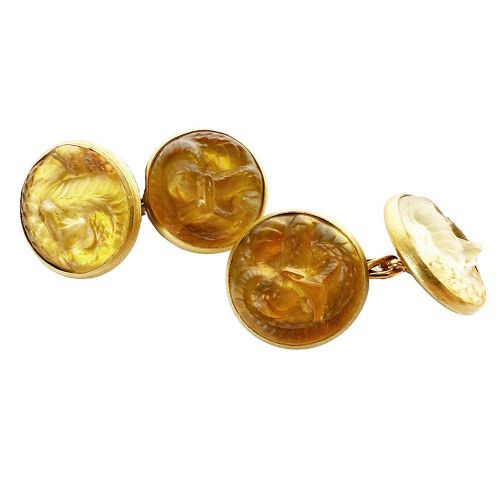
Specialist designers like R Lalique and Levinger & Bissinger employed distinct media including silver, art glass, and hematite during the Art Nouveau era.
Even glass and hematite found themselves shaped into slithering serpents by turn-of-the-century designers.
What varies in quality
Quality rests in the precision of the serpent's scale engraving, the symmetry of the coiling body, and the security of stone settings.
The choice of materials dictates the tier of a piece, separating standard 9ct gold iterations from substantial 18K gold and diamond-heavy examples.
R Lalique·Levinger & Bissinger
The Antique Snake Motif Jewellery Glossary
- Ouroboros
- A circular motif depicting a snake swallowing its own tail. This ancient symbol represents eternity and continuous rebirth.
- Old cut diamond
- A hand-faceted diamond shape typical of the Georgian and Victorian eras. These stones exhibit smaller tables and open culets.
Antique Snake Motif Jewellery: Frequently Asked Questions
What do snakes mean in antique jewellery?
Serpents symbolised eternal love, wisdom, and commitment in the Victorian era, popularised famously by Queen Victoria's engagement ring.
This romantic symbolism made the motif a frequent choice for betrothal gifts, mourning pieces, and fashionable daily wear across the nineteenth century.
How do I date antique snake jewellery?
Dating relies on hallmarks, metal purities like 15ct gold, and gemstone cuts such as old cut diamonds alongside overall stylistic cues.
Georgian pieces often feature closed-back settings and geometric engraving, whereas Victorian and Edwardian examples incorporate coloured gems and natural pearls.
Are snake rings adjustable?
Many antique snake rings wrap around the finger in a flexible or coiled manner rather than featuring a solid, closed band.
Sizing requires caution from a specialist jeweller to avoid damaging the intricate scale engraving or gemstone settings along the body.
What materials were used in these pieces?
Golds in 9ct, 15ct, and 18K alongside silver form the structural framework for these serpent designs across different eras.
Gemstones including diamonds, rubies, garnets, and pearls embellish the bodies, complemented by enamel work, malachite, hematite, and moulded glass.