
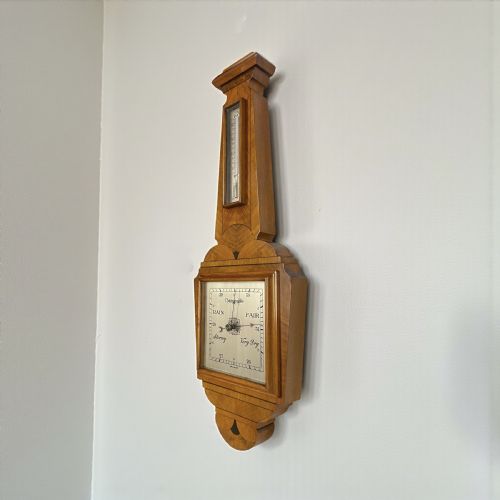
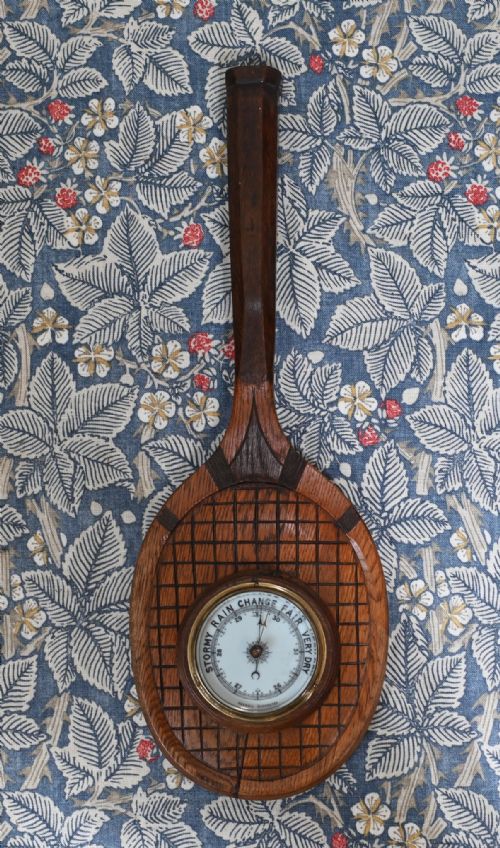
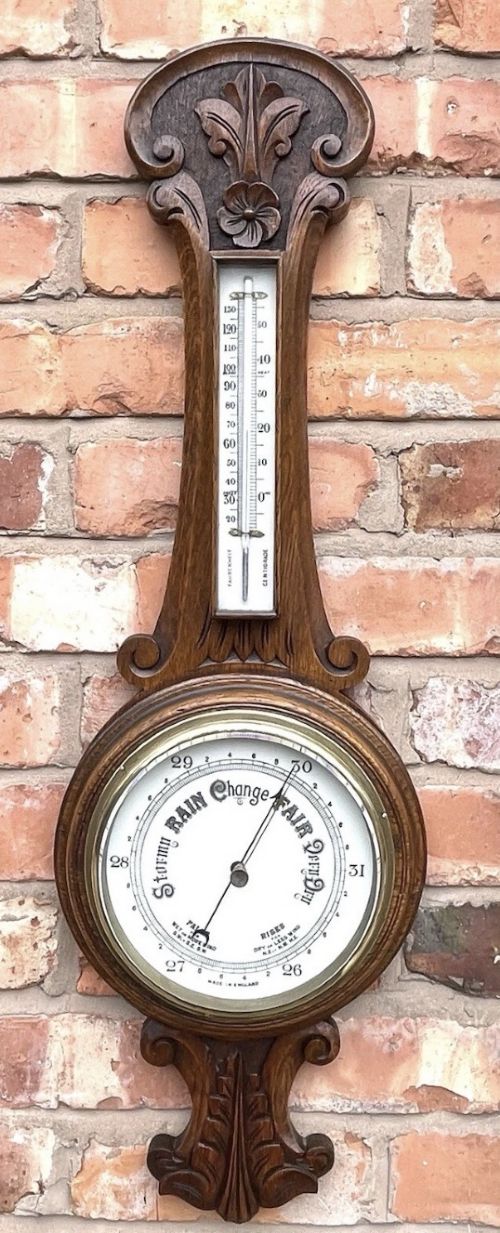

Aneroid Wall Barometer
An aneroid wall barometer measures atmospheric pressure without liquid, bringing mechanical precision and domestic utility together in wood and brass.
Aneroid Wall Barometer
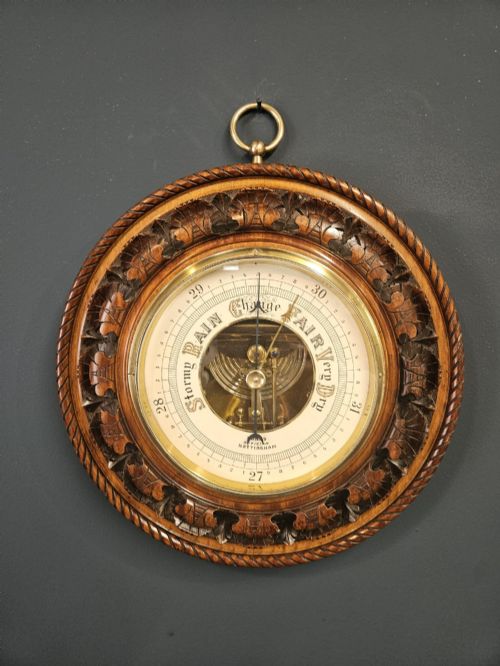
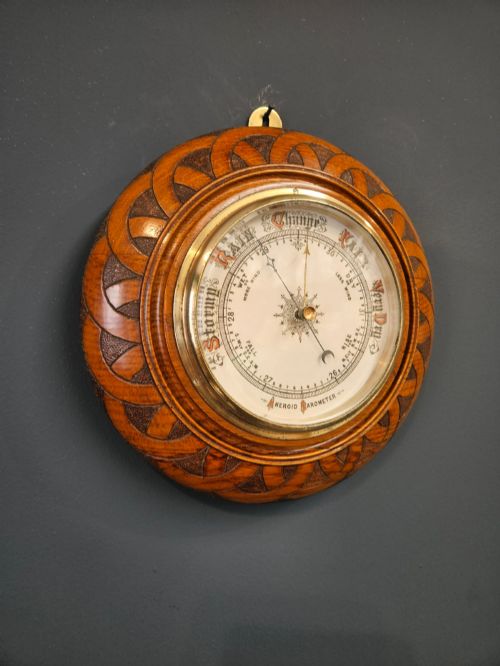
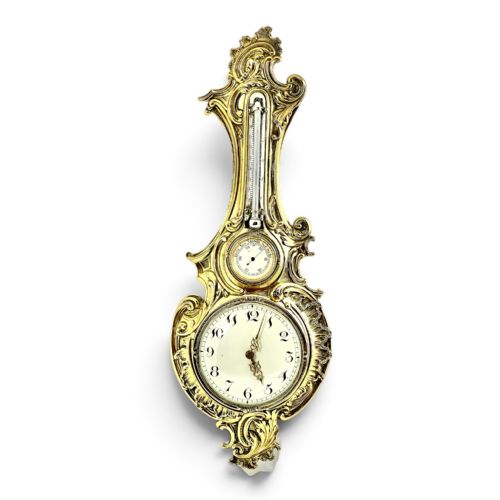
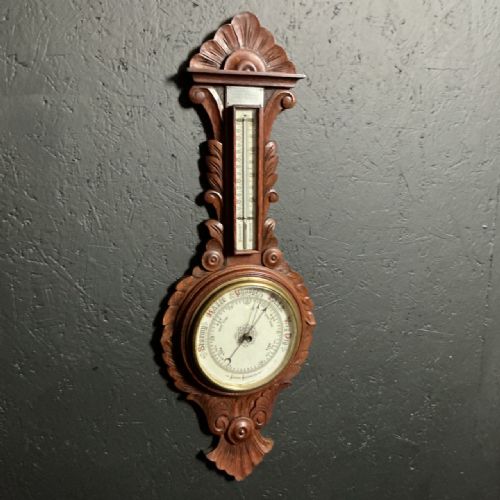
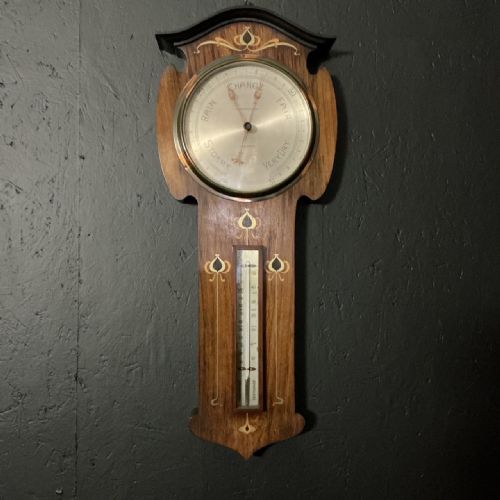
An aneroid wall barometer employs a sealed metal capsule that expands and contracts with changes in air pressure, moving a needle across a dial. When you search for an aneroid wall barometer, you encounter pieces spanning the Victorian, Edwardian, and Art Deco periods, housed in timber frames designed to hang prominently in a room.
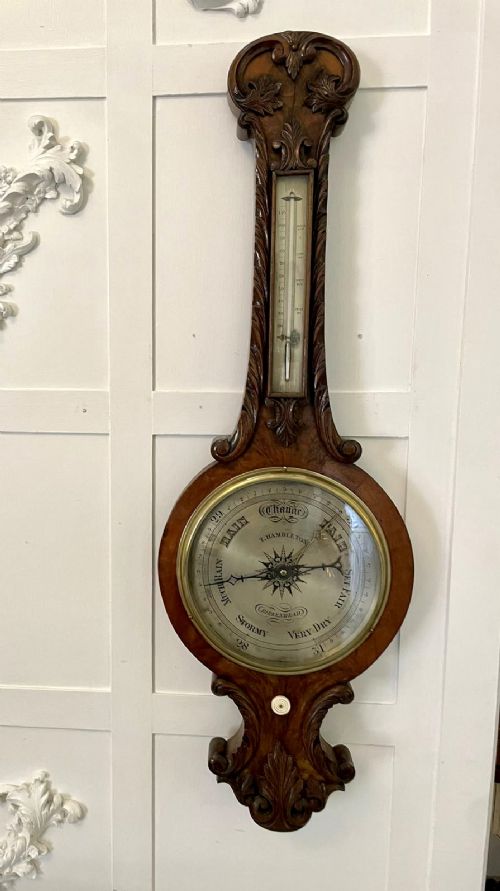
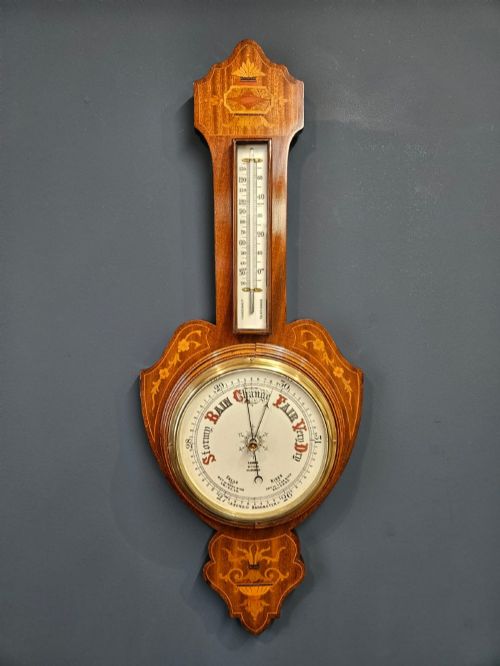
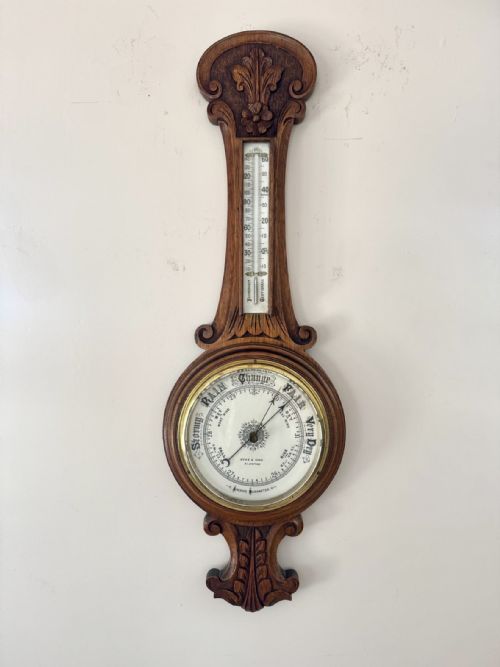
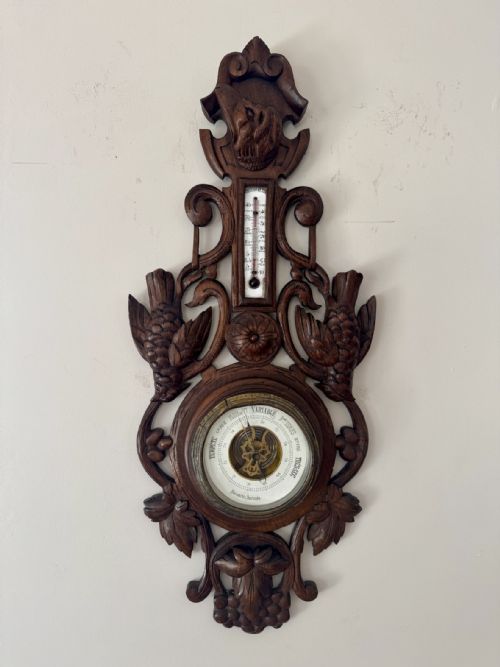
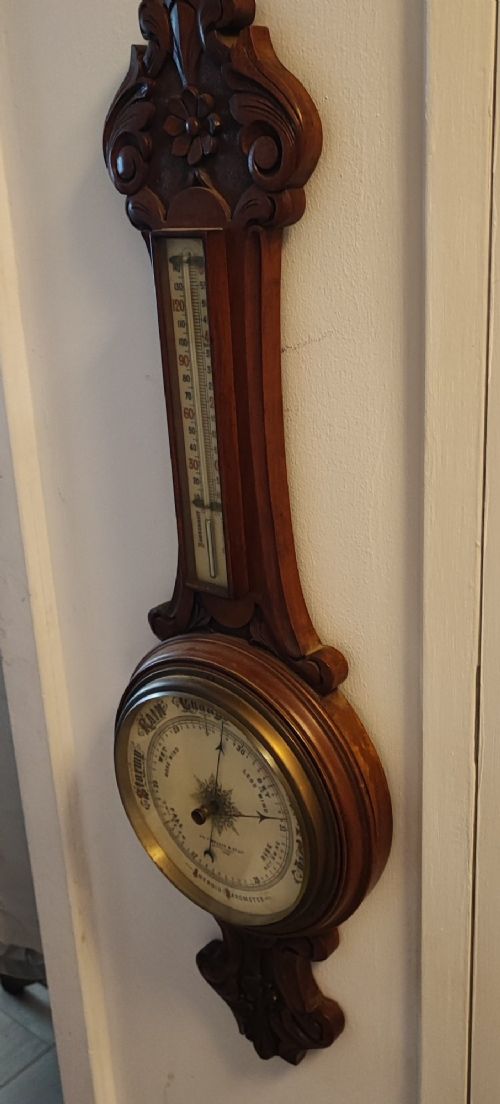
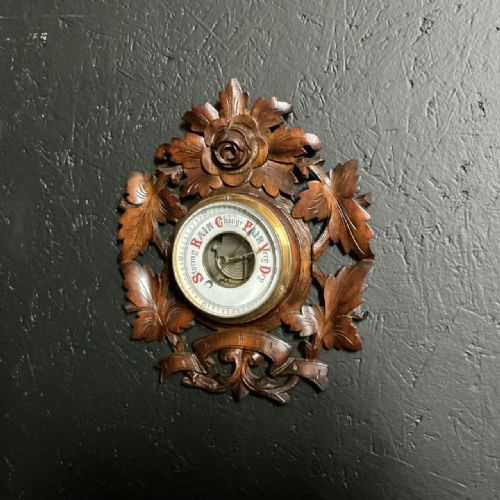
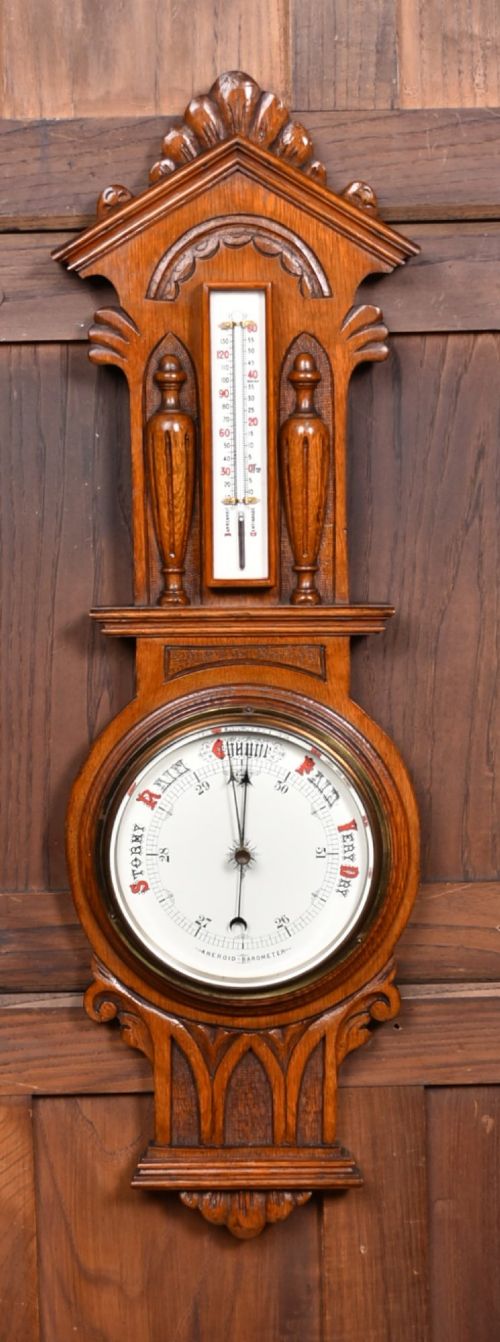
The domestic forms range from carved oak banjo cases incorporating thermometers to compact Black Forest wood carvings and geometric wall clocks. Victorian and Edwardian examples dominate the selection, often presenting intricate foliage or inlaid borders alongside silvered metal dials.
Makers such as Negretti & Zambra and Short & Mason signed many of the finest dials, marking a shift toward scientific instruments housed in decorative domestic cabinetry. These wall pieces function simultaneously as practical weather foretellers and as focal points for period interiors.
How they were made
Cabinetmakers shaped oak, walnut, mahogany, rosewood, and carved wood into banjo, wheel, and rectangular wall cases, frequently incorporating glass faceplates to protect the dial. Wood carving, geometric turning, and delicate inlay define the housing, while the internal aneroid mechanism relies upon precise brass linkages.
Dials are typically silvered or enamelled brass, etched with pressure scales and weather descriptions, sometimes accompanied by mercury thermometers or clock movements. Specialised workshops combined precision instrument making with traditional cabinet work to produce unified domestic stations.
Aneroid Wall Barometer Retail Price Guide 2026
Typical asking prices for aneroid wall barometer among the pieces listed under this phrase on Sellingantiques today, from the lower quarter to the upper quarter. They describe what is for sale here now, not the wider market.
Listings feature oak, walnut, mahogany, and carved wood cases housing aneroid mechanisms across Victorian, Edwardian, and Art Deco periods.
What varies in quality
The distinction between ordinary production and superior execution rests upon the depth of the cabinet carving and the reputation of the instrument maker. Signed dials by established firms such as Short & Mason or Negretti & Zambra elevate a piece above standard domestic wares.
Material selection and decorative complexity also separate examples, where burr walnut, intricate Black Forest animal carvings, or combined clock and thermometer stations indicate higher workshop ambition.
Hyde & Sons Sleaford·Elliott Brothers·Short & Mason·Negretti & Zambra·Bramwell & Harbron·Chadburns Ltd Liverpool·CW Dixey
The Aneroid Wall Barometer Glossary
- Aneroid barometer
- An instrument that measures air pressure utilising a flexible metal bellows rather than liquid mercury. It responds rapidly to atmospheric changes.
- Banjo barometer
- A wall barometer housed in a tapering wooden case shaped like a banjo, often mounting a thermometer above the main dial.
- Silvered dial
- A brass clock or barometer face treated with a silver solution to create a matte metallic finish for legible black markings.
- Black Forest style
- Carved wood decoration originating from Central Europe featuring naturalistic motifs such as leaves, birds, and game.
- Skeletonised
- A design exposing the internal mechanical works of the barometer or clock through an open dial.
Aneroid Wall Barometer: Frequently Asked Questions
How do I read an aneroid barometer?
Read the main pointer against the pressure scale marked in inches or millibars. A secondary pointer can be manually set over the main needle to track whether pressure rises or falls.
Changes in the weather follow these movements, with rising pressure indicating settled conditions and falling pressure suggesting approaching rain.
Where should I hang a wall barometer?
Hang your barometer on an interior wall away from direct sunlight, radiators, and exterior doors. Excessive heat or temperature fluctuations disrupt the internal metal capsule.
A stable indoor environment ensures the most accurate response to atmospheric changes.
How do I date an aneroid barometer?
Examine the timber, the style of the dial typography, and the case design. Victorian examples often feature heavy carved oak or burr walnut, while Art Deco pieces display geometric mahogany.
Maker signatures on the dial or inscriptions on the mechanism offer the most reliable path to precise dating.
Can an antique barometer be adjusted?
Adjustment is possible via a small screw located on the back of the mechanism. This screw alters the linkage between the vacuum capsule and the pointer.
Compare your reading against a reliable local meteorological source before making any delicate adjustments.