




Edwardian Banjo Barometer
Edwardian banjo barometers combine practical weather measurement with domestic elegance, offering a distinct focal point for hallway walls.

Edwardian Banjo Barometer
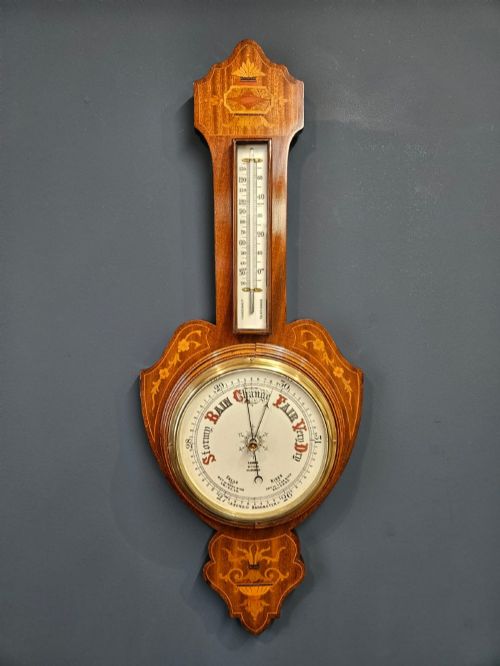
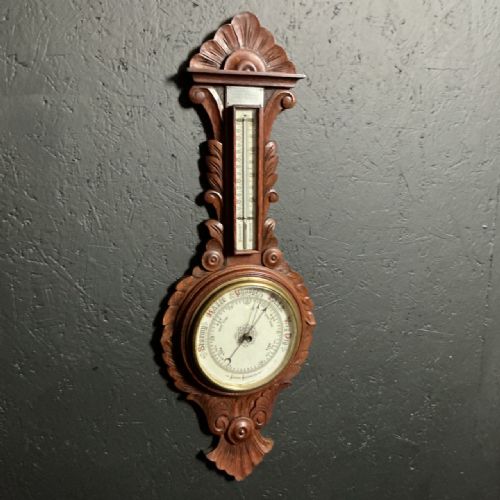
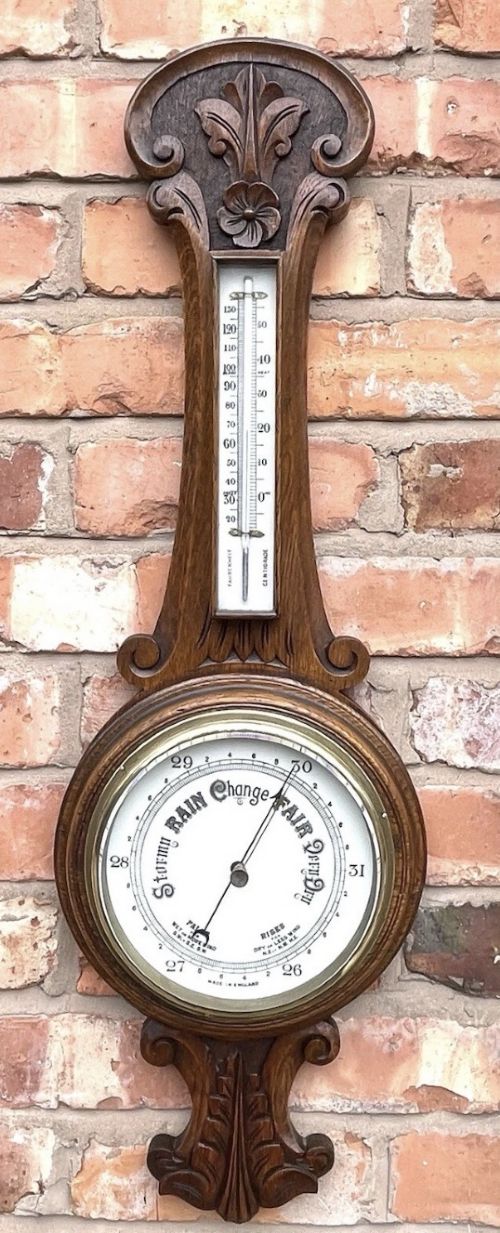
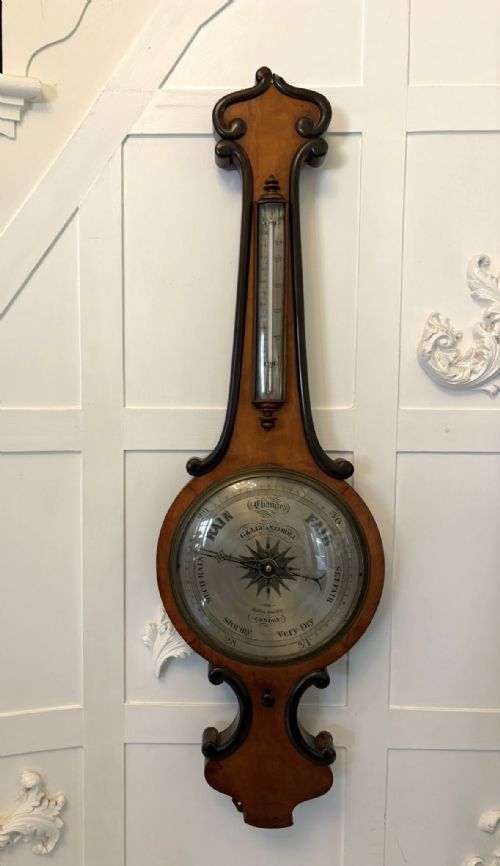
An edwardian banjo barometer takes its name from the distinctive stringed instrument shape, featuring a narrow stem rising to a circular dial beneath a broken arch or pediment. These wall-hanging instruments combine barometers, thermometers, and sometimes hygrometers within a single wooden housing.
The version most commonly encountered on this page pairs Edwardian craftsmanship with mahogany, oak, or walnut bodies, often embellished with string inlay or marquetry. While many pieces date from the Edwardian period or around nineteen hundred, the selection also includes Victorian, George III, and Georgian Revival examples.
Makers housed these mechanisms in wall barometers that served both practical meteorological functions and decorative roles in period homes. The evidence shows these instruments spanning the nineteenth and twentieth centuries, incorporating materials like rosewood and satinwood alongside brass fittings and glass dials.
Materials and construction
Cabinetmakers constructed the distinctive frames using hardwoods such as mahogany, oak, walnut, and rosewood, frequently incorporating satinwood stringing and marquetry details. These woods were shaped, carved, and polished to create the characteristic curved silhouette of the wall barometer.
Makers fitted the cases with glass panels to protect the silvered metal dials, thermometers, and interior mercury or aneroid movements. Brass bezels, indicators, and fixings completed the functional assembly, securing the delicate mechanisms within the wooden housing.
Edwardian Banjo Barometer Retail Price Guide 2026
Typical asking prices for edwardian banjo barometer among the pieces listed under this phrase on Sellingantiques today, from the lower quarter to the upper quarter. They describe what is for sale here now, not the wider market.
Listings feature woods including mahogany, oak, walnut, rosewood, and satinwood, combined with brass, glass, and silvered metal.
Evaluating the pieces
The distinction between standard and superior pieces rests on the precision of the cabinetwork and the intricacy of the decorative inlay. Marquetry panels, Sheraton-style stringing, and detailed carved oak relief separate ambitious workshop output from plain utility models.
Dial legibility and the retention of original glass, brass bezels, and mercury or aneroid mechanisms heavily influence the integrity of each instrument. Examples featuring named makers or integrated thermometers and clock faces represent more complex achievements in domestic horology and meteorology.
G & L Guanziroli London·Hayward of Ashford·Negretti & Zambra
The Edwardian Banjo Barometer Glossary
- Aneroid barometer
- An instrument that measures atmospheric pressure using a flexible metal box, which expands or contracts without the use of liquid mercury. This design allowed barometers to be built in smaller or more varied wall-hanging shapes.
- Wheel barometer
- A traditional domestic weather glass where atmospheric pressure changes move a float inside a sealed tube, turning a mechanical pulley and pointer around a circular dial. This form creates the characteristic round lower section of the banjo shape.
- Marquetry
- The art of applying decorative pieces of veneer to a wooden structure to form pictorial or geometric patterns. Makers utilised contrasting timbers like satinwood and mahogany to create detailed motifs on the instrument case.
- Silvered metal
- A brass or copper dial plate treated with a silver compound to produce a pale, matte metallic finish for engraved numbers and lettering. This surface reduces glare and provides clear legibility against the wooden background.
- Sheraton inlaid
- A furniture style associated with the late eighteenth century that influenced later revival pieces through delicate contrasting wood inlays, straight lines, and classical motifs.
Edwardian Banjo Barometer: Frequently Asked Questions
How do aneroid and mercury barometers differ?
Mercury barometers rely on a column of liquid metal balancing against atmospheric pressure within a glass tube. Aneroid versions utilise an internal sealed metal vacuum chamber that responds to air pressure changes mechanically.
Both systems drive the pointer visible on the dial face, though their internal mechanics require different handling considerations when moving the instrument.
Where should a wall barometer be hung?
These instruments belong on interior walls away from direct sunlight, radiators, and drafts that might affect the internal mechanism or warp the wooden case. Hallways and studies provide stable environments where the instrument remains easily readable.
Secure wall fixings are essential because the combination of hardwood cases, glass, and metal movements creates substantial weight for a single hanging point.
Did these instruments include thermometers?
Many banjo barometers incorporate a vertical thermometer mounted on the stem above the main circular dial. These companion instruments allowed households to track temperature alongside barometric pressure.
While some examples focus solely on atmospheric pressure, pieces featuring both thermometers and hygrometers offered comprehensive domestic weather tracking.
How can I identify the period of a piece?
Dating relies on combining stylistic clues from the woodwork, the style of the dial lettering, and the construction methods used inside the case. Edwardian examples often feature lighter mahogany with delicate string inlay, while Victorian and Georgian pieces frequently display heavier carving or distinct regional cabinetmaking traits.
Signed dials and maker plaques provide definitive attribution when present, though many surviving instruments remain unsigned by their original workshops.