
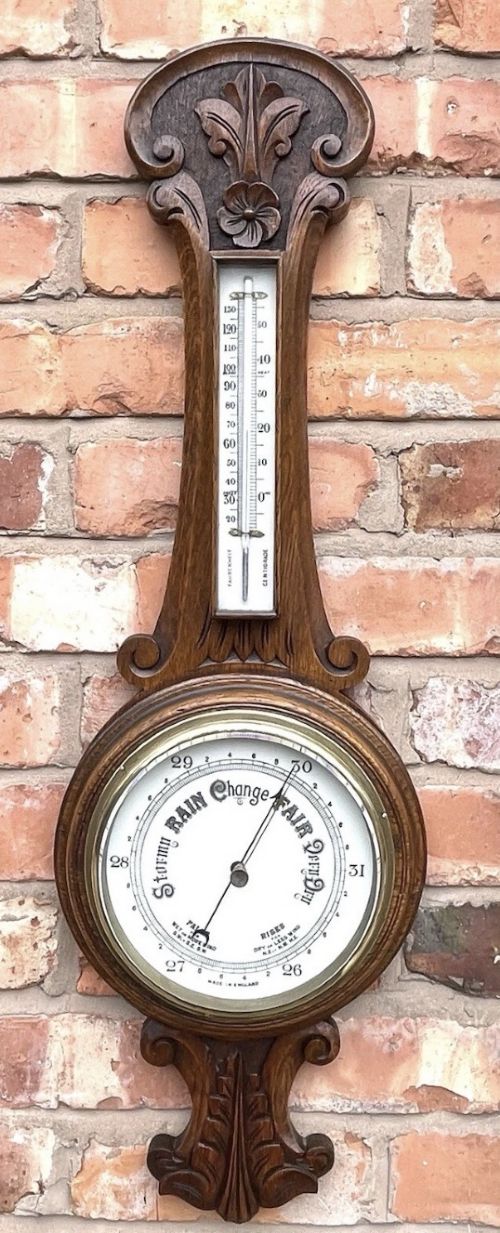


Aneroid Barometer Thermometer
These aneroid barometer thermometers measure atmospheric pressure and temperature through mechanical precision, bringing reliable Victorian and Edwardian utility to any wall.
Aneroid Barometer Thermometer
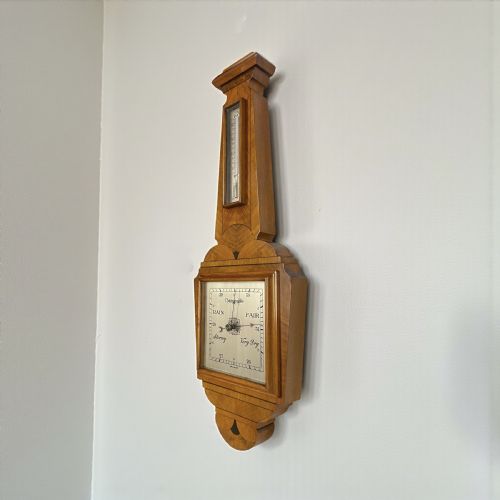
An aneroid barometer thermometer combines a weather glass dial with a temperature scale in a single instrument, avoiding liquid mercury in the pressure capsule. The pieces found here span the Victorian, Edwardian and Art Deco periods, created in various timber cases including oak, mahogany, walnut and burr walnut.
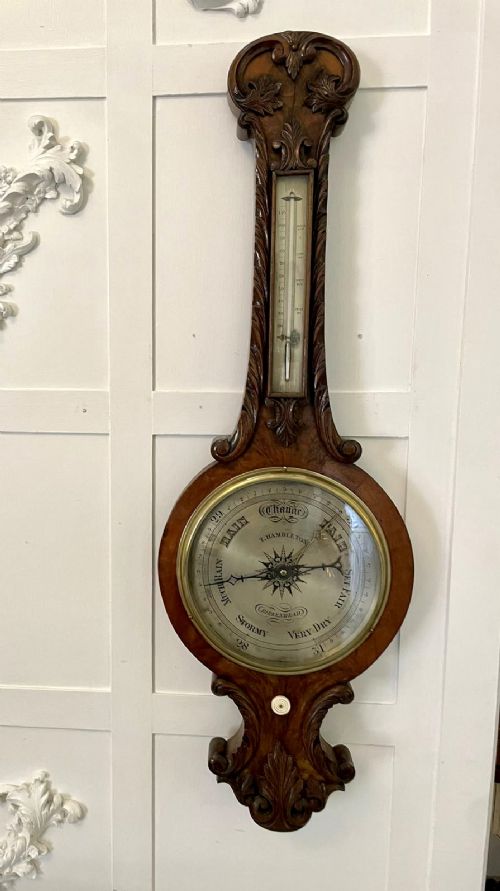
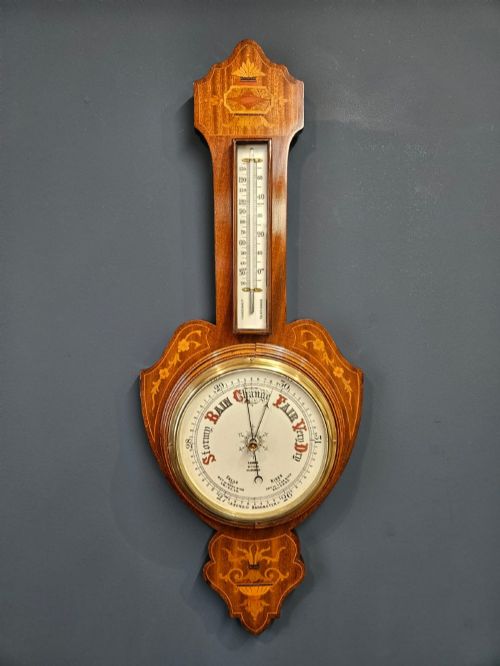
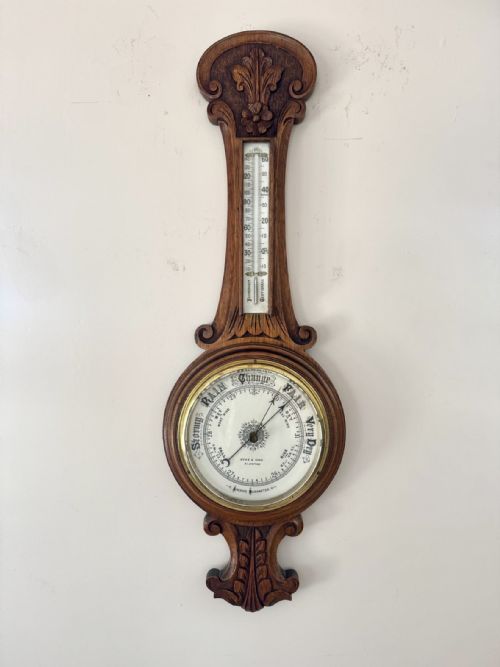
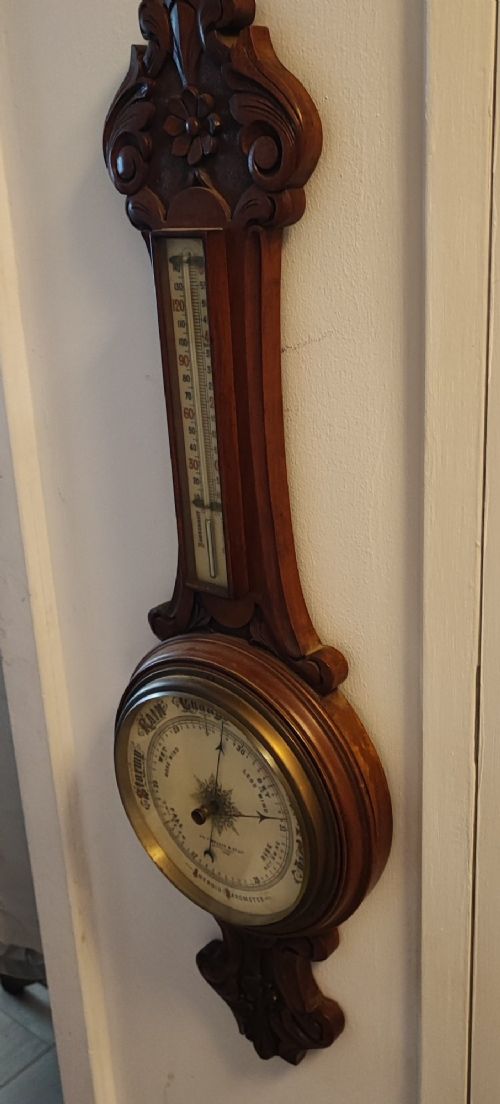
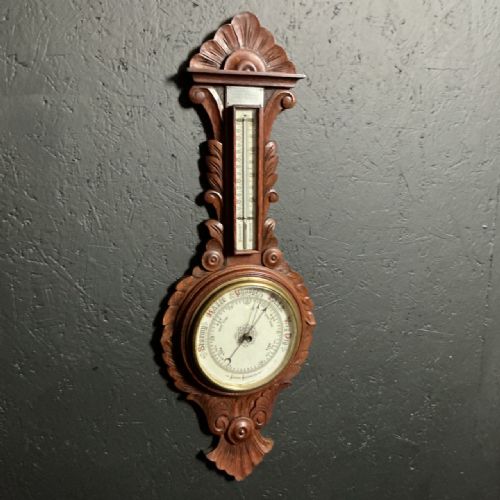
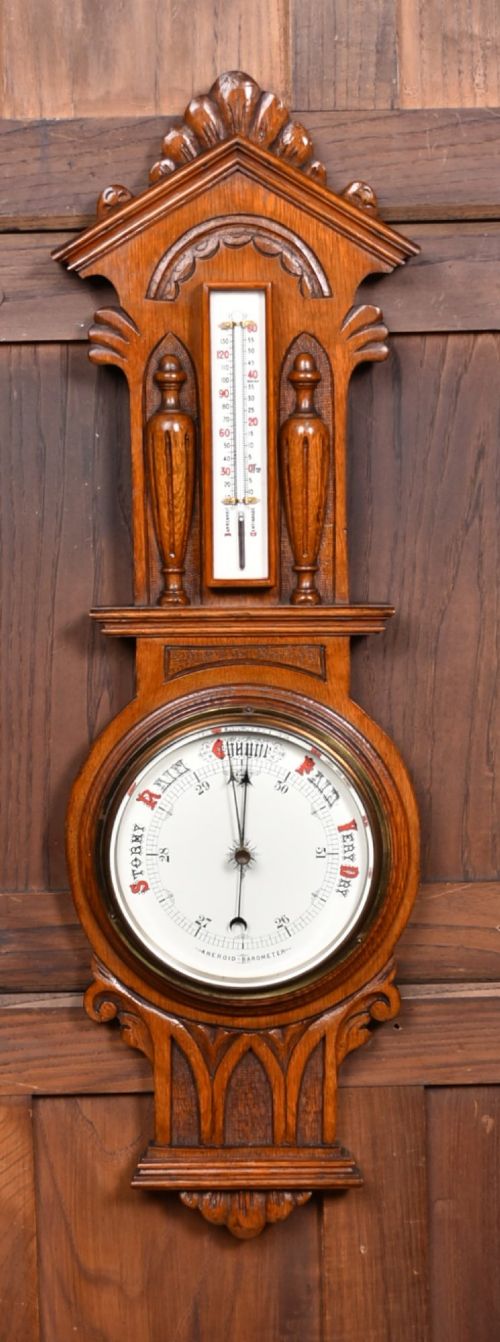
Banjo barometers dominate the selection, featuring a curved upper dial for pressure and a vertical or crescent thermometer mounted on the trunk. Wall hanging oak and carved Black Forest examples appear frequently alongside desk compendiums and occasional barographs.
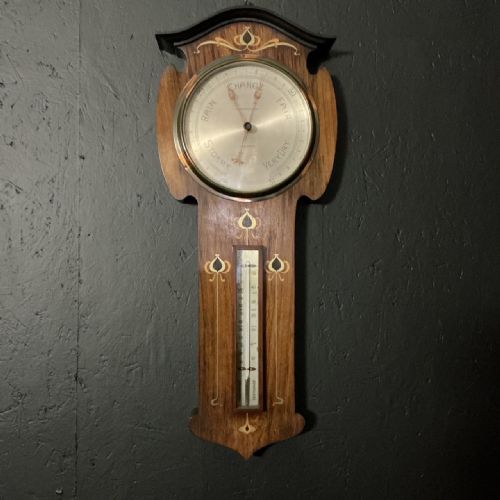
Makers such as Negretti & Zambra and Hyde & Sons represent the scientific instrument makers who signed these dials. Plain domestic models sit alongside heavily carved architectural cases and inlaid rosewood or mahogany pieces from the late nineteenth century.
Materials and construction
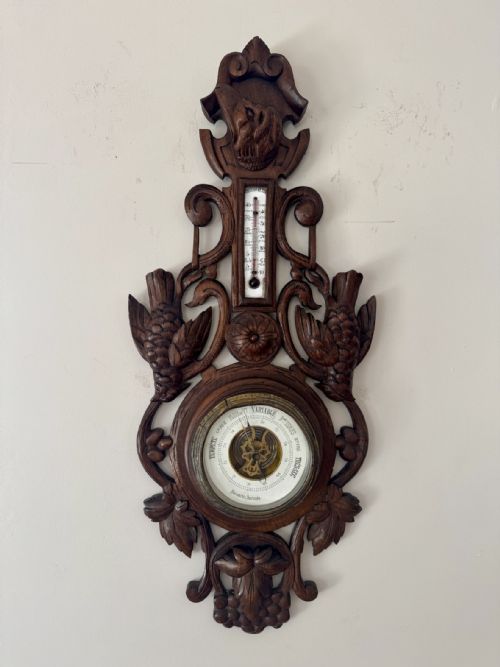
Cases utilise solid timbers like oak and walnut, often hand-carved with foliage or birds, or veneered in mahogany and burr walnut with fine boxwood stringing. Bevelled glass protects the silvered or porcelain dial faces where barometric pressure and temperature scales are engraved.
The internal aneroid mechanism relies on a sealed corrugated metal box that expands or contracts with air pressure changes, linked to a needle via levers and a tiny chain. Mercury or spirit-filled thermometer tubes sit alongside this primary movement, backed by engraved brass or porcelain plates.
Aneroid Barometer Thermometer Retail Price Guide 2026
Typical asking prices for aneroid barometer thermometer among the pieces listed under this phrase on Sellingantiques today, from the lower quarter to the upper quarter. They describe what is for sale here now, not the wider market.
Massive Victorian oak barometers are occasionally carved with lifelike birds keeping watch over the weather.
Quality differences
Quality rests in the crispness of the case carving and the choice of cabinet timber, from plain pine-backed oak to figured burr walnut and rosewood marquetry. Finely engraved silvered brass dials with blued steel indicator hands signal higher grade production than stamped aluminium replacements.
The reputation of the retailer or maker inscribed on the dial distinguishes standard domestic pieces from precision scientific instruments. Maker signatures from established opticians or instrument houses indicate superior movement assembly and longevity.
Hyde & Sons Sleaford·GAUPP & CO HONGKONG & SINGAPORE·NEGRETTI & ZAMBRA LONDON·W Watson & Sons·Joseph Lucas Ltd
The Aneroid Barometer Thermometer Glossary
- Aneroid barometer
- A device that measures atmospheric pressure using a flexible metal capsule rather than liquid mercury. The expansion and contraction of this sealed chamber moves the indicator hand.
- Banjo barometer
- A wall barometer shaped like a banjo, with a circular dial at the top for pressure and a long trunk carrying a thermometer. This form became popular during the Victorian period.
- Barograph
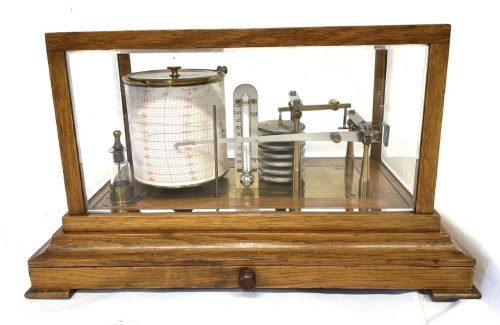
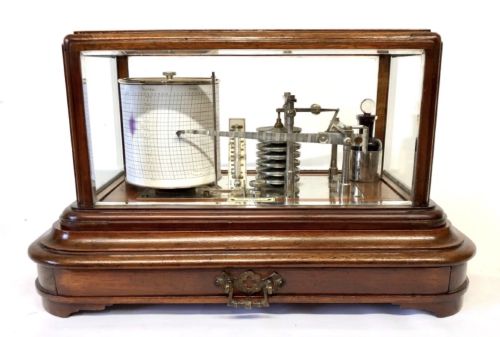
- A self-recording aneroid barometer that charts atmospheric pressure onto a paper drum over a week. These instruments usually incorporate a thermometer and sit within a glazed wooden case.
- Desk compendium
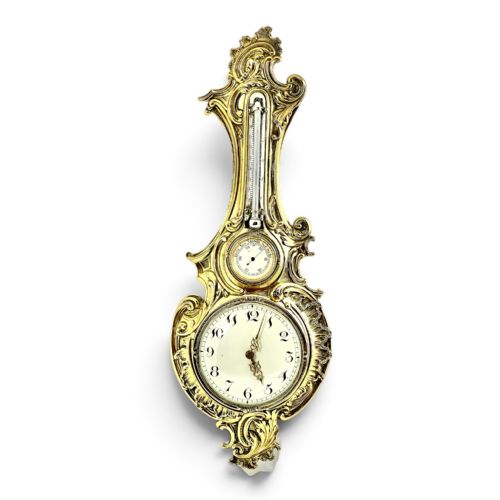
- A multi-instrument desk accessory combining a barometer, thermometer and clock within a single housing. These portable pieces often date to the late nineteenth or early twentieth century.
- Silvered dial
- A brass dial plate treated with a silver compound and engraved with black graduations. This finish provides high contrast and a traditional appearance for scientific instruments.
Aneroid Barometer Thermometer: Frequently Asked Questions
How do I read an aneroid barometer thermometer?
Read the main dial to observe changes in atmospheric pressure, noting whether the needle points toward rain, change or fair weather. The secondary thermometer tube indicates the ambient room temperature at the same time.
Tap the glass lightly before reading to settle the internal mechanical linkage. The secondary pointer can be manually set over the pressure needle to track whether pressure rises or falls over subsequent hours.
Are these barometers accurate for weather forecasting?
These historical instruments provide a reliable local indication of approaching weather changes based on rising or falling barometric pressure. They function well for general domestic forecasting when calibrated correctly against local readings.
Adjustment is typically performed via a small screw accessible on the back of the case. Turning this screw aligns the internal needle with known regional pressure data.
Where should I hang a wall barometer?
Hang the instrument on an interior wall away from direct sunlight, radiators and exterior doors. Rapid temperature fluctuations and damp walls can affect both the timber case and the delicate metal movement inside.
Ensure the wall fixing is secure, particularly with heavier carved oak or mahogany banjo barometers. Most pieces require a sturdy wall plug or a direct screw into a stud rather than a simple picture hook.
How do I identify a Victorian barometer?
Victorian models frequently feature hand-carved oak cases, mercury tube thermometers, and silvered brass dials with ornate typography. Styles range from heavy Black Forest foliage carvings to inlaid mahogany banjo shapes.
Examine the back of the case and the style of the timber framing for clues to the nineteenth-century origin. Maker signatures engraved on the dial plate often provide a precise date or period reference.