


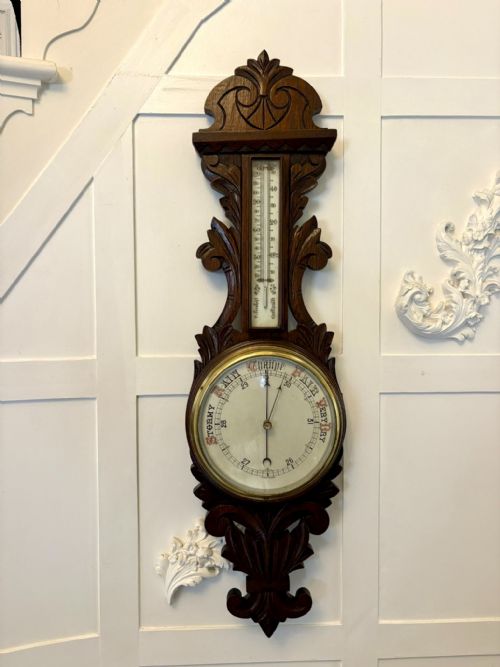

Victorian Carved Barometer
A Victorian carved barometer brings mechanical precision and deep-relief woodwork together on the wall, offering a tangible link to nineteenth-century domestic forecasting.
Victorian Carved Barometer
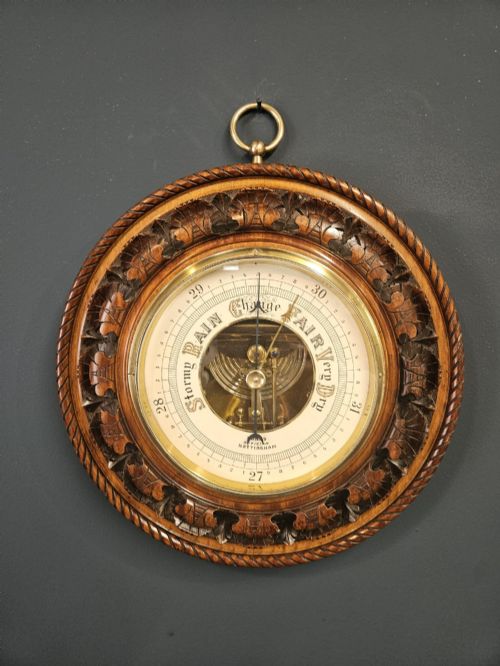
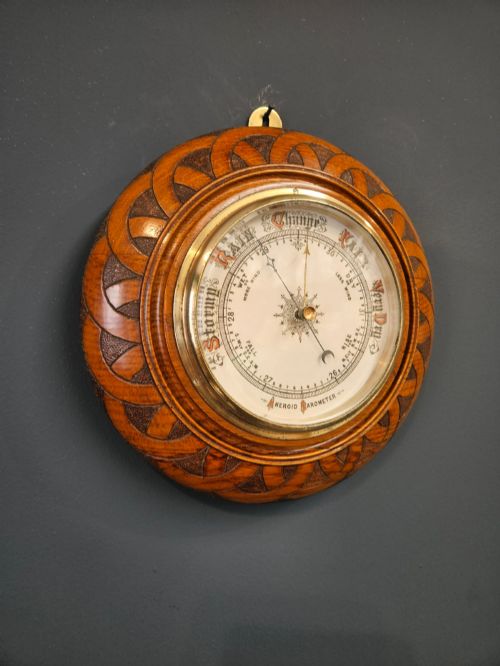
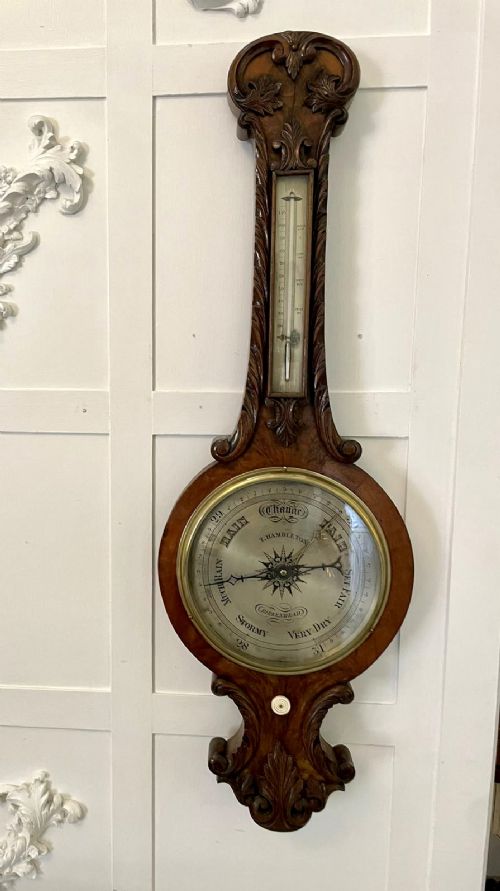
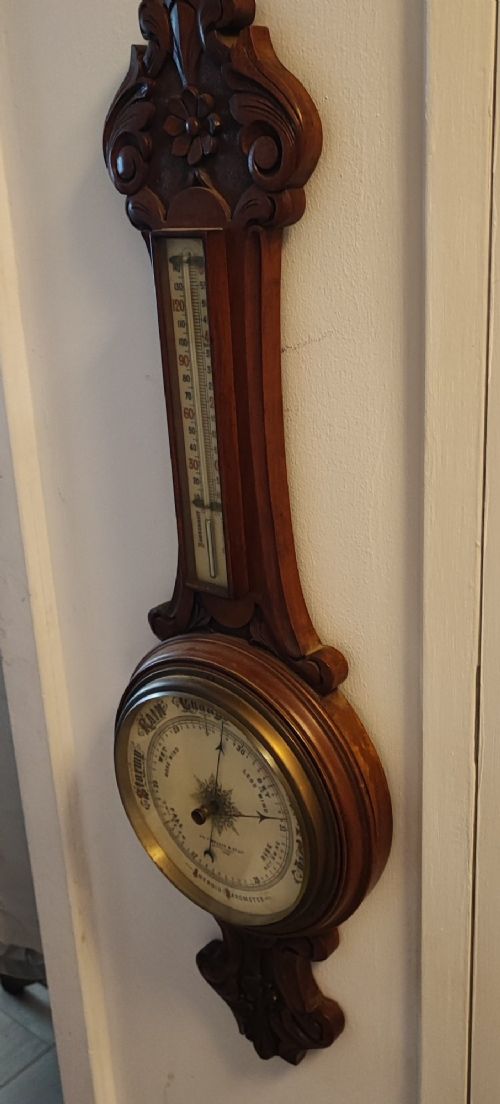
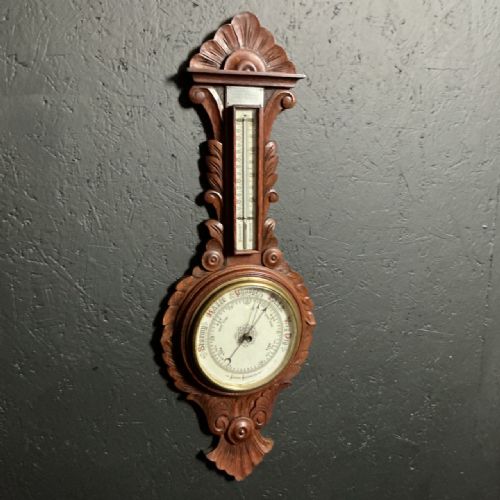
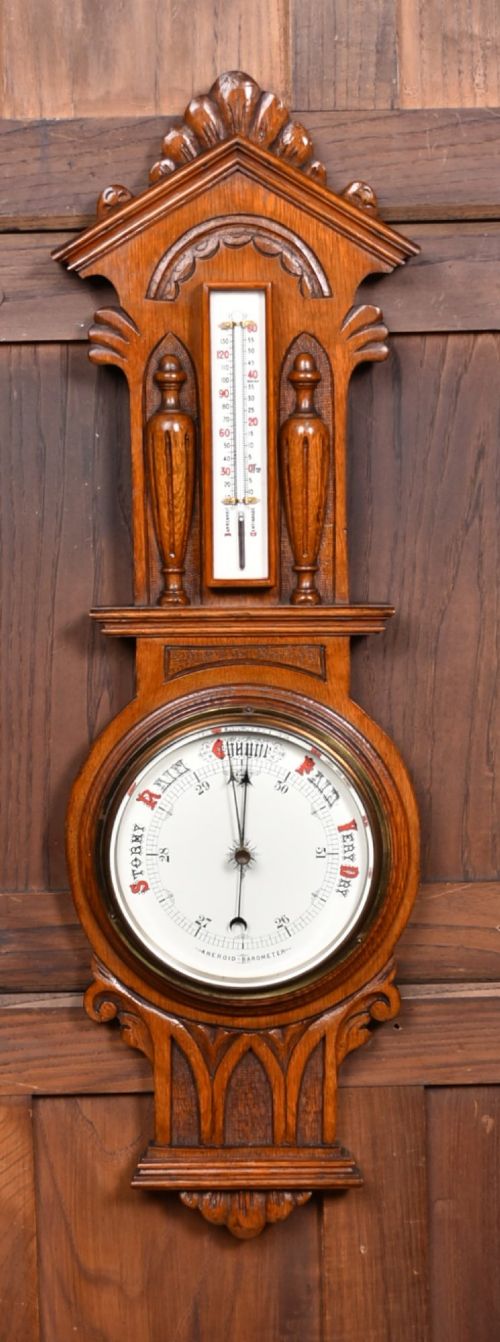
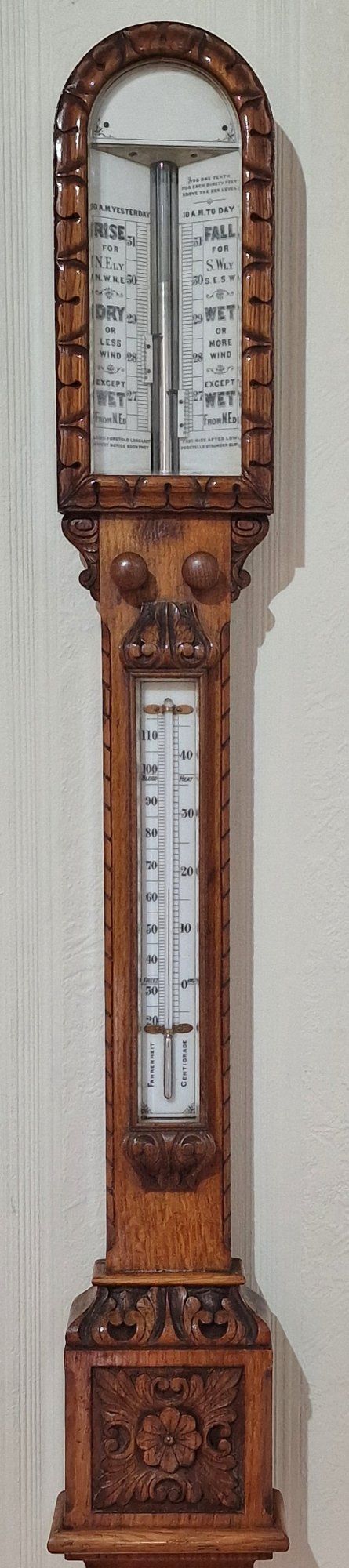
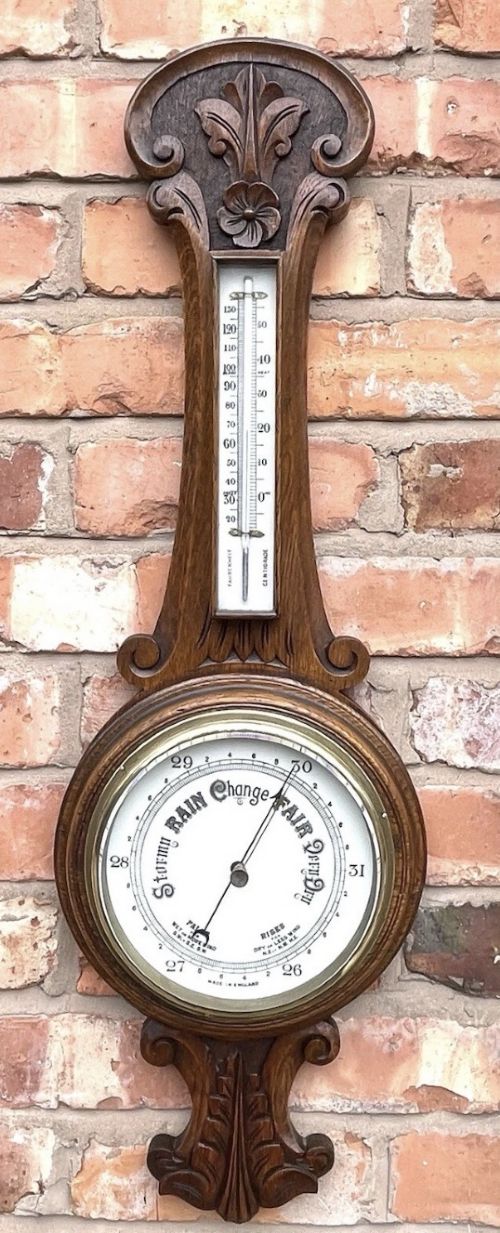
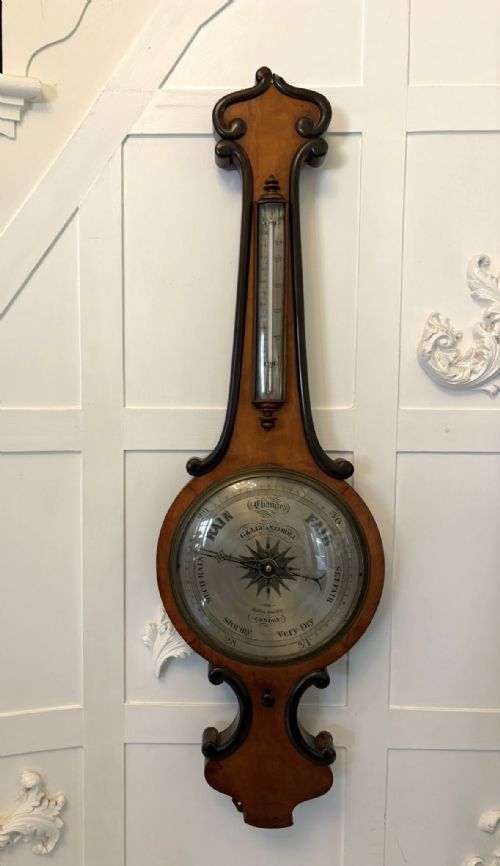
When you search for a Victorian carved barometer, you are looking at domestic weather-measuring instruments housed in elaborate timber frames produced primarily during the nineteenth century. These instruments span various formats, with the banjo configuration featuring prominently alongside wheel, stick, and skeletonised aneroid designs.
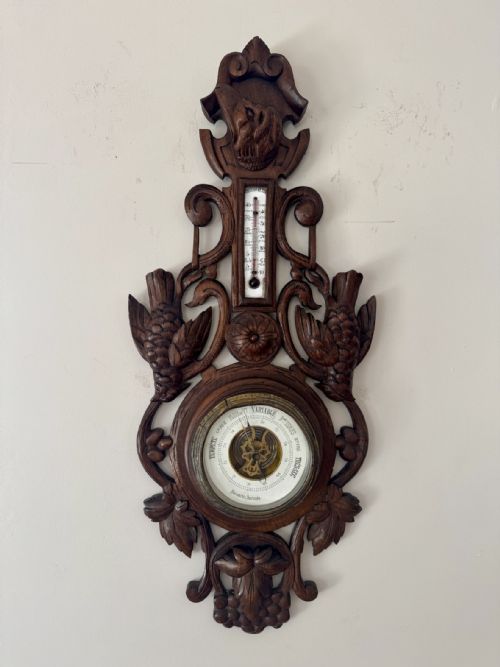
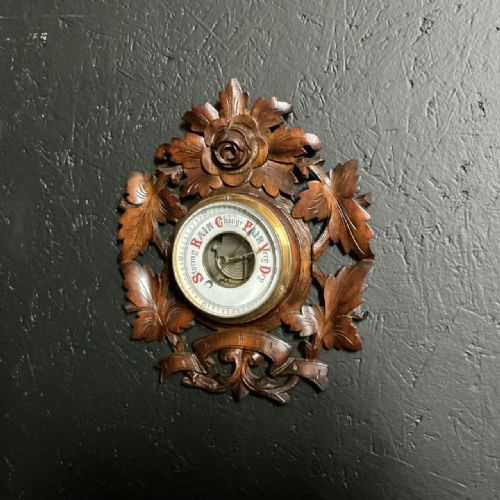
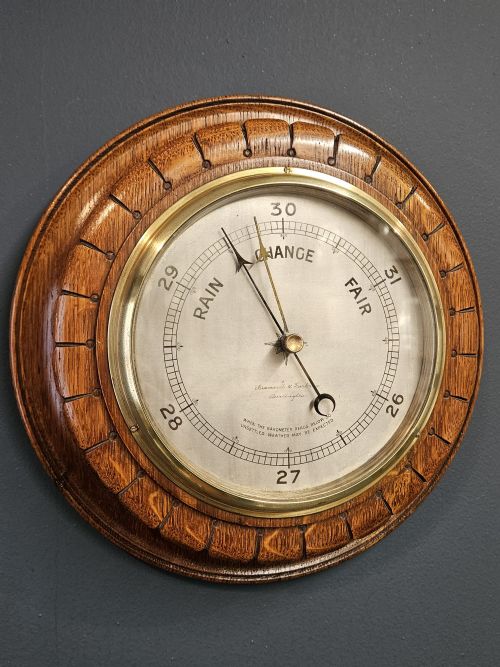
The dominant material on this page is oak, frequently deeply carved with foliage, birds, or geometric patterns, alongside rich walnut and occasional mahogany. Examples range from compact wall-hung pieces to massive architectural frames produced by British makers and continental workshops influenced by the Black Forest style.
While Victorian pieces form the core of the selection, related examples stretch into the Edwardian period and draw upon earlier Georgian influences. Buyers encounter instruments equipped with thermometers, ceramic dials, and silvered brass scales alongside combined clock and barometer formats.
Materials and construction methods
Makers shaped solid blocks of oak, walnut, and mahogany into robust cases using hand-carving techniques to create high-relief wreaths, petals, leaves, and animal motifs. Cabinetmakers turned secondary elements on lathes to frame circular dials and thermometer tubes.
Internal mechanisms rely upon either mercury columns housed in glass tubes for stick and admiral fitzroy barometers, or spring-loaded aneroid capsules that translate atmospheric pressure changes to a pointer via metal linkages. Dials utilise engraved silvered brass, ceramic, or porcelain plates protected beneath bevelled glass bezels.
Victorian Carved Barometer Retail Price Guide 2026
Typical asking prices for victorian carved barometer among the pieces listed under this phrase on Sellingantiques today, from the lower quarter to the upper quarter. They describe what is for sale here now, not the wider market.
Certain Victorian oak barometers feature finely carved birds peering down intently from the crest, keeping a permanent watch over the rising and falling weather.
Distinctions in craftsmanship and design
Quality rests heavily upon the depth and crispness of the wood carving, where finely undercut foliage and naturalistic bird motifs distinguish master carvers from routine production work. The choice of timber also dictates standing, with highly figured burr walnut and dense golden oak commanding attention over plain secondary woods.
The sophistication of the internal movement separates standard instruments from superior examples, particularly skeletonised aneroid mechanisms that display the brass works openly through glazed apertures. Signed brass dials by noted makers such as Negretti and Zambra add documented provenance and mechanical refinement.
G & L Guanziroli London·Bramwell & Harbron of Darlington·Negretti & Zambra·W Watson & Sons
The Victorian Carved Barometer Glossary
- Aneroid barometer
- A sealed metal capsule that expands and contracts with air pressure changes, moving a dial pointer without liquid mercury. This design allowed instruments to take on compact banjo and wall-hanging shapes.
- Banjo barometer
- A domestic weather glass housed in a shaped wooden case resembling a stringed musical instrument. The upper portion typically holds the dial while the lower bulb accommodates the thermometer or cistern.
- Stick barometer
- A tall, vertical instrument displaying an exposed mercury column against a calibrated scale. This traditional format allows direct reading of atmospheric height in inches.
- Skeletonised movement
- An internal mechanism featuring openwork brass plates that expose the gears and levers to view. These are often displayed behind glass dials in walnut frames.
- Silvered dial
- A brass face treated with silver powder to create a matte metallic finish for engraved numbers and lettering. It provides clear contrast against dark timber cases.
Victorian Carved Barometer: Frequently Asked Questions
How do aneroid and mercury barometers differ?
Aneroid barometers use a sealed metal vacuum capsule to measure air pressure mechanically through gears and springs, making them safer and easier to hang in any orientation. Mercury barometers rely on a traditional column of liquid metal in a glass tube to respond directly to atmospheric weight.
Both systems require careful handling, but aneroid movements proved more popular for the decorative carved wooden frames seen throughout the Victorian period.
What is a skeletonised barometer movement?
A skeletonised movement reveals the brass gears, springs, and levers of the aneroid mechanism directly through a partially glazed or open dial face. This design showcases the intricate internal engineering rather than hiding it behind a solid metal plate.
Such pieces are typically housed in substantial walnut frames and represent a more decorative approach to domestic weather recording.
Where should I hang a wall barometer?
Wall barometers require a secure fixing point that can support the weight of dense timbers like solid oak or walnut, particularly for larger banjo or wheel formats. Position the instrument away from direct heat sources, radiators, and heavy drafts to ensure accurate mechanical responses.
Interior walls in main living spaces generally provide the stable ambient temperature necessary for consistent mechanical performance.
How do I distinguish Black Forest barometers?
Black Forest barometers feature deeply undercut carvings of natural subjects such as oak leaves, trailing foliage, and birds, reflecting Swiss and German craftsmanship from the nineteenth century. These cases often utilise rich walnut and display dramatic, sculptural three-dimensional elements.
They stand apart from standard British output through their intense organic ornament and distinctively continental stylistic flourishes.