


Antique Wall Weather Station
An antique wall weather station brings together brass dials and carved timber to track the atmosphere, turning meteorological records into domestic furniture.
Antique Wall Weather Station
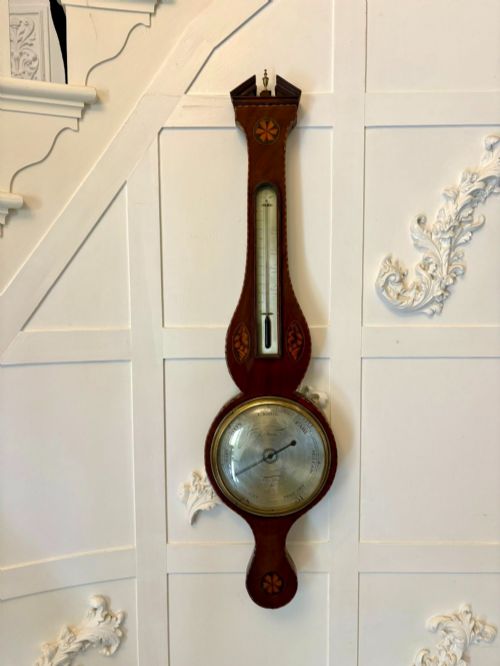
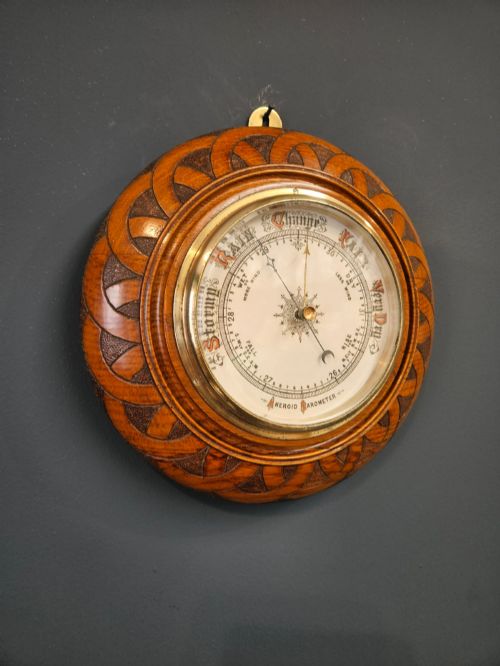
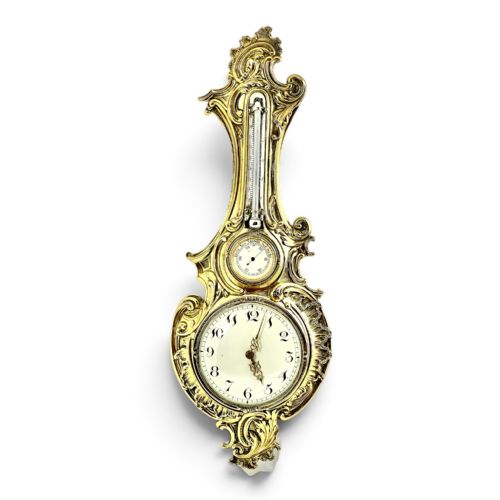
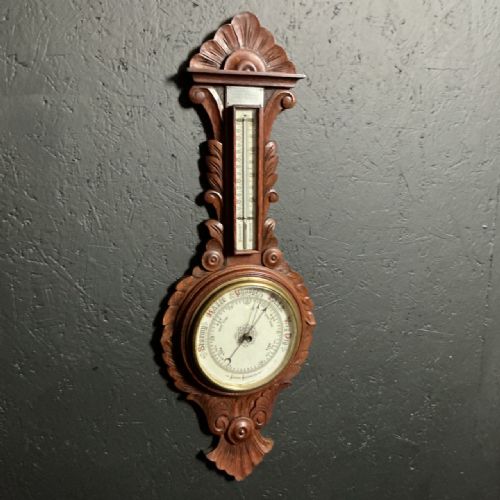
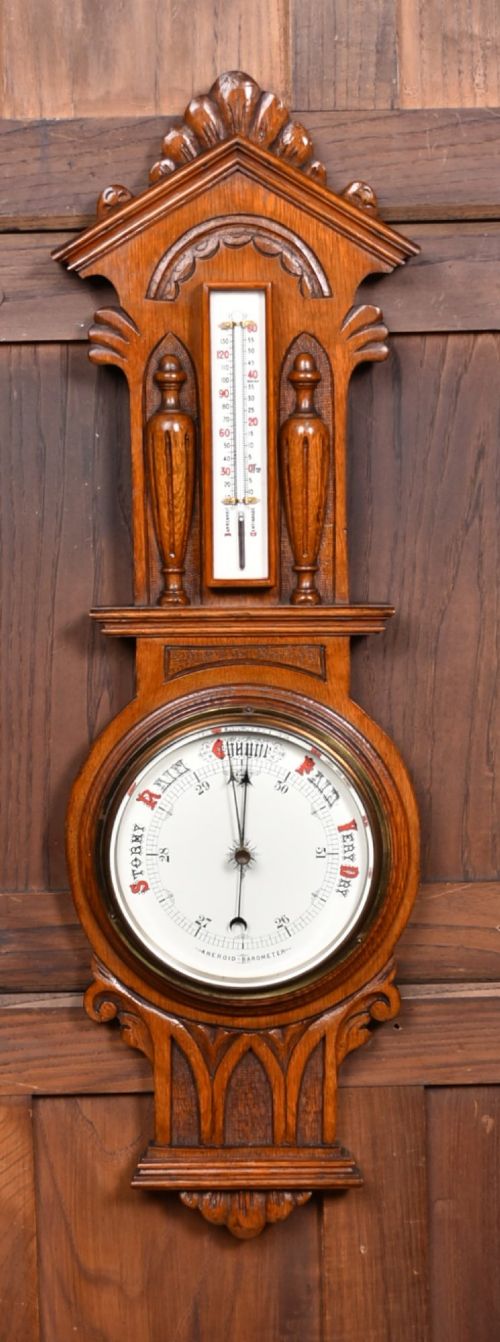
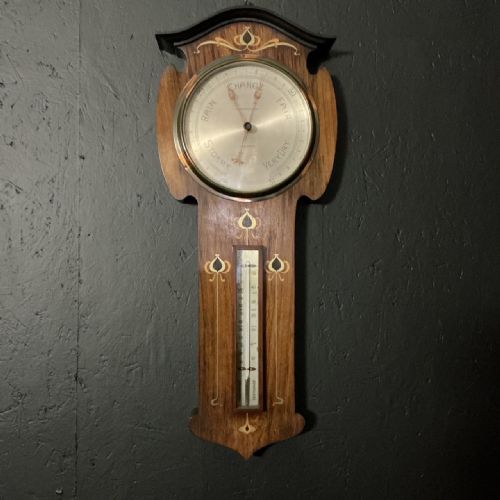
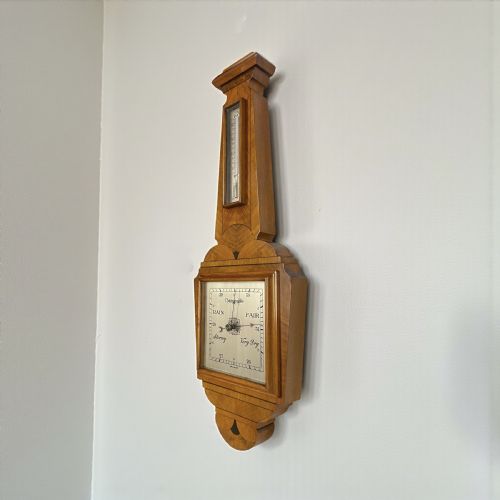
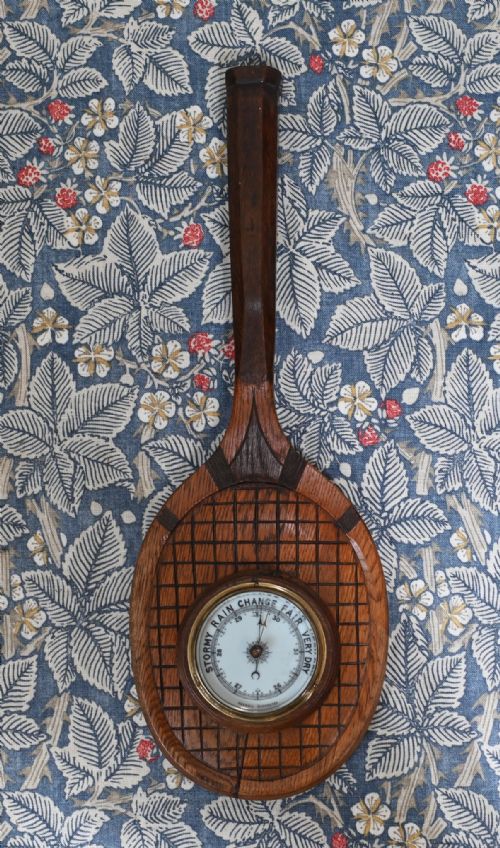
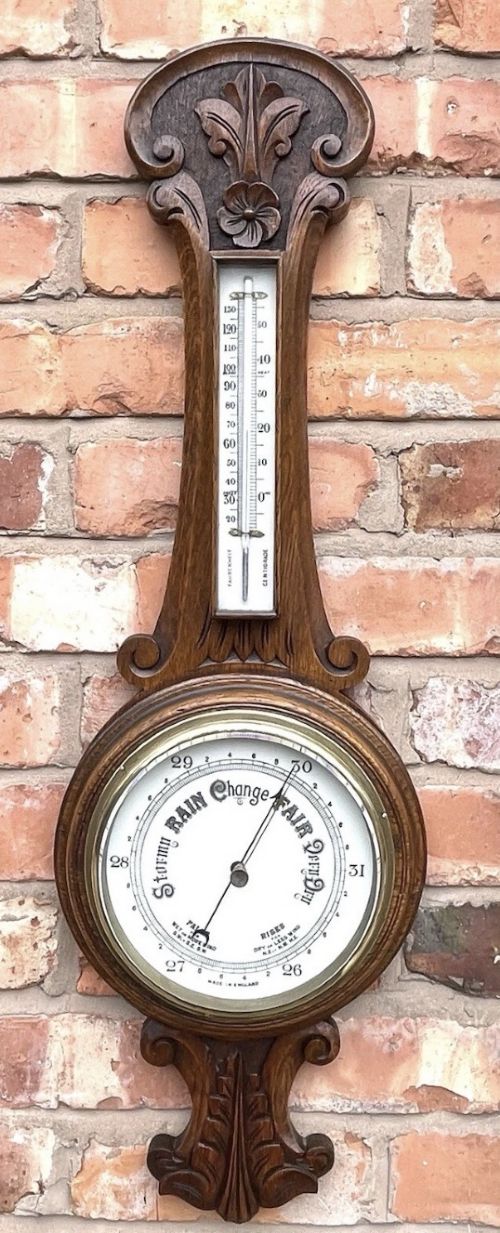
When you search for an antique wall weather station, you encounter instruments designed to measure barometric pressure, temperature and humidity within a single wooden case. The most common examples on this page are carved oak banjo barometers and multi-instrument stations combining thermometers and clocks from the Victorian and Edwardian eras.
The objects originate from domestic halls and libraries, built to hang upon a wall where changes in air pressure could be monitored alongside the time. Surviving pieces span from Georgian stick barometers to substantial Art Deco designs and Black Forest carved walnut instruments.
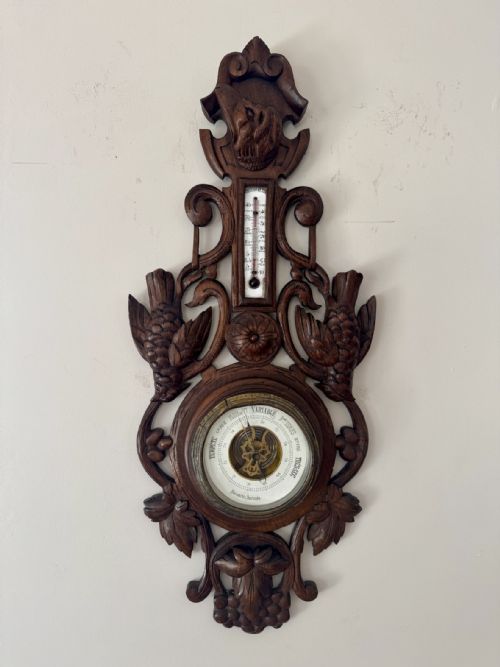
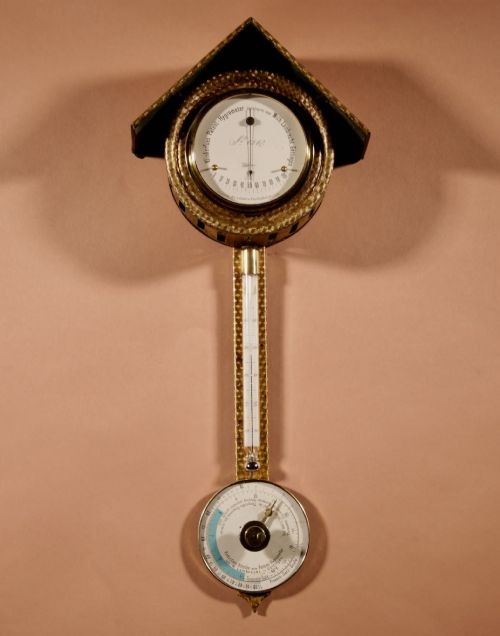
Makers and retailers such as Negretti and Zambra, Elliott Brothers, and Wilh. Lambrecht produced these functional instruments, housing precision mechanisms inside decorative timber frames. The selection ranges from plain mahogany stick barometers to elaborate Victorian carvings involving foliage and animal motifs.
Materials and construction
Cabinetmakers utilised dense hardwoods including oak, mahogany and walnut to form the structural cases, often shaping them through turning, carving or marquetry inlay. Oak appears frequently in Victorian and Edwardian banjo styles, whilst mahogany provides the straight grain required for traditional stick barometers.
Internal mechanisms rely on brass components, glass dials and mercury columns or aneroid capsules to register atmospheric movement. Enamel scales and silvered brass plates display the readings clearly, protected behind hinged glass bezels set into the wooden frames.
The listings span multiple decades, incorporating Victorian carved oak, Edwardian walnut, and Georgian mahogany examples.
Assessing quality and execution
The distinction between standard domestic barometers and superior examples lies in the depth of the woodcarving and the precision of the dial engraving. Finely executed Black Forest walnut cases show crisp undercut foliage and animal details, whereas lesser pieces feature repetitive machine routing.
Maker attribution also dictates standing, as instruments signed by known scientific instrument makers command greater attention than unsigned workshop pieces. The clarity of the silvered brass dial and the original condition of the glass and mercury or aneroid mechanism further separate standard production from masterwork.
Wilh. Lambrecht·Elliott Brothers·Negretti and Zambra·W Watson and Sons
The Antique Wall Weather Station Glossary
- Aneroid barometer
- An instrument that measures atmospheric pressure using a flexible metal capsule rather than liquid mercury. These units became widespread during the Victorian period for domestic wall hanging.
- Stick barometer
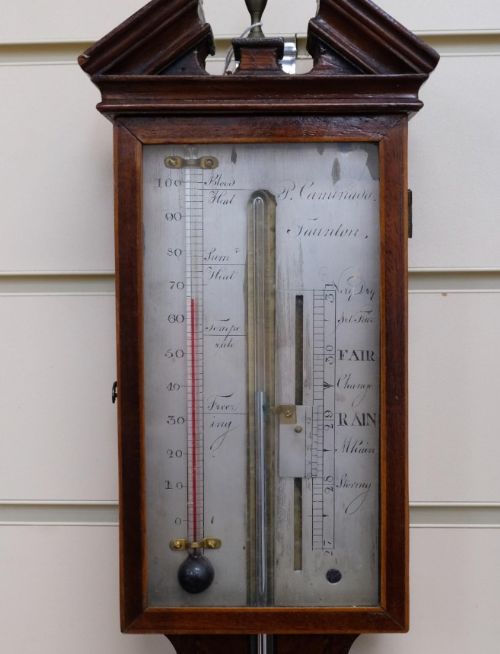
- A tall, narrow instrument featuring an exposed vertical glass tube filled with mercury alongside a vernier scale. Georgian and nineteenth-century examples often use mahogany or walnut cases.
- Banjo barometer
- A domestic weather instrument shaped like a banjo, housing a circular dial at the top and a thermometer or hygrometer along the vertical stem. Oak and mahogany versions dominate late nineteenth-century production.
- Hygrometer
- A device that measures relative humidity in the air, frequently incorporated into multi-instrument weather stations. Specialised hair hygrometers utilise treated animal hair to register moisture levels.
- Marquetry
- The art of applying pieces of veneer to a structure to form decorative patterns or pictures. Neo-classical and Georgian pieces often employ this technique on mahogany backboards.
Antique Wall Weather Station: Frequently Asked Questions
How do I read a mercury stick barometer?
The mercury column rises and falls within the glass tube in response to atmospheric pressure changes. Reading the vernier scale alongside the tube gives the exact barometric pressure measurement.
Changes in the height of the mercury indicate upcoming weather shifts, with falling levels pointing towards unsettled conditions.
Where should I hang a wall barometer?
Mount the instrument on an interior wall away from direct sunlight, radiators and draughty doors. Temperature fluctuations near heat sources can distort the readings of both aneroid and mercury mechanisms.
Ensure the wall plug and screw match the weight of the timber case, particularly with heavy carved oak or walnut designs.
How do I tell an aneroid from a mercury barometer?
Aneroid barometers display a round dial with a pointer needle moving across printed weather descriptions like storm, rain and fair. They contain no visible liquid columns.
Mercury barometers feature a tall vertical glass tube where a silver liquid line moves up and down against a calibrated scale.
What is a Black Forest barometer?
These instruments originate from the Black Forest region of Germany and feature elaborate, deeply carved wooden frames depicting leaves, birds and animals. Walnut and oak are common timbers for these decorative pieces.
The carving style is distinct to the late nineteenth century, combining domestic utility with sculptural woodworking traditions.
Did weather stations always include clocks?
Combined weather stations house barometers, thermometers and occasionally clocks within a single architectural frame. These multi-function panels appeared frequently in Edwardian and late Victorian hallways.
While single-purpose barometers remain common, combined stations provided households with a complete domestic information centre.