


Aneroid Barograph
An aneroid barograph records atmospheric pressure continuously on paper charts, combining scientific utility with the heavy presence of polished timber and bevelled glass.
Aneroid Barograph
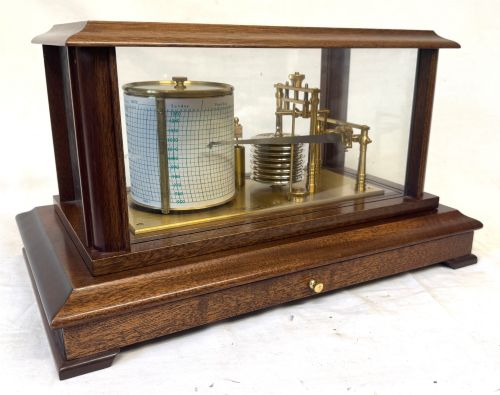
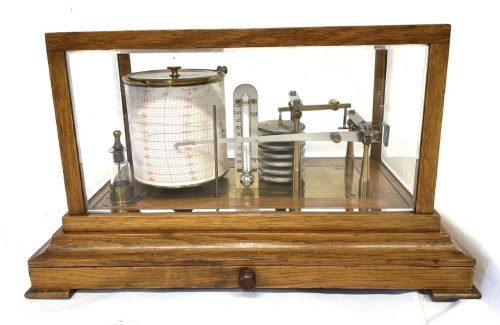
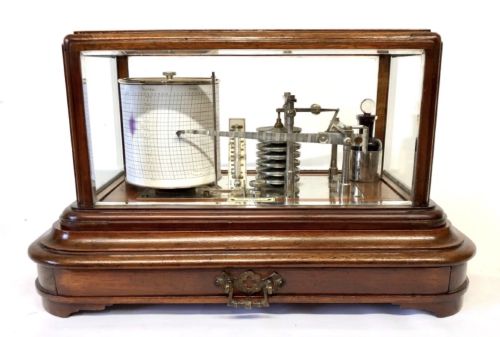
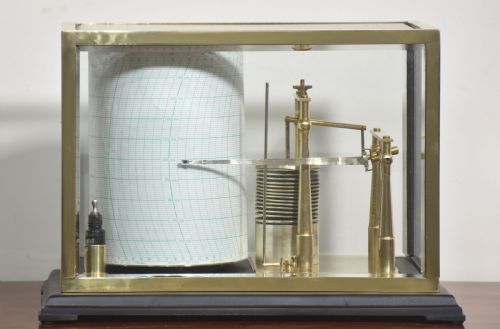
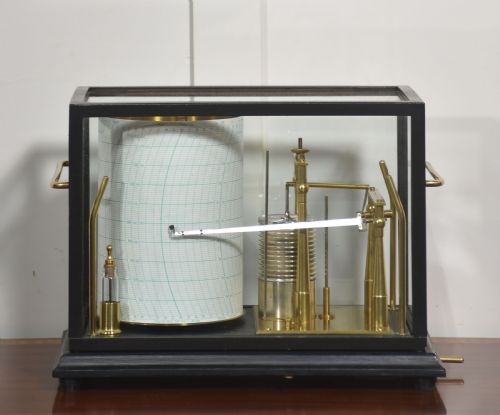
An aneroid barograph is a recording meteorological instrument designed to track pressure changes over a week without using liquid mercury. These scientific pieces measure time through clockwork drum movements while metal bellows expand and contract against levers to draw the ink line.
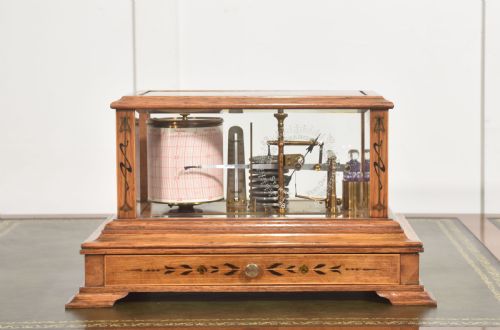
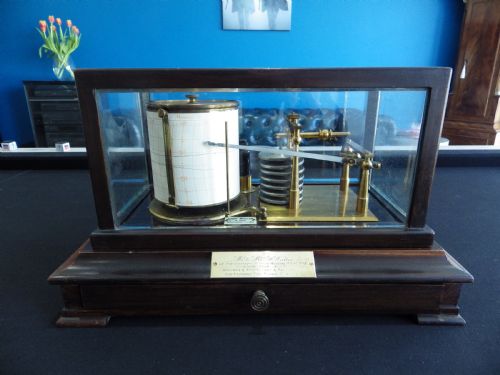
The versions met most frequently on this page sit inside wooden glazed enclosures, often housing a chart drawer in the base. Mahogany and oak dominate the surviving examples, accompanied by brass mechanisms and paper recording sheets.
The historical spread spans from late Victorian workshops through Edwardian iterations into the mid-twentieth century. Wall-mounted variations and miniature formats appear alongside the standard table-standing cabinet designs.
Materials and construction
Cabinet makers constructed the protective housings primarily from mahogany, oak, and walnut, often incorporating five panes of bevelled glass to display the movement clearly. Selected models feature inlaid details, integrated mercury thermometers, or supplementary aneroid barometer dials set into the woodwork.
The internal mechanics rely upon brass for plates, levers, and drum cylinders, paired with steel springs and evacuated metal chambers that sense barometric shift. Paper charts printed with grid lines wrap around the clockwork drums, receiving a continuous trace from an ink-filled nib.
Aneroid Barograph Retail Price Guide 2026
Typical asking prices for aneroid barograph among the pieces listed under this phrase on Sellingantiques today, from the lower quarter to the upper quarter. They describe what is for sale here now, not the wider market.
Certain models recorded historical moments like railway openings and Southend excursions directly onto their paper charts.
Variations in quality
Quality rests upon the precision of the mechanical linkages and the reputation of the maker supplying the dial or chassis. Established scientific instrument makers produced cleaner casting finishes and more reliable temperature-compensated movements than unknown regional retailers.
Cabinetwork distinguishes the standard production from superior examples through heavier timber selection, tighter joinery, and thoughtful details like integrated chart drawers and bevelled glass panels. The presence of original paperwork or specialised regional provenance adds contextual weight to an instrument.
Short And Mason·Negretti And Zambra·Richard Freres·Jules Richard·R Fuess
The Aneroid Barograph Glossary
- Aneroid
- Operating without liquid. These instruments measure air pressure via the expansion and contraction of sealed metal bellows.
- Barograph
- A self-recording barometer. It traces a continuous graphical record of atmospheric pressure onto a paper chart.
- Chart drawer
- A shallow compartment built into the wooden base of the cabinet. It stores spare weekly recording papers.
- Bevelled glass
- Glass panes with ground and polished angled edges. This detail reflects light cleanly and marks finer cabinet construction.
- Clockwork drum
- A rotating brass cylinder powered by an internal spring. The paper chart attaches here to turn once every seven days.
Aneroid Barograph: Frequently Asked Questions
How does an aneroid barograph work?
Sealed metal chambers expand and contract as atmospheric pressure rises and falls outdoors. Mechanical levers transfer this movement to an arm holding an ink nib, which traces the data onto a rotating paper chart.
A clockwork mechanism turns the brass drum once every week to ensure a continuous timeline. The resulting graph shows weather trends at a glance without requiring liquid mercury.
How do I change the chart paper?
Lift the ink arm gently off the drum to protect the delicate nib from bending or damage. Release the old paper sheet from its clip and wrap a fresh weekly chart around the brass cylinder.
Secure the ends carefully so the grid aligns with the starting time. Adjust the ink arm back onto the paper and wind the clockwork movement inside the drum.
Where should I place a barograph?
Position the instrument on a stable surface away from direct sunlight, radiators, and heavy vibrations. Sudden temperature changes can affect the metal bellows and distort the pressure readings.
A room with consistent ambient conditions helps keep the mechanical clockwork running accurately over its weekly cycle.
How do I date an antique barograph?
Examine the style of the wood cabinetry, the lettering on the brass bedplate, and any accompanying paper documentation. Edwardian and late Victorian pieces often show distinct inlay work or retailer signatures that tie them to specific decades.
Makers frequently stamped their business names and serial numbers onto the brass framework. Comparing these details against known working periods of the firm narrows the manufacturing window.