



Ancient Chinese Ceramics
Ancient chinese ceramics comprise durable terracotta and earthenware vessels and figures shaped across dynasties from the Neolithic era onwards.
Ancient Chinese Ceramics
When you search for ancient chinese ceramics, you encounter vessels and sculptural figures spanning dynasties from the Neolithic Yangshao culture through to the Ming period.
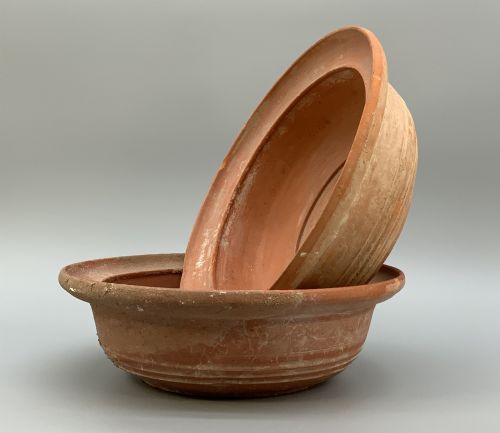
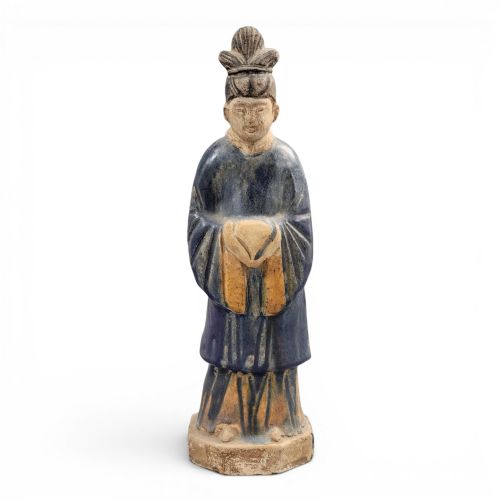
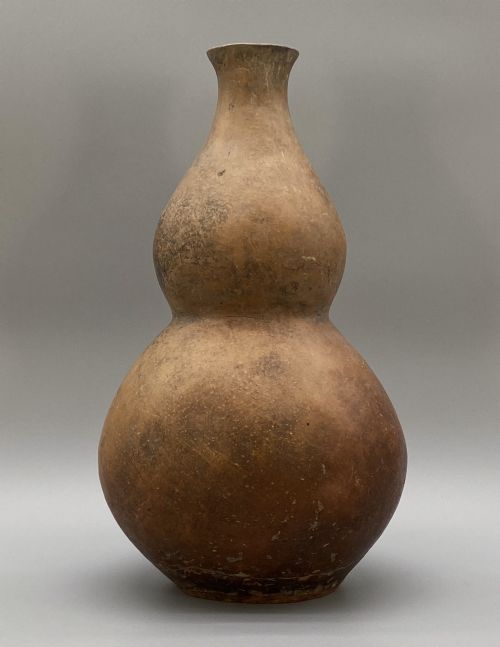
The objects on this page include red pottery bowls, grey pottery dancers, sancai glazed court attendants, and double-gourd vases.
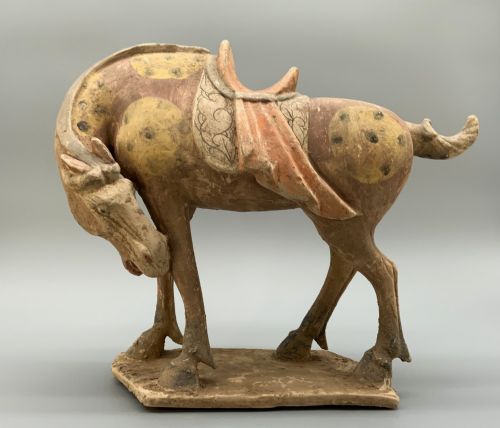
Figures designed for burial, known as mingqi, appear frequently alongside scholar's water vessels and utilitarian pottery forms.
How they were made
Potters shaped these works from grey and red terracotta and clay, hand-forming bodies or throwing them on wheels before low-firing the earthenware.
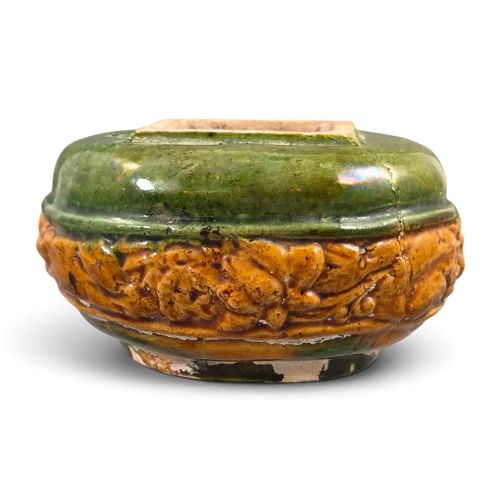
Makers applied mineral pigments and lead-based sancai glazes to decorate surfaces, achieving characteristic amber, green, and cream coloration on funerary figures.
Listings span periods from the Neolithic Yangshao culture through the Han, Tang, Sui, and Ming dynasties, utilising terracotta and lead glazes.
What varies in quality
Quality rests upon the crispness of modelling in figural works, where facial expressions and drapery folds remain sharp and well-defined.
The preservation of original mineral pigments and the evenness of lead glazes distinguish superior examples from heavily restored or weathered pieces.
The Ancient Chinese Ceramics Glossary
- Terracotta
- A porous, brownish-red fired clay used extensively for early Chinese sculptures and vessels. This material forms the base of many tomb figures.
- Sancai
- A traditional three-colour lead glaze originating in the Tang Dynasty. Artisans typically utilised amber, green, and cream hues.
- Mingqi
- Spirit objects or burial goods placed in tombs to accompany the deceased. These figures represent attendants, animals, and entertainers.
- Neolithic
- The late stone age period in China noted for early painted pottery vessels. The Yangshao culture belongs to this era.
Ancient Chinese Ceramics: Frequently Asked Questions
How do I identify a Tang Dynasty glaze?
Tang Dynasty glazes often feature the sancai palette of amber, green, and creamy white overlapping on the clay body.
These lead glazes tend to run slightly and create distinct pooling effects on pottery and figures.
What is grey earthenware?
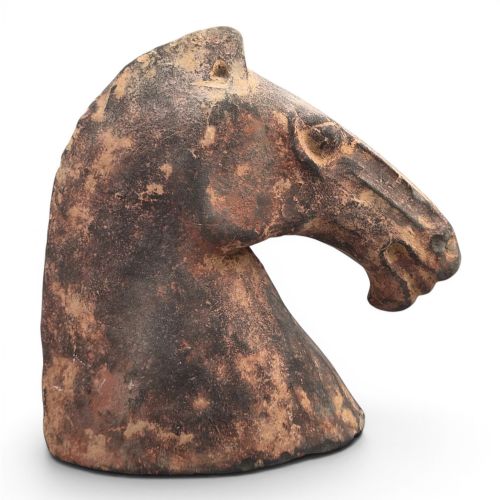
Grey earthenware is a dense, unglazed ceramic body fired in a reduced oxygen atmosphere during ancient periods.
This material is typical of Han Dynasty figural sculpture and vessels.
How should I display ancient pottery?
Display these ceramics in stable, indoor environments away from direct sunlight and excessive humidity.
Support heavier vessels securely, as ancient earthenware bodies can be fragile.