




Ancient Terracotta Vessel
An ancient terracotta vessel brings millennia of human craftsmanship straight to your hands, offering tangible history from early civilisations.
Ancient Terracotta Vessel
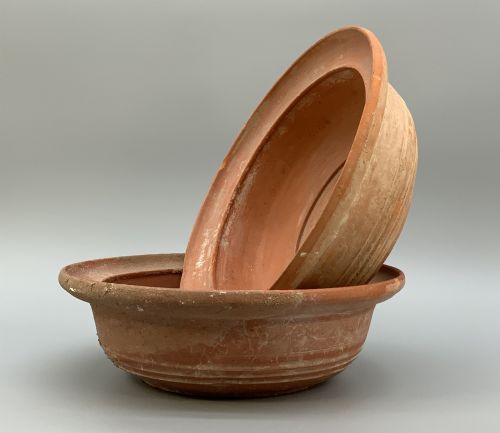
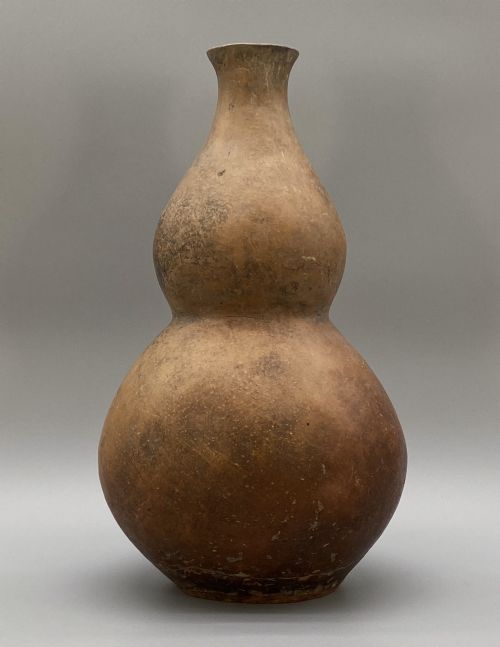
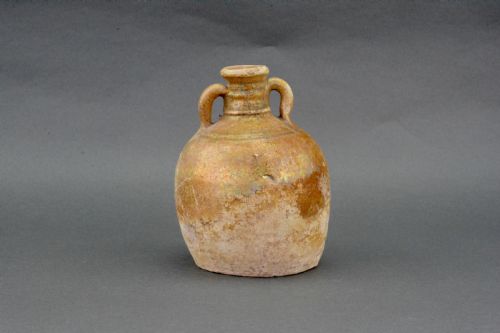
When you search for an ancient terracotta vessel, you encounter early forms spanning pre-Columbian traditions, Chinese dynasties from Han to Ming, and early Islamic pottery. These pieces take the shape of decorative bowls, double-gourd vases, ornithomorphic and zoomorphic vessels, and small flasks.
The versions most likely to appear on this page include Pre-Columbian Moche and Chimú tradition figures alongside Chinese Han Dynasty red pottery basins and Neolithic Yangshao culture pieces. Collectors also find Persian Nishapur slip-painted bowls and Tang Dynasty vases with covers.
How they were made
Potters shaped these objects from raw clay using foundational hand-building methods before firing the earth in open or kiln environments. Artisans then applied pigments, slips, and lead glaze to decorate the surfaces.
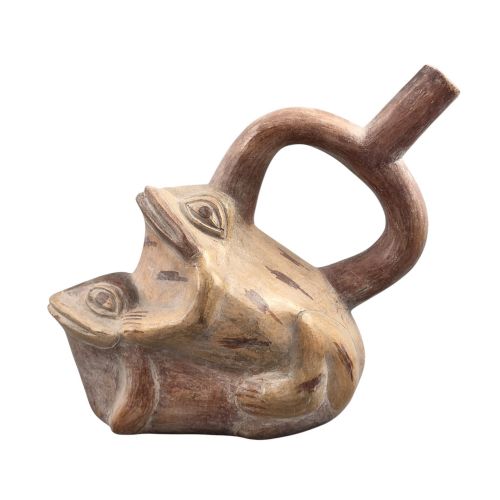
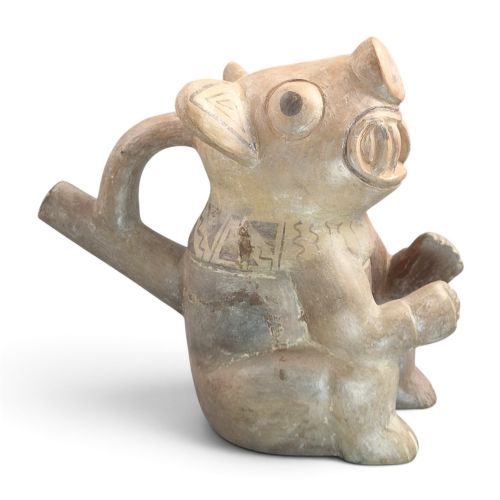
Makers utilised slip pigment to paint figurative scenes, such as seated figures on buffware pottery bowls, or modelled three-dimensional forms like mating frogs and animal vessels directly into the damp clay.
Ancient makers sometimes embedded a working ceramic frog whistle into a vessel, ensuring the pottery could literally speak after two millennia.
What varies in quality
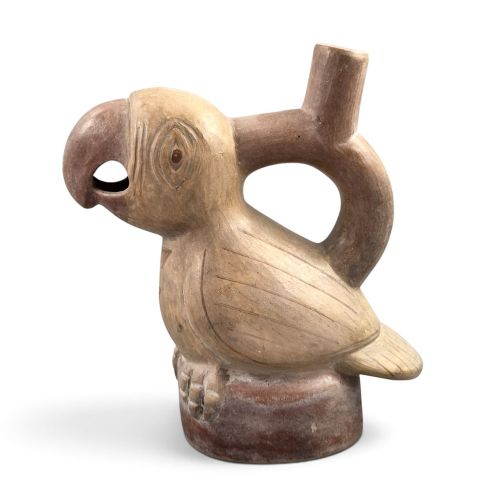
The distinction between standard examples and exceptional pieces rests upon the crispness of modelling in zoomorphic and ornithomorphic shapes. Surface preservation of early slip paint, pigment, and lead glaze also determines the visual strength of a piece.
Completeness alters the character of an object, particularly where covers, stands, or delicate whistles remain intact alongside the primary vessel body.
The Ancient Terracotta Vessel Glossary
- Terracotta
- A porous, brownish-red earthenware clay that is fired at relatively low temperatures. It forms the structural base for much early pottery and sculpture.
- Slip
- A liquid mixture of clay and water applied to pottery before firing to smooth the surface or create decorative patterns.
- Zoomorphic
- Having or representing animal forms. This term describes vessels shaped like frogs or other creatures.
- Ornithomorphic
- Shaped or decorated in the form of a bird. Such vessels reflect the deep connection early makers had with the natural world.
- Buffware
- Pottery produced with a light, buff-coloured clay body, frequently seen in early Islamic traditions from regions like Nishapur.
Ancient Terracotta Vessel: Frequently Asked Questions
How old is an ancient terracotta vessel?
These items span vast historical periods, with many pieces originating from several centuries before the common era up through the medieval era. Neolithic pieces date back multiple millennia, while later examples represent Chinese dynasties and early Islamic periods.
Because the dating covers such a wide historical arc, each piece carries distinct cultural markers from its specific region of origin, whether ancient Greece, pre-Columbian Peru, or Tang Dynasty China.
What were these terracotta vessels used for?
Early civilisations utilised these vessels for both daily practical storage and significant ceremonial or ritual functions. Some pieces held liquids or food, while others served purely decorative or symbolic purposes in burials and communal spaces.
Figural objects, including whistles and zoomorphic containers, often held ritualistic meaning within their specific cultures, linking utility with spiritual expression.
How should I display an ancient terracotta vessel?
Displaying these antiquities requires stable surfaces away from high traffic areas where accidental knocks might occur. Supporting pieces properly, especially those with rounded bottoms or separate stands, ensures long-term physical security.
Keeping them out of direct, harsh sunlight helps protect remaining pigments, slip paint, and delicate surface glazes from fading over time.
How do I identify different regional pottery styles?
Regional styles reveal themselves through characteristic clay bodies, specific pigment colours, and distinct manufacturing techniques. For instance, pre-Columbian pieces often feature modelled animal forms, whereas Nishapur bowls utilise slip-painted geometric or figurative motifs.
Studying the specific form, such as a double-gourd shape or an ornithomorphic body, helps connect a piece to its geographic and cultural source.