





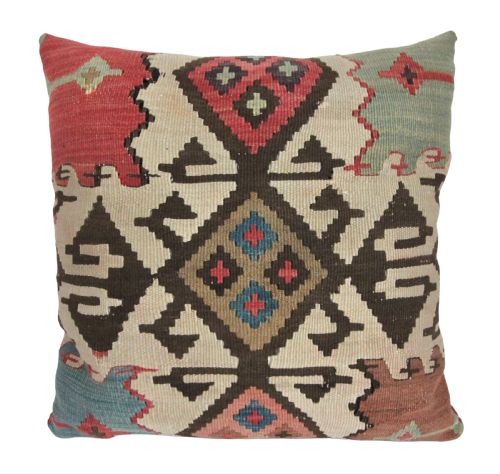
Anatolian Tribal Kilim
An anatolian tribal kilim brings flatwoven nomadic character to an interior through geometric motifs and dyed wool.
Anatolian Tribal Kilim
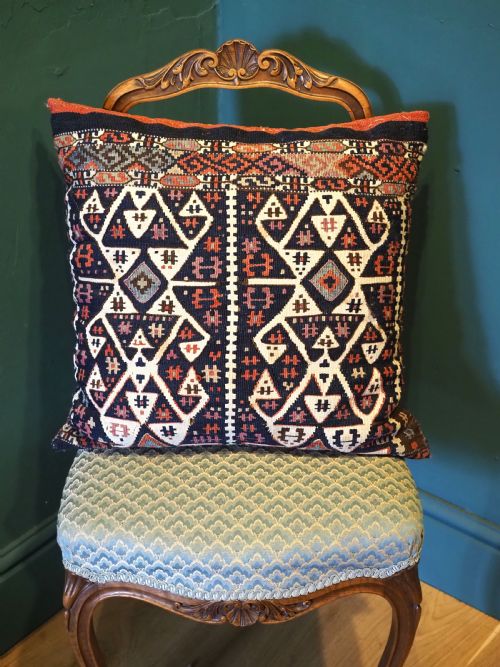
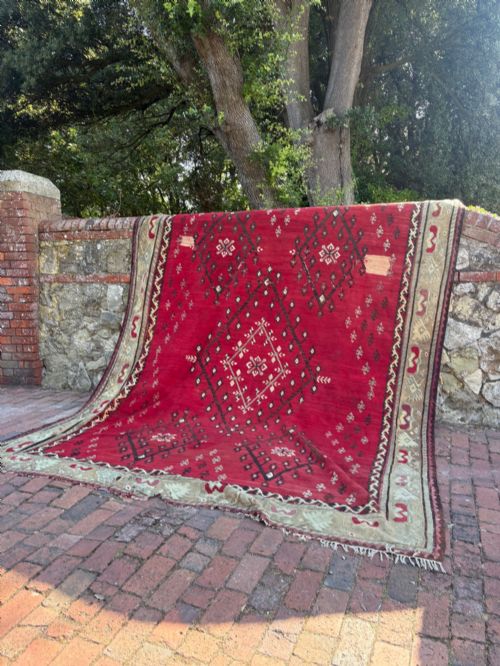
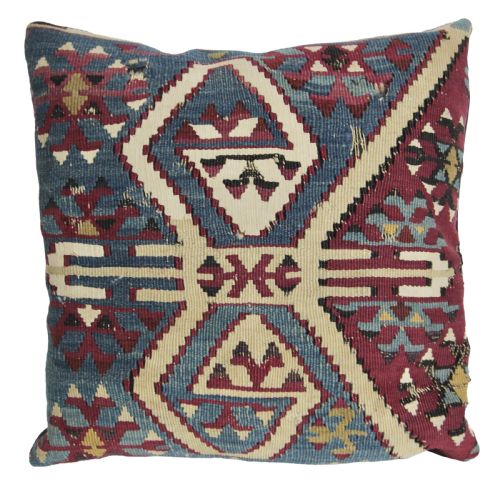
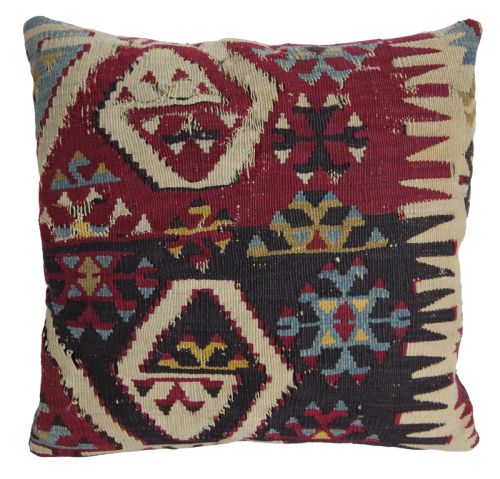
An anatolian tribal kilim is a flatwoven textile originating from regions such as Konya, Malatya, and Ushak, created by nomadic and village weavers. These pieces take several forms, including large floor carpets, long runners, prayer kilims, and cushions fashioned from saddle bags or bag faces.
The selection ranges from nineteenth-century pieces to twentieth-century examples, displaying regional patterns and traditional weaving structures. Buyers most frequently encounter scatter sizes, runners, and decorative cushions adapted from older utilitarian flatweaves.
Materials and Construction
These textiles are constructed primarily from wool, occasionally incorporating cotton foundations or leather elements on functional items like saddle bags and cushions. The flatweave technique relies on tightly packed warp and weft threads, sometimes woven in two separate parts and joined together down the centre.
Weavers utilised natural dyes to achieve soft reds and other traditional hues, producing geometric designs characteristic of nomadic groups such as the Yuruk, Kurdish, and Karakecili communities.
Object types include runner rugs, prayer kilims, saddle bag cushions, and large flatweaves.
Quality and Character
Quality in an anatolian tribal kilim rests on the integrity of the flatweave structure, the balance of the regional design, and the depth of the wool. Pieces that retain their original dimensions and distinct tribal motifs sit at the upper end of the scale.
Condition varies from timeworn examples with historical repairs to crisper twentieth-century specimens. The visual impact depends heavily on the preservation of the traditional patterns and the richness of the palette.
The Anatolian Tribal Kilim Glossary
- Kilim
- A flatwoven textile produced without a pile by tightly interweaving warp and weft strands. This technique creates a lightweight, durable fabric with smooth surfaces on both sides.
- Flatweave
- A method of weaving rugs and carpets without knotting pile yarn onto the warp threads. It results in a thin, versatile textile traditionally used for floor coverings and wall hangings.
- Saddle Bag
- A dual-pouch carrier woven by nomads for transport on animals, frequently separated into individual cushions or panels for modern interiors. These items display dense geometric patterns unique to specific tribal groups.
- Prayer Kilim
- A flatwoven rug featuring a mihrab design, traditionally used for daily prayers by pointing towards Mecca. These pieces often incorporate specific regional symbols unique to weaving centres like Obruk and Sivrihisar.
- Warp
- The stationary vertical threads stretched on a loom before weaving begins. The weft threads pass horizontally through these structural elements to form the fabric.
Anatolian Tribal Kilim: Frequently Asked Questions
What is an anatolian tribal kilim?
An anatolian tribal kilim is a flatwoven textile made by nomadic and village weavers across regions of Turkey. They were produced as utilitarian items like floor coverings, blankets, and storage bags.
Today, these textiles serve as decorative rugs, runners, and cushions that bring historical geometric patterns into modern spaces.
How were these kilims used originally?
Nomadic and village communities utilised flatweaves for everyday practical functions within tents and houses. They functioned as floor rugs, blankets, wall hangings, and animal transport bags.
Larger pieces covered tent floors, while smaller bags stored grain, salt, or personal possessions during seasonal migrations.
How do I live with an antique kilim?
Flatwoven textiles suit heavy traffic areas when paired with an appropriate rug underlay to prevent slipping. Regular gentle vacuuming without a rotating brush helps maintain the wool fibres.
Smaller formats and cushions offer versatile styling options for sofas, benches, and chairs without requiring floor space.
How do I identify different regional styles?
Regional styles depend on specific design motifs, colour palettes, and weaving structures associated with towns like Malatya, Konya, and Bergama. Certain groups wove large rugs in two separate parts joined down the centre.
Examining the handling of the wool and the geometry of the borders often reveals the specific Anatolian district of origin.