






Multicoloured Wool Kilim
These multicoloured wool kilim examples are flat-woven textiles offering vibrant tribal patterns for modern floors.
Multicoloured Wool Kilim
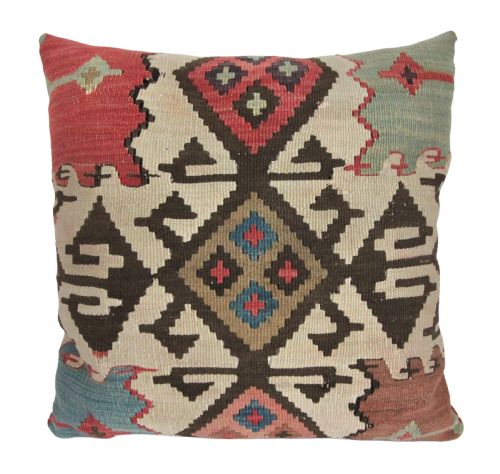
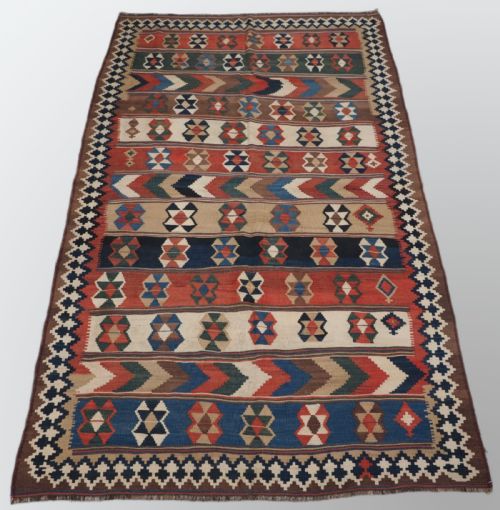
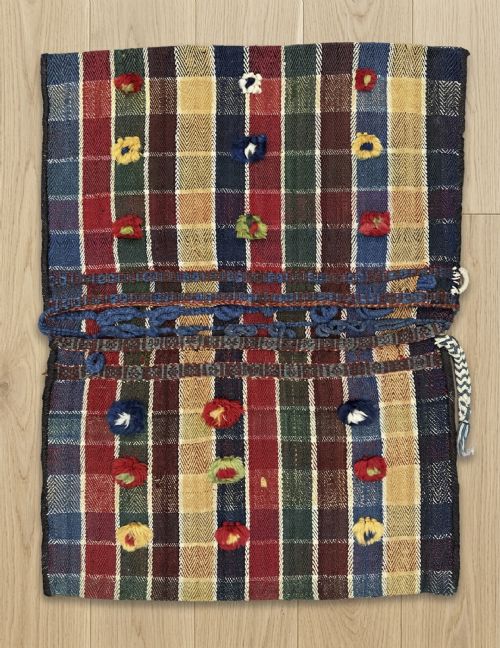
A multicoloured wool kilim is a flat-woven textile created by nomadic and tribal groups across Anatolia, Persia, the Caucasus, and Central Asia. These pieces range from large carpets and rugs to smaller utilitarian items such as storage bags, salt-bags, saddle-bags, bread sofrehs, and cushions.
The versions most commonly met on this page include Turkish regional kilims from centres like Bergama, Konya, Afyon, and Malatya, alongside Persian tribal works from Qashqai, Afshar, and Kurdish weavers. Buyers often encounter pieces spanning the mid-nineteenth century through the early twentieth century, showing distinct tribal and nomadic designs.
Tribal weaving traditions dictate the specific motifs and structures found across these flat-weaves, which were originally made for domestic use within nomadic tents and village houses. Their enduring appeal lies in the flat weave construction, which lacks a pile and relies on the interplay of colourful warp and weft threads.
What Varies in Quality
Quality in a multicoloured wool kilim rests upon the vibrancy and depth of the natural dyes, which determine the visual impact of the geometric and banded designs. Pieces that retain bold, harmonious palettes and crisp drawing command attention.
The fineness of the weave and the integrity of the hand-spun wool foundation dictate the structural endurance of the textile. Examples exhibiting careful execution in tribal motifs and well-preserved structural formats reflect the higher tier of these flat-woven works.
Multicoloured Wool Kilim Retail Price Guide 2026
Typical asking prices for multicoloured wool kilim among the pieces listed under this phrase on Sellingantiques today, from the lower quarter to the upper quarter. They describe what is for sale here now, not the wider market.
The listings span from the mid-nineteenth century through the 1930s, featuring wool, cotton, and natural dyes.
The Multicoloured Wool Kilim Glossary
- Kilim
- A flat-woven textile produced without a pile, traditionally used for floor coverings, wall hangings, and utilitarian bags. These pieces rely on interlocking weft techniques to create geometric patterns.
- Sofreh
- A spreading cloth used for kneading dough, serving food, or preparing bread within nomadic and village households. They often feature distinct central fields and border arrangements.
- Mafrash
- A large rectangular storage chest or bag used by nomadic groups for bedding and household goods during migration. They are typically woven in panels and assembled into a box shape.
- Warp
- The stationary vertical threads stretched across a loom that form the structural foundation of the textile. The coloured weft threads are passed over and under these structural elements.
- Weft
- The horizontal threads that are tightly packed across the warp to create the visible design and colour fields. In flat weaves, the weft entirely conceals the warp.
Multicoloured Wool Kilim: Frequently Asked Questions
How are kilims different from carpets?
Kilims are flat-woven textiles made without a pile, whereas traditional carpets have knotted vertical tufts that create a plush surface.
This lack of pile makes kilims lighter and thinner, allowing them to function easily as floor coverings, wall hangings, or cushion covers.
Where were these tribal kilims made?
These textiles originate from nomadic and village workshops across Anatolia, Persia, the Caucasus, and Central Asia.
Specific regions include Turkish districts like Konya and Malatya, as well as Persian tribal confederacies such as the Qashqai and Kurds.
How do I care for a wool kilim?
Maintenance involves regular gentle vacuuming without a rotating brush to prevent pulling the flat-woven threads.
Professional cleaning suited for antique textiles is recommended when deep cleaning becomes necessary to protect the natural dyes and wool.
How can I tell the age of a kilim?
Age is assessed through the analysis of natural dye palettes, the quality of hand-spun wool, and traditional tribal weaving structures.
Comparing structural characteristics and regional motifs with documented historical pieces helps narrow down the period of production.