
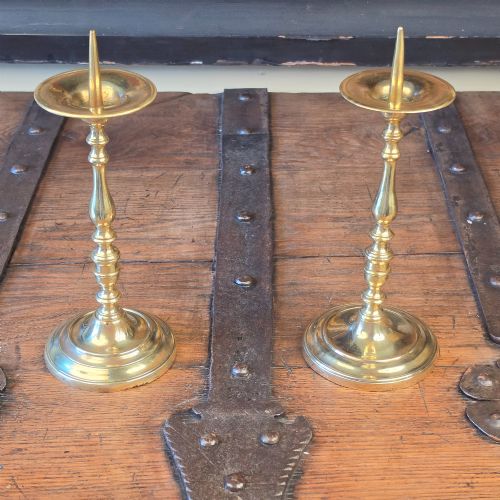
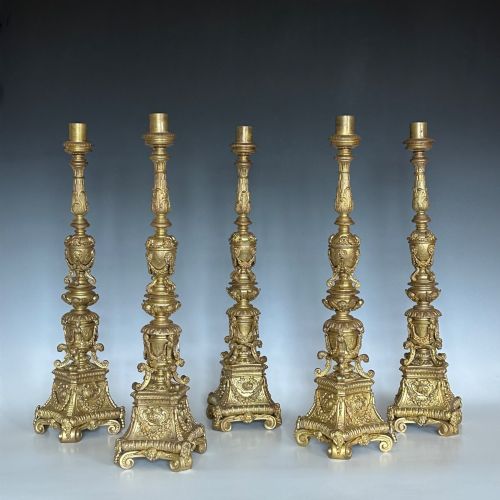
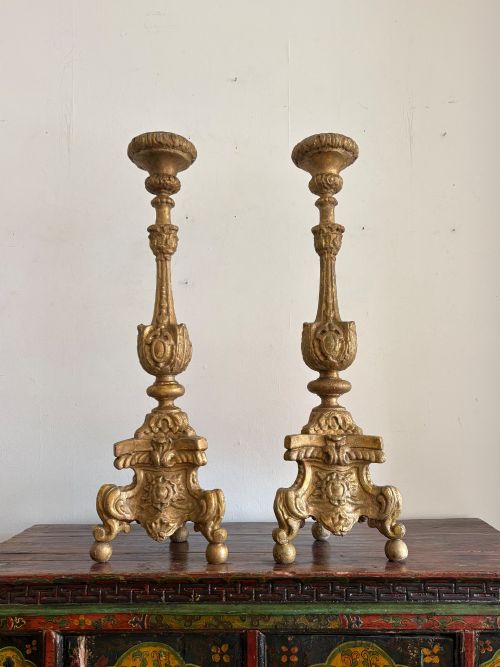
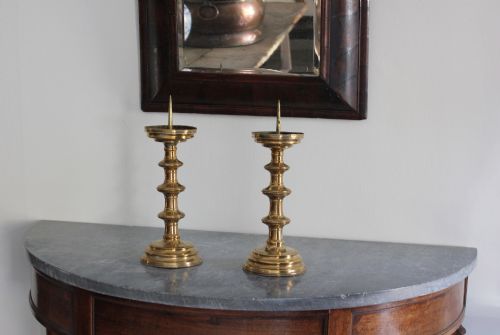




Altar Pricket Candlesticks
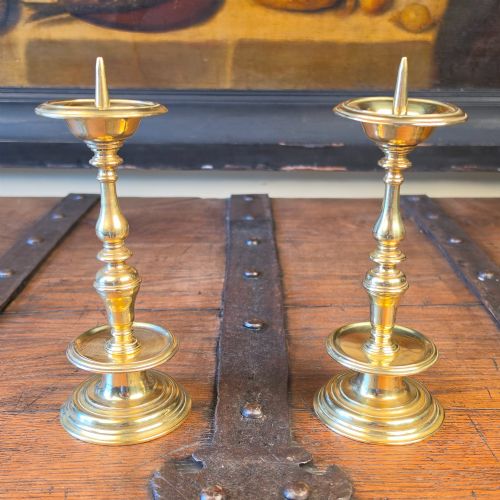
Altar pricket candlesticks are liturgical candle holders featuring a central spike to secure large candles, carrying centuries of ecclesiastical and domestic ritual into modern interiors.
Altar Pricket Candlesticks
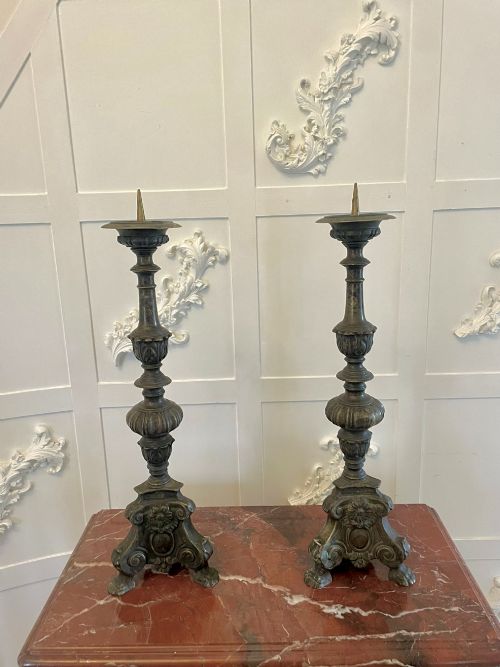
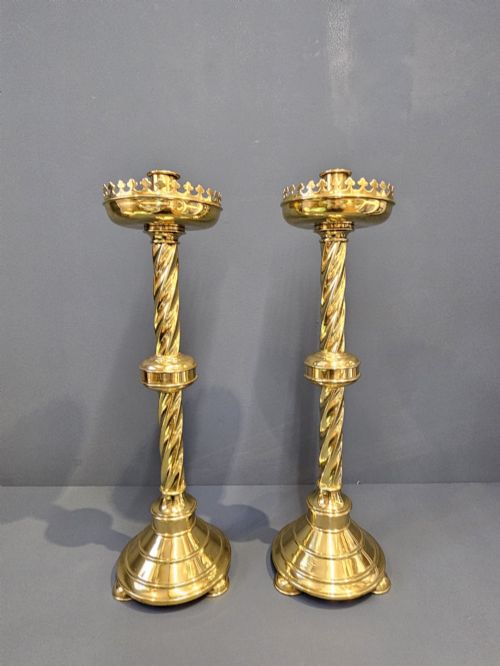
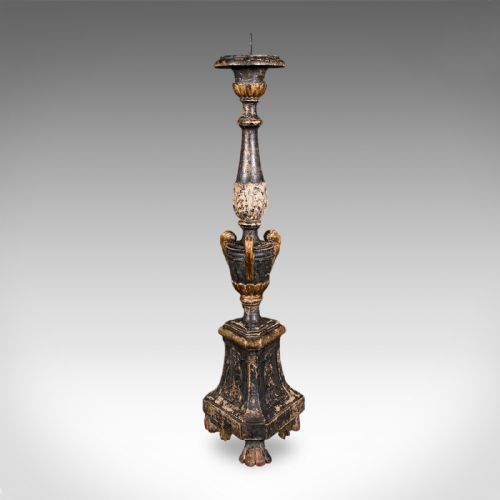
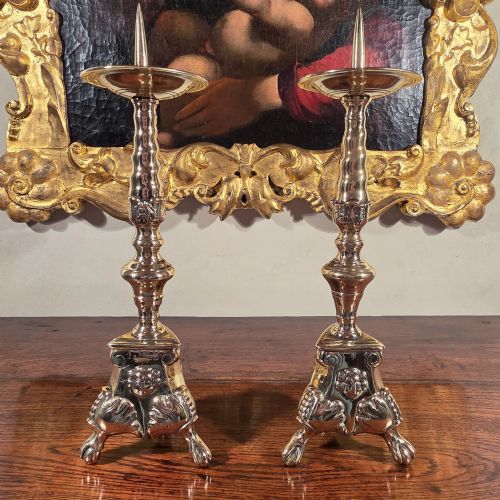
When you search for altar pricket candlesticks, you encounter monumental church fittings designed to hold large wax candles on liturgical altars. The pieces appearing here span from the seventeenth century through to the early twentieth century, showing substantial height and formal presence.
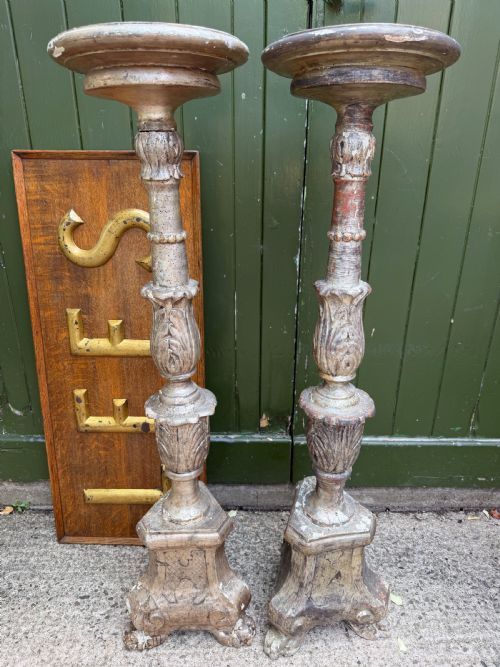
Italian Baroque and Gothic Revival examples dominate the selection, often taking the form of paired heavy brass or carved and giltwood shafts. Alongside these, you find substantial Amsterdam School copper and iron variants alongside rustic wooden interpretations.
The objects frequently cross over into domestic lighting through later conversions into table lamps, or remain in their original form as tall floor-standing torcheres and tabletop candle stands.
Materials and Construction
Carved timber provides the substrate for wooden pieces, which rely on traditional joinery before receiving layers of gesso, gold leaf, silver leaf, or polychrome paint.
Surface treatments combine hand-chased metal detailing with applied gilding that ages through natural oxidation and wear.
Evaluating Quality and Presence
The authority of a piece rests in the depth of its carving or the crispness of its metal casting, separating masterwork liturgical fittings from standard utility items. Original surface finishes, such as untouched period gilding or patinated bronze, dictate the visual integrity.
Proportion and scale drive the hierarchy, where towering heights and balanced symmetry create the commanding silhouette expected of serious church furnishings.
The Altar Pricket Candlesticks Glossary
- Pricket
- A sharp metal spike atop a candlestick designed to pierce the base of a large candle and hold it securely in place.
- Torchere
- A tall ornamental stand or candlestick originally designed to carry a light source, often carved from wood or cast in metal.
- Giltwood
- Timber that has been coated with a thin layer of gold leaf or gold paint over a prepared gesso base.
- Gesso
- A plaster-like mixture applied to wood surfaces to provide a smooth base for gilding or painting.
- Ormolu
- Finely chased and gilt bronze used for decorative mounts and luxury decorative objects during the eighteenth and nineteenth centuries.
Altar Pricket Candlesticks: Frequently Asked Questions
What is a pricket candlestick?
A pricket candlestick uses a vertical metal spike instead of a socket to hold a candle in place.
This design allows the candle to sit directly on a flat drip pan, which was standard for large church candles before the widespread adoption of socketed holders.
How were these candlesticks used?
These pieces stood upon church altars to illuminate liturgical services and display large wax offerings.
Over time, many of these tall stands migrated into domestic settings as decorative architectural elements or functional lighting.
Are converted lamps still valuable?
Conversion to electricity is common for tall church candlesticks to make them practical for modern home lighting.
Many collectors value the sculptural presence of the original metal or carved wooden shaft regardless of whether the wiring is modern or removable.
How do I date an antique candlestick?
Dating relies on identifying stylistic markers such as Baroque scrollwork, Gothic Revival tracery, or Amsterdam School abstraction.
Material composition, casting techniques, and the natural wear of the gilding or brass also provide clear clues to the century of origin.