

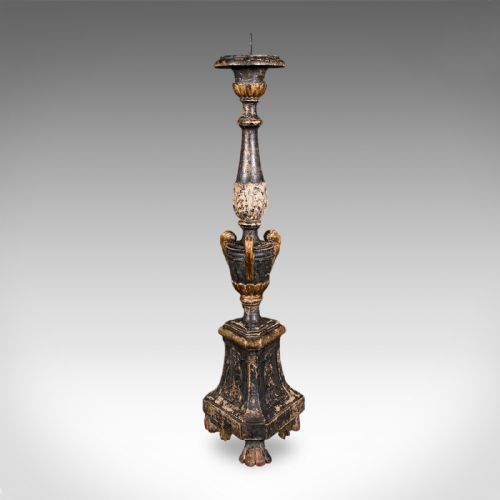


Altar Candle Holders
Altar candle holders bring ecclesiastical gravity into domestic rooms, offering towering brass, carved wood and gilt surfaces built for solemn rituals.
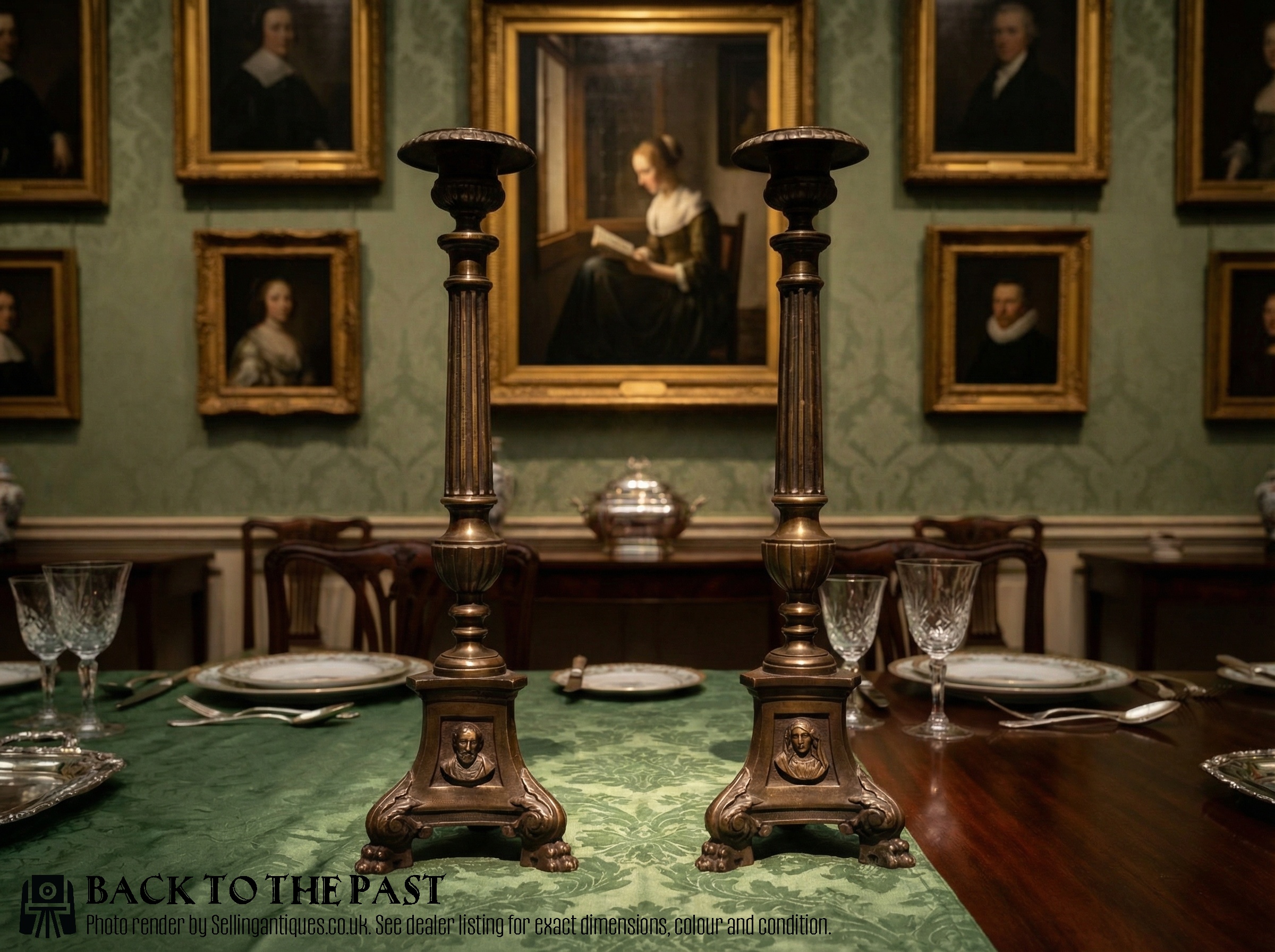
Altar Candle Holders
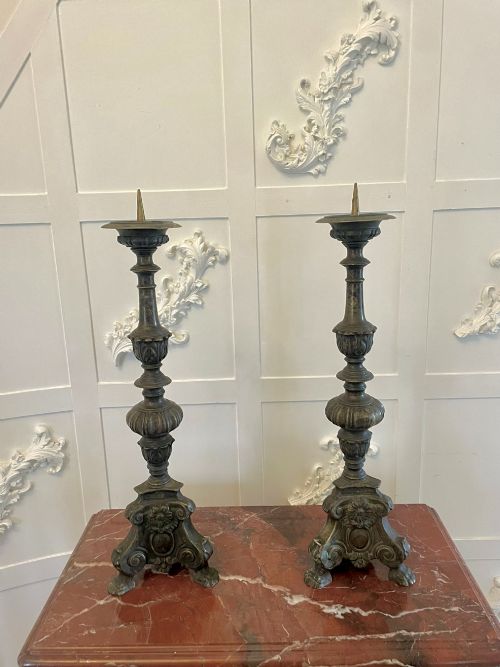
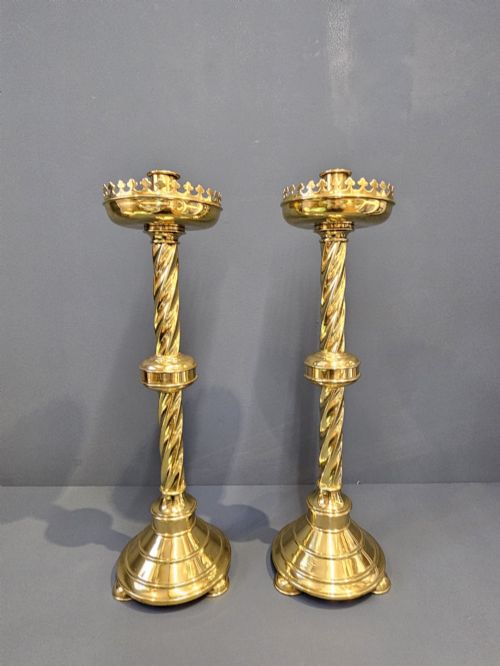
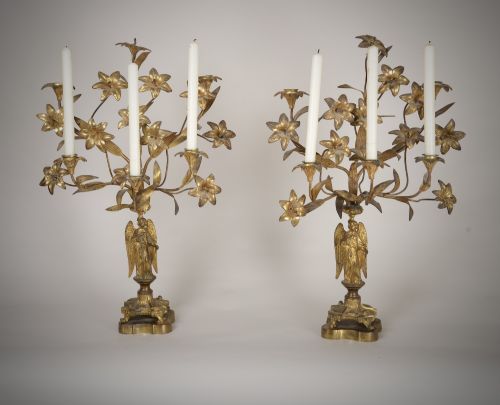
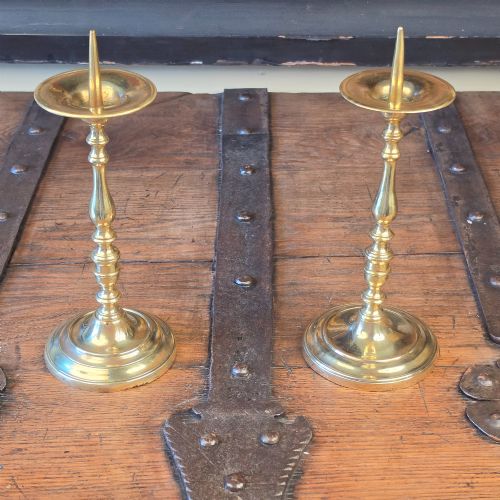
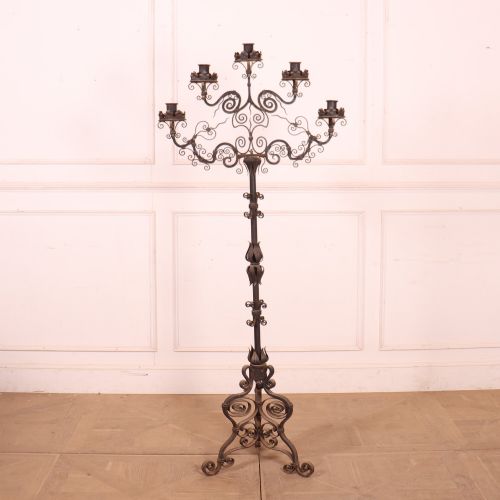
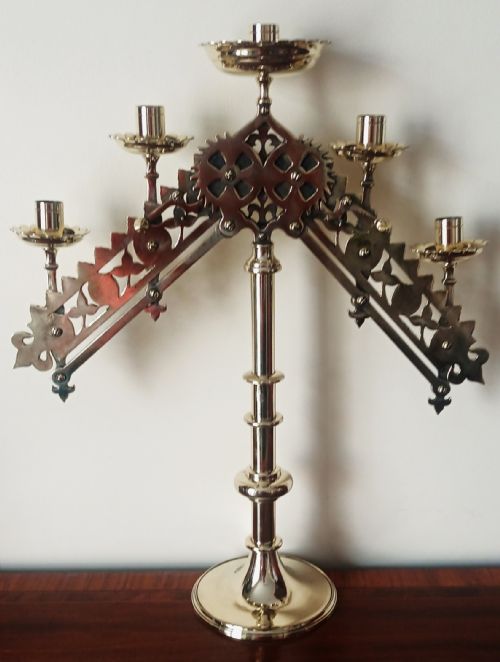
When you search for altar candle holders, you encounter heavy brass church candlesticks, tall floor-standing torcheres and carved wooden pricket stands originating from ecclesiastical settings. These pieces span several centuries, with Victorian brass examples and nineteenth-century Gothic revival designs appearing most frequently alongside earlier continental European works.
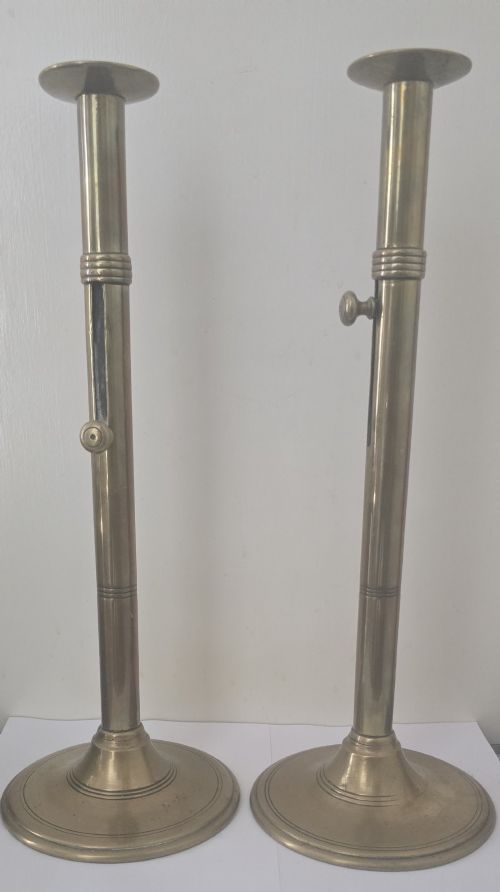
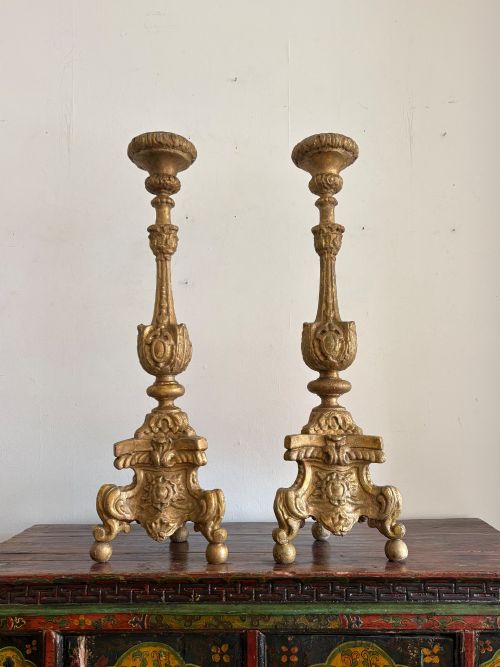
The selection ranges from modest table candlesticks with side ejectors to massive giltwood and polychrome Italian altar pieces that stand nearly a metre tall. Makers adapted forms from Georgian, Baroque and Amsterdam School traditions, producing both functional socket candlesticks and spiked pricket stands designed to hold large wax pillars.
Cast metals and carved timbers
Makers utilised cast brass, bronze and copper for the metal iterations, often turning components on a lathe before assembling heavy architectural columns and triangular bases. Iron and wrought iron elements provide structural support in larger floor-standing pieces and Amsterdam School designs.
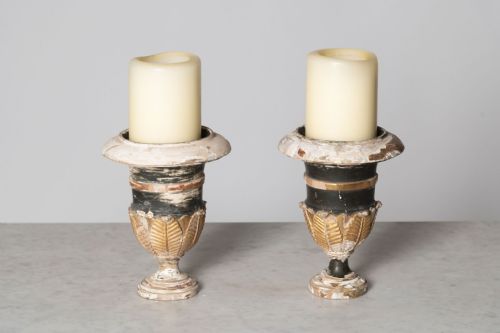
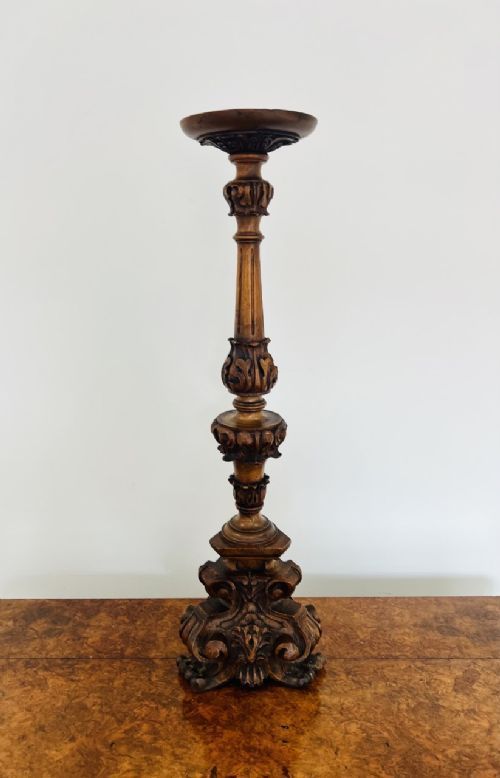
Wooden examples rely on carved walnut, pinewood, oak and treen, finished with gesso, gold leaf or painted polychrome details. Guilds and workshops applied layers of leaf over prepared gesso grounds to achieve the rich metallic sheen seen on Italian and French giltwood altar pieces.
The listings on this site span materials from cast brass and bronze to carved wood, gesso, iron and gold leaf across multiple centuries.
Substance and proportion
The distinction between ordinary production and superior work lies in the heft of the metal and the crispness of the turned or carved detail. Heavy, thick-walled brass castings retain sharper architectural mouldings and resist bending under the weight of large candles, whereas thin castings feel light and lack definition.
Proportion and surface finish further separate the examples. Hand-carving in wood shows depth and undercut relief rather than shallow mechanical shaping, and surviving original gilt surfaces or patinated bronze display an integrated ageing that mass-produced or later chemical treatments fail to replicate.
The Altar Candle Holders Glossary
- Pricket
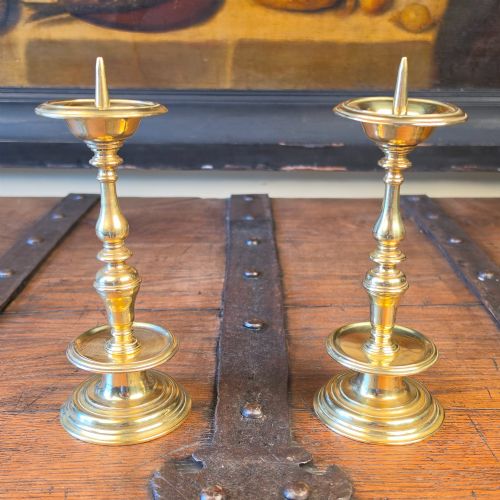
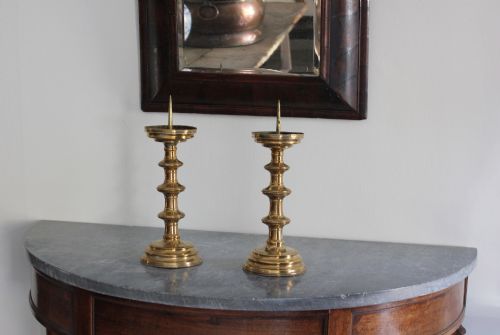
- A metal spike at the top of a candlestick designed to skewer and hold a large candle securely in place. This form predates the socket candlestick and remains common on ecclesiastical altar pieces.
- Torchere
- A tall stand or pedestal originally built to support a light source or candle. These pieces often feature elaborate carved wood or turned columns.
- Giltwood
- Timber that has been coated with a thin layer of gold leaf over a prepared gesso base. This technique was widely utilised on Italian and French ecclesiastical furnishings.
- Amsterdam School
- An architectural and design movement from the early twentieth century characterised by expressive forms, brickwork patterns and robust metalwork. Pieces from this tradition often combine brass and iron.
- Ejector
- A mechanical feature inside the stem of a candlestick operated by a small side lever to push out the remaining candle stub. This mechanism appears on Georgian and later domestic brass examples.
Altar Candle Holders: Frequently Asked Questions
What is a pricket candlestick?
A pricket candlestick uses a sharp metal spike instead of a socket to hold the candle. The base of the wax pillar presses directly onto this spike.
This design originated in churches where large wax tapers needed a secure mounting method that accommodated varying candle diameters.
How do I date antique brass candlesticks?
Dating relies on manufacturing marks, assembly methods, base construction and wear patterns. Earlier pieces often show heavier castings and distinct casting seams.
Stylistic cues such as Corinthian columns, Georgian ejector mechanisms or Amsterdam School geometry also point to specific decades.
Are these pieces suitable for everyday lighting?
Most pieces function well with standard taper candles, though pricket versions require candles with a base wide enough to sit stably on the spike plate. Floor-standing torcheres serve primarily as decorative architectural elements.
Care should be taken with older drip pans and wax accumulation to protect both the candlestick and the surface it rests upon.
What is the difference between domestic and church candlesticks?
Church candlesticks, or altar candle holders, are typically much taller and heavier than domestic table candlesticks. They were engineered to be viewed from a distance in large ecclesiastical spaces.
Materials frequently include robust brass, iron and heavy carved wood finished with gold leaf or polychrome paint.