





Ecclesiastical Altar Candle Stands
These ecclesiastical altar candle stands are heavy, purpose-built items designed to hold altar lights, drawing buyers who want genuine devotional metalwork or carved timber for domestic interiors.
Ecclesiastical Altar Candle Stands
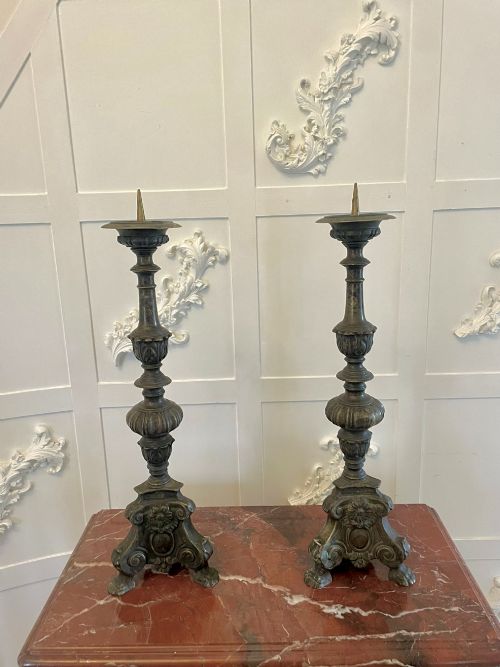
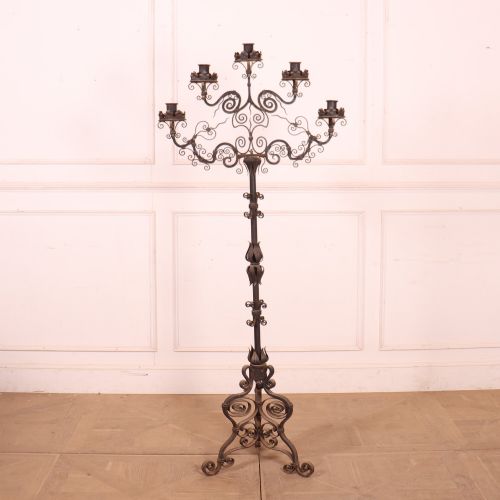
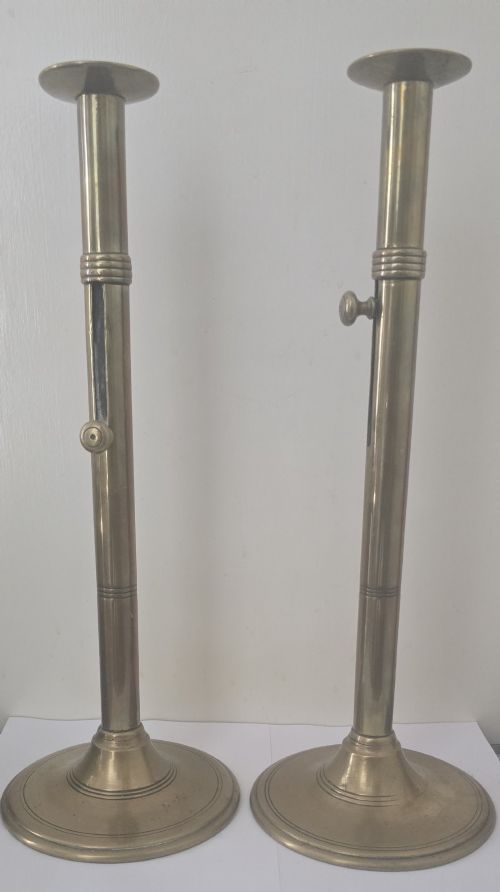
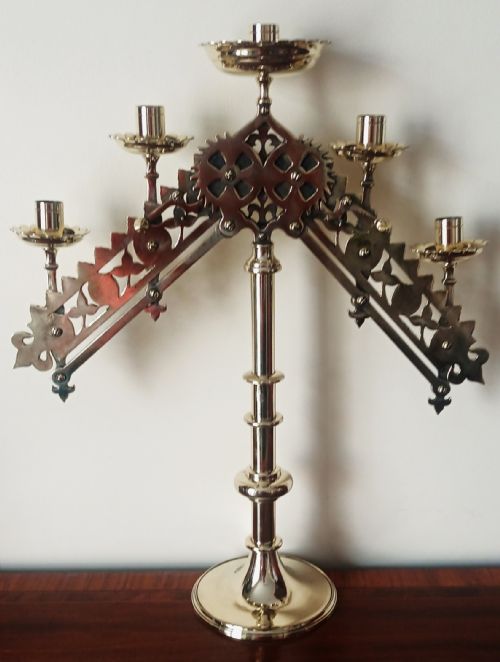
Ecclesiastical altar candle stands encompass floor-standing candelabras, heavy pricket sticks, and tall altar candlesticks originating from church settings across Britain and continental Europe. Buyers seeking ecclesiastical altar candle stands encounter robust brass, bronze, and carved wooden pieces that span from the seventeenth century through the Victorian period and into the early twentieth century.
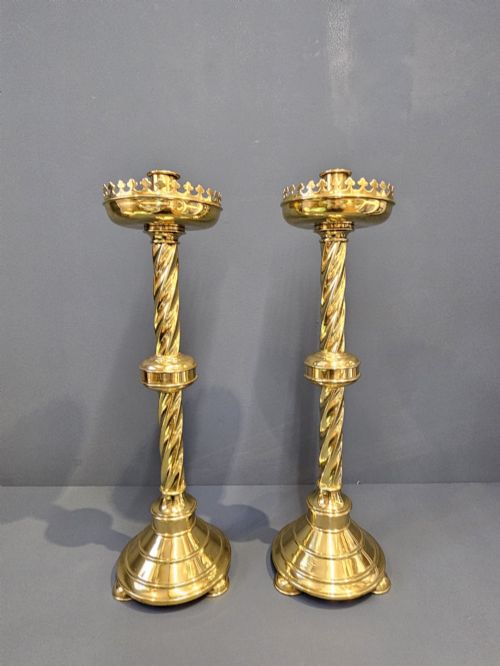
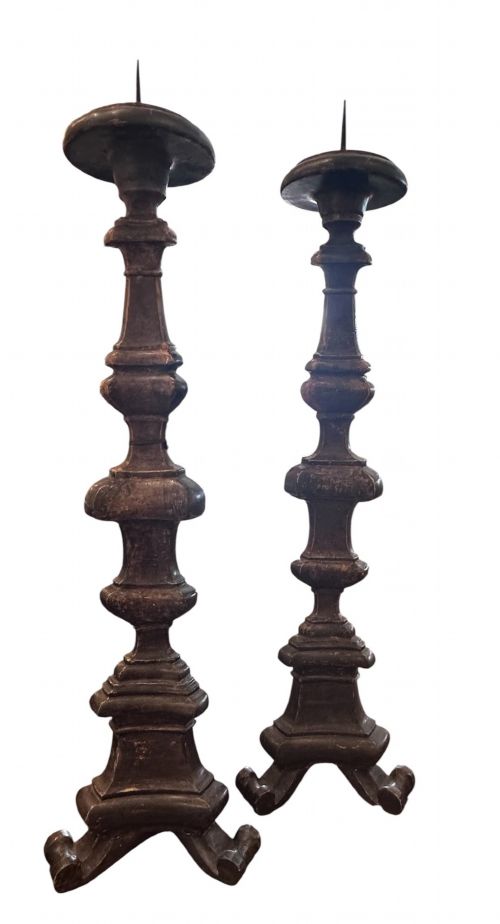
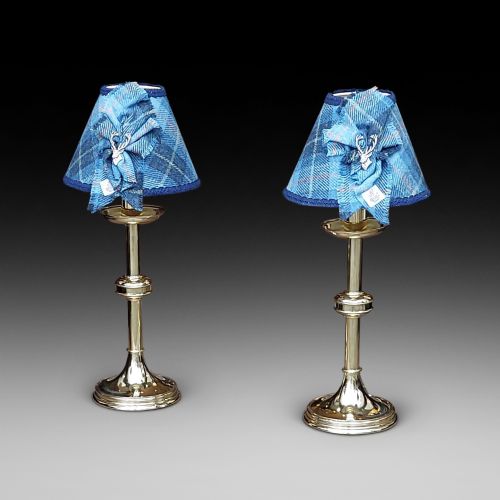
The selections on this page lean heavily toward nineteenth-century Victorian Gothic Revival brass pairs, alongside earlier eighteenth-century Italian floor-standing examples and seventeenth-century carved wooden figures. These objects range from modest table lamps converted from pricket sticks to large sets of four heavy brass candle holders meant for substantial altars.
Materials and construction
Foundry casting dominates the metal pieces, utilising heavy brass and bronze shaped into ornate shafts, drip pans, and wide bases. Many nineteenth-century examples employ multi-tier casting techniques to achieve the height and stability required for heavy church candles.
Wooden alternatives rely on hand-carved timber, gesso, and applied silver leaf or gold leaf, particularly in seventeenth-century and eighteenth-century continental pieces. These construction methods produce durable liturgical furnishings designed to withstand decades of ceremonial use.
Several pairs preserve the sharp metal prickets that once held thick church wax, ready to skewer your dinner party.
Defining quality
The caliber of an ecclesiastical altar candle stand rests on the crispness of its casting detail and the integrity of its original surface finish, whether patinated brass, bronze, or gilded wood. Pieces featuring intricate Gothic Revival ornamentation or deep hand-carved motifs display superior craftsmanship compared to plain utilitarian counterparts.
T Thomason & Co
The Ecclesiastical Altar Candle Stands Glossary
- Pricket
- A sharp metal spike on top of a candlestick designed to skewer the base of a candle rather than drop it into a socket. This traditional ecclesiastical form remains common on altar candlesticks.
- Gothic Revival
- An architectural and decorative style popular during the nineteenth century that mimics medieval pointed arches, trefoils, and heavy tracery. Much of the brassware here displays this distinctive aesthetic.
- Gesso
- A plaster-like mixture applied to wood surfaces as a base for paint or leaf gilding. It appears frequently on carved wooden candlesticks from continental Europe.
- Treen
- Small handmade wooden household objects and decorative items. In this context, it describes turned wooden components forming parts of older candlesticks.
Ecclesiastical Altar Candle Stands: Frequently Asked Questions
How do I style an altar candle stand at home?
These tall metal and carved wooden stands work effectively as floor-standing accents beside fireplaces or large pieces of furniture. Their vertical height helps fill empty corners without requiring table space.
Pairs look balanced when placed on wide sideboards or low architectural ledges, echoing their original placement on church altars.
How can I tell a Victorian Gothic Revival stand apart from an earlier piece?
Victorian Gothic Revival pieces usually feature crisp, machine-finished brass castings with predictable symmetry and heavy architectural detailing like quatrefoils. Earlier seventeenth-century or eighteenth-century examples often show the irregularities of hand-carved wood, gesso, and hand-beaten metal.
Continental European pieces from the eighteenth century also tend to employ silvered wood or unique classical proportions distinct from British church brass.
Can these candle stands be used with modern candles?
Pricket stands require candles with a soft enough base to press down onto the central metal spike, or candles that have been drilled to fit the point. Socket-based candlesticks accept standard taper candles depending on the inner diameter.
Many tall stands from the nineteenth century have also been converted into lamp bases, offering alternative domestic lighting options.