




Allegorical Female Figurine
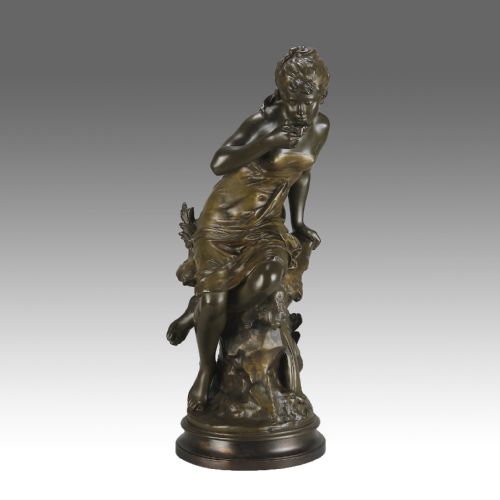
An allegorical female figurine brings personified ideas of art, seasons, and virtues straight into your room in bronze, porcelain, and carved alabaster.
Allegorical Female Figurine
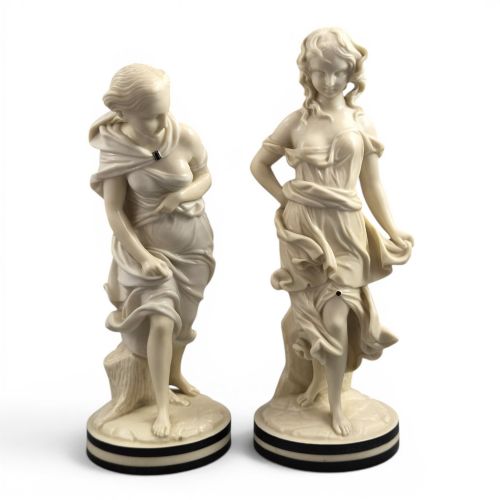
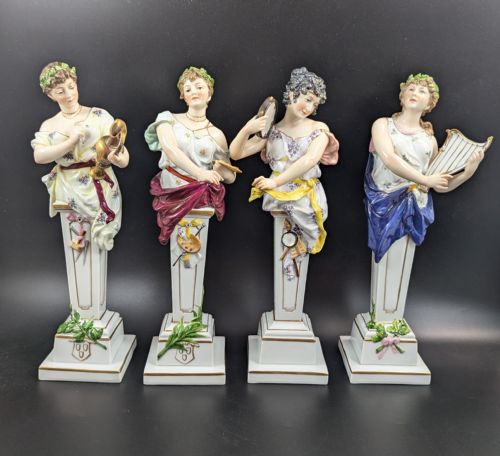
An allegorical female figurine depicts personified concepts such as spring, harvest, art, and modesty through classical and romantic imagery. These pieces span the nineteenth century, including Victorian works and later Art Nouveau designs.
Originating predominantly from French, German, and Italian workshops, these sculptures utilise styles including Neoclassical Revival, Rococo Revival, and fluid Art Nouveau lines. They serve as decorative focal points that carry symbolic narratives from historical interiors.
Materials and construction methods
Bronze sculptures and spelter figures are produced through metal casting, capturing intricate drapery and delicate facial expressions. Many metal examples receive surface treatments such as gold leaf application or patination to enhance their visual depth.
Porcelain figurines, including Parian ware and pieces from factories like Volkstedt and Royal Worcester, are shaped in moulds and hand-painted or glazed. Alabaster sculptures rely on meticulous hand carving to achieve translucency in female forms.
Even modesty and gaiety require a solid metal stance when cast as French statues.
Judging the quality of the sculpture
The standard of an allegorical female figurine rests on the crispness of the casting or the finesse of the carving in materials like alabaster and wood. Superior pieces exhibit deeply detailed hands, hair, and drapery that avoid the softness found in secondary casts.
Surface finish and hand-painting distinguish finer porcelain and bronze works, where careful coloration and patination bring out the allegorical theme. Maker attributions and signatures from established sculptors elevate the standing of a piece within its period.
Mathurin Moreau·James Hadley·Ernst Barrias·Pugi·Volkstedt·Achille Mollica·Aug. Moreau
The Allegorical Female Figurine Glossary
- Allegory
- The representation of abstract ideas through human figures and symbols. This technique allows a sculpture to embody concepts like art, nature, or the seasons.
- Parian ware
- A fine-grained, unglazed porcelain developed in the nineteenth century that mimics carved marble. It is frequently utilised for classical female figures and portrait busts.
- Spelter
- A zinc alloy used as a less expensive alternative to bronze for decorative figures. It is usually given a bronze-coloured metallic finish.
- Patina
- The surface coloration and sheen acquired by bronze over time or applied chemically by the maker. A good patina highlights the underlying metalwork and contours.
- Neoclassical Revival
- A style drawing inspiration from classical antiquity, particularly Greek and Roman art. Figures from this movement often wear classical drapery and display restrained poses.
Allegorical Female Figurine: Frequently Asked Questions
What is an allegorical female figurine?
An allegorical female figurine is a sculptural representation of an abstract concept, virtue, or season portrayed in the form of a woman. Common examples depict figures symbolizing spring, nature, art, or modesty.
These pieces were produced primarily during the nineteenth century in materials such as bronze, porcelain, and carved alabaster to decorate period interiors.
How were these figures displayed originally?
These sculptures were designed to sit on mantelpieces, console tables, and pedestals within Victorian and continental drawing rooms. Pairs were often placed symmetrically to balance a fireplace or cabinet top.
Their presence added a layer of classical education and sophisticated taste to a home through recognised symbolic imagery.
What periods do these pieces come from?
The pieces seen here date predominantly from the nineteenth century, stretching from the Victorian era through the late 1800s and into early twentieth-century movements like Art Nouveau.
Stylistic shifts range from Neoclassical and Rococo revivals to the organic, flowing lines characteristic of nineteen-hundreds design.