




Rococo Revival Statuette
A rococo revival statuette brings theatrical eighteenth-century energy and exquisite detail to a room, capturing playful putti, musicians, and elegant figures in porcelain or bronze.
Rococo Revival Statuette
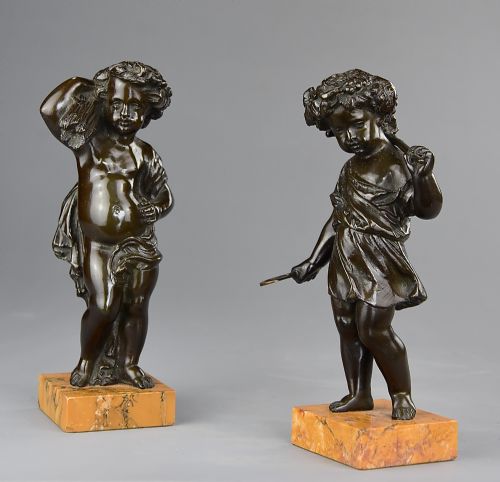
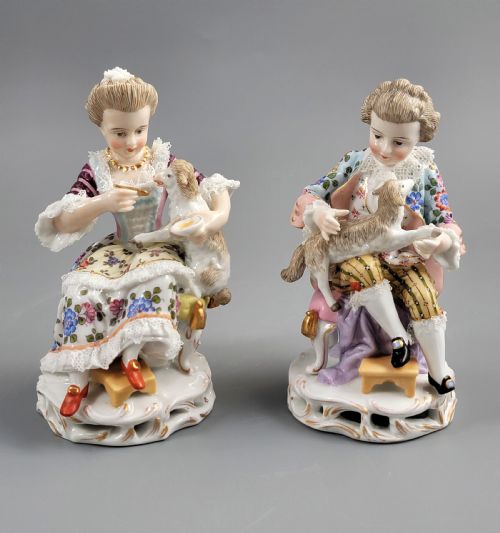
When you search for a rococo revival statuette, you are looking at nineteenth-century decorative sculpture inspired by earlier French tastes, spanning delicate porcelain figurines and cast bronze figures. These pieces frequently depict allegorical themes, children with animals, or young gallants set within ornate, flowing contexts.
The versions you are most likely to meet on this page date from the nineteenth century, including Victorian interpretations and continental European porcelain from German and French factories. They range from single cabinet figures to paired decorative groups and occasionally bronze cherubs adapted as table lamps.
How they were made
Hard-paste porcelain and bronze form the primary material foundation for these sculptures, often enhanced with enamel painting, gilding, and gold leaf. Porcelain pieces rely on detailed moulding and hand-painting to articulate clothing, foliage, and facial expressions.
Bronze statuettes utilise metal casting techniques to achieve fluid movement and fine surface textures, occasionally complemented by marble bases. Many porcelain figures employ bocage backgrounds, featuring intricate applied leaves and floral elements surrounding the central subjects.
Listings feature nineteenth-century porcelain, hard-paste porcelain, bronze, marble, enamel, and gold leaf across Victorian and continental European origins.
What varies in quality
In porcelain groups and bocage works, quality reveals itself in the delicacy of the applied foliage and the structural stability of outstretched limbs. Bronze castings show superiority through sharp chasing of surface details and smooth, considered integration with any mounting or base.
Triebner Ens And Eckert·Vion Et Baury·Helena Wolfsohn
The Rococo Revival Statuette Glossary
- Bocage
- A decorative background of applied leaves and flowers surrounding a ceramic figure. This technique mimics natural foliage and appears frequently in eighteenth-century and revival porcelain.
- Biscuit porcelain
- Unglazed ceramic fired to a matte finish that resembles marble. This material highlights sculptural form and subtle modelling without the distraction of a glossy glaze.
- Allegorical figure
- A sculpture representing an abstract idea or season, such as Autumn or Spring, through human or mythological forms. These pieces often carry specific attributes like harvest crops or flowers.
- Hard-paste porcelain
- A durable ceramic composition fired at high temperatures using kaolin and petuntse. It provides a crisp, bright base for enamel colours and detailed hand-painting.
- Putto
- A plump, winged child figure, often representing a cupid or angelic spirit in classical and revival art. Pairs of these figures frequently depict seasonal themes or musical pursuits.
Rococo Revival Statuette: Frequently Asked Questions
What are rococo revival statuettes?
These decorative sculptures are nineteenth-century interpretations of earlier French artistic styles, created in porcelain or bronze.
They typically portray figures, putti, and allegorical scenes with ornate, flowing forms designed for interior display.
How were porcelain figurines used?
They served as decorative centrepieces on mantelpieces, tables, and cabinets within Victorian and continental interiors.
Owners arranged them to demonstrate cultural refinement and appreciation for historical European artistry.
How do I identify a Victorian piece?
Look for factory marks, paste characteristics, and manufacturing methods associated with nineteenth-century European kilns and foundries.
Stylistic cues often combine eighteenth-century motifs with the distinct production standards of the 1850s to 1890s.
How should I clean porcelain figures?
Dust them gently with a soft, dry brush to prevent accumulation without risking delicate applied elements like bocage leaves.
Avoid liquid cleaners or submerging painted porcelain, as moisture can damage fragile enamels and historic gilding.