
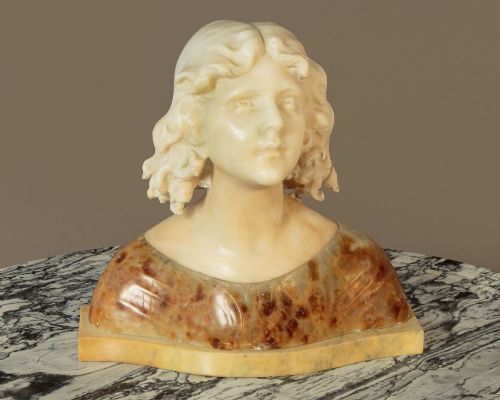


Alabaster Female Figure
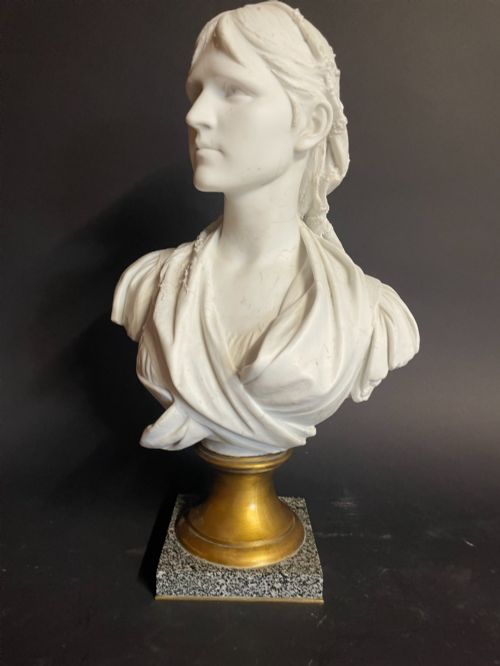
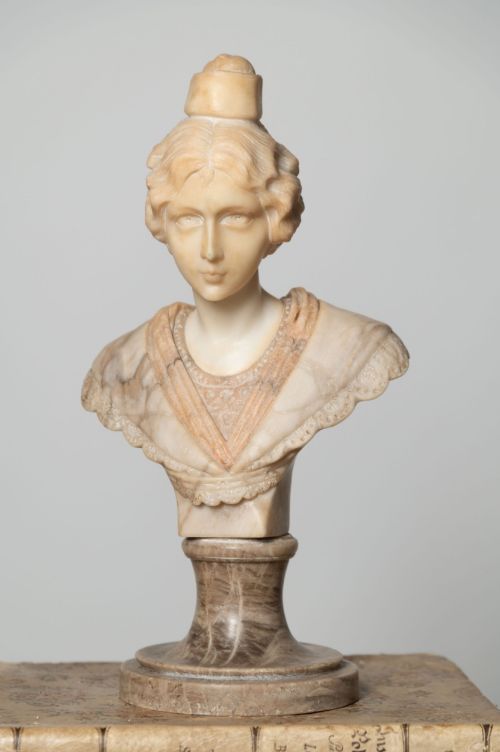
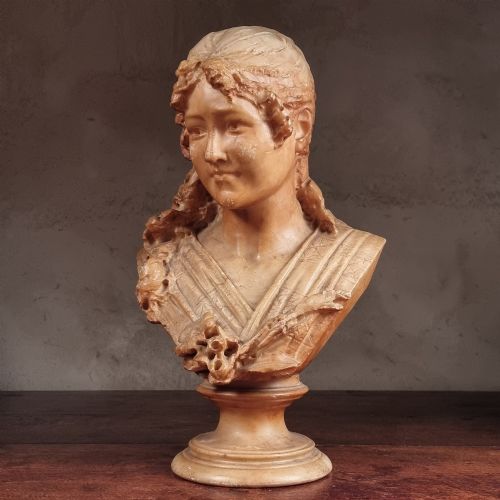
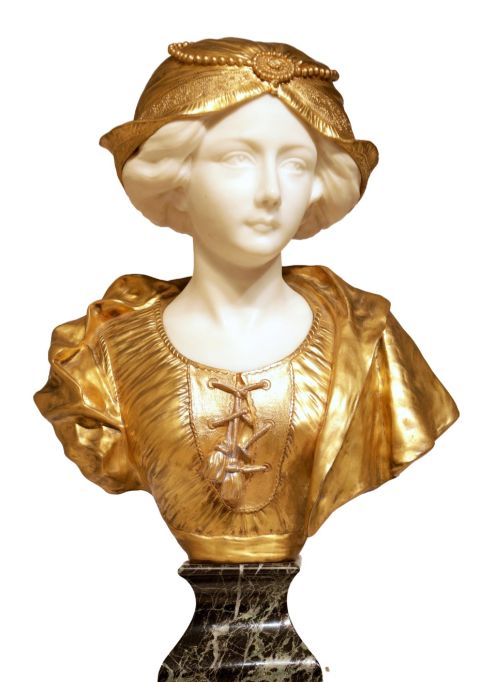
An alabaster female figure brings classical grace or period character to a room, captured in tactile stone by European workshops.
Alabaster Female Figure
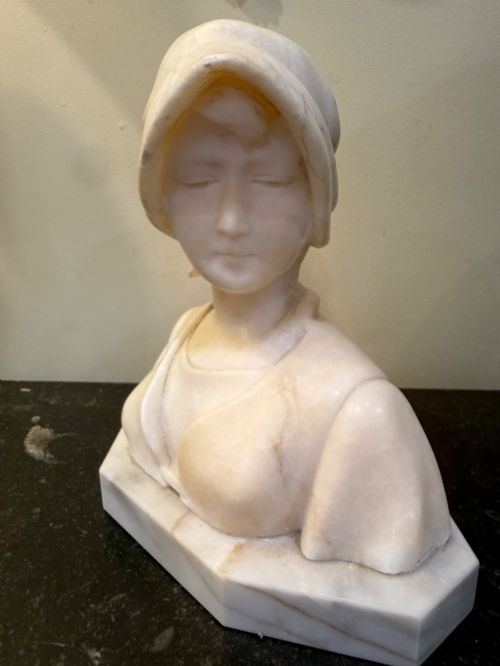
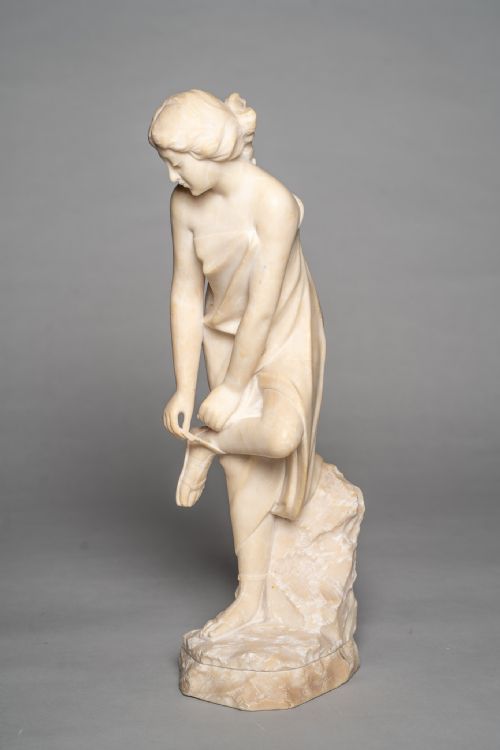
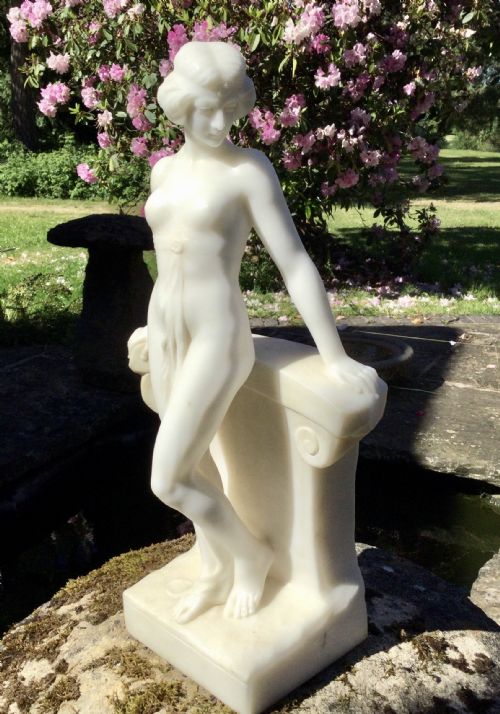
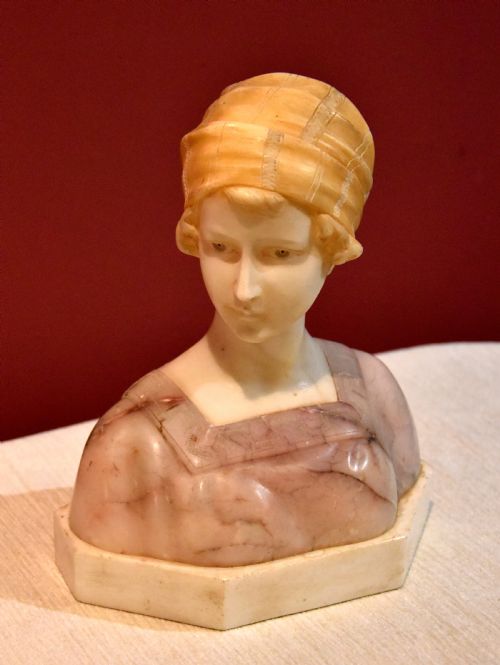
An alabaster female figure is a carved sculpture, bust, or lamp depicting women in various classical, allegorical, or modern poses. When searching for an alabaster female figure, buyers encounter works ranging from Victorian portraits to Art Deco dancers.
Most examples originate from Italian and French studios active between the mid-nineteenth century and the interwar period. These pieces take the form of busts, full-length reclining nudes, standing figures, and functional objects such as bookends and table lamps.
The aesthetic shifts from heavy Victorian and Neoclassical formality through the fluid lines of Art Nouveau to the geometric styling of Art Deco. Italian carvers and French foundries dominate the selection, often combining stone with metals like bronze or spelter.
Materials and construction methods
Makers shaped these figures primarily from quarried alabaster and marble, utilising the soft translucency of the stone to mimic human skin and drapery. Sculptors carved the main body by hand, sometimes combining white stone with darker marble bases or multi-tone mineral elements.
Mixed media constructions frequently pair carved alabaster with cast bronze, gilt bronze, spelter, or silver-plated metal fittings. Lamps and illuminated figures integrate internal wiring and glass components to let light pass directly through thin sections of the stone.
Several ladies hold wheat sheaves or play the lyre, proving that classical goddesses also enjoyed a productive hobby.
Distinctions in craftsmanship
Quality rests upon the crispness of the carving in details like hair, hands, and facial expression. Finer sculptures display subtle modulation in the stone, whereas coarser pieces rely on heavy casting or lack depth in the drapery.
The integration of mixed materials alters the character of the piece, as seen where cast metal elements meet hand-finished stone. Signed works by established sculptors demonstrate superior proportions and more ambitious poses than anonymous factory output.
Affortunato Gory·Auguste Henri Carli·Fritz Kochendorfer·Gugielmo Pugi·Giuseppe Gambogi
The Alabaster Female Figure Glossary
- Alabaster
- A soft, fine-grained stone that allows light to pass through its surface, making it popular for detailed figure carving. Sculptors value it for its smooth texture.
- Spelter
- A zinc alloy used as a substitute for bronze in decorative figures and lamp bases. It takes patination well but is softer than copper-based metals.
- Ormolu
- Gilded bronze applied to mounts, bases, or decorative accents on stone sculptures. It provides a bright metallic contrast to matte white stone.
- Bust
- A sculpted representation of a person from the chest up. These portrait pieces often sit on integrated marble plinths.
Alabaster Female Figure: Frequently Asked Questions
How are lamps integrated into these sculptures?
Some sculptures incorporate internal lighting systems designed to illuminate the translucent stone from within. This highlights the grain and warmth of the material when lit in a room.
Wiring in antique pieces should be checked by a professional to ensure safety. Many retain original metal fittings combined with glass elements.
What is the difference between marble and alabaster?
Marble is a hard metamorphic rock that resists scratching and has a dense, crystalline structure. It is typically heavier and used for monumental sculptures and structural bases.
Alabaster is softer, easily scratched by a fingernail, and possesses a waxy translucency. This softness allows carvers to achieve fine, delicate folds in drapery.
How do I identify Art Deco pieces?
Art Deco figures from the nineteen-twenties feature stylized geometry, streamlined clothing, and dynamic poses like dancers or bathers. They often combine carved stone with silver plate or contrasting metals.
Earlier Victorian and Art Nouveau works tend toward romantic drapery, naturalistic hair, and softer classical themes. Period signatures and base materials help confirm the date.