


Italian Alabaster Statue
An italian alabaster statue brings the tactile warmth of carved stone into a room, offering classical figures and modernist dancers shaped by Italian hands.

Italian Alabaster Statue
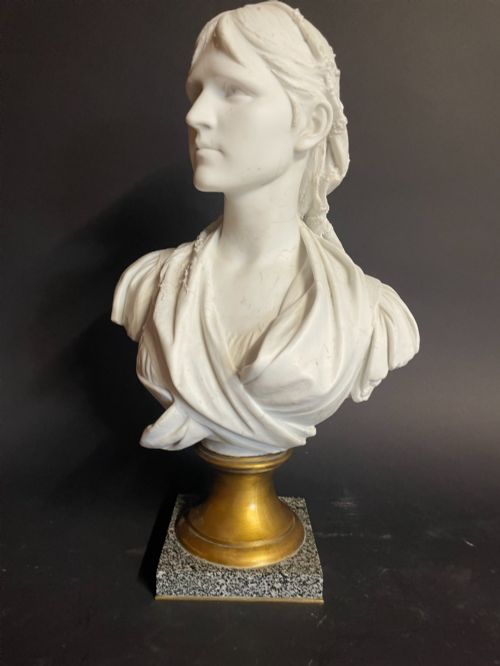
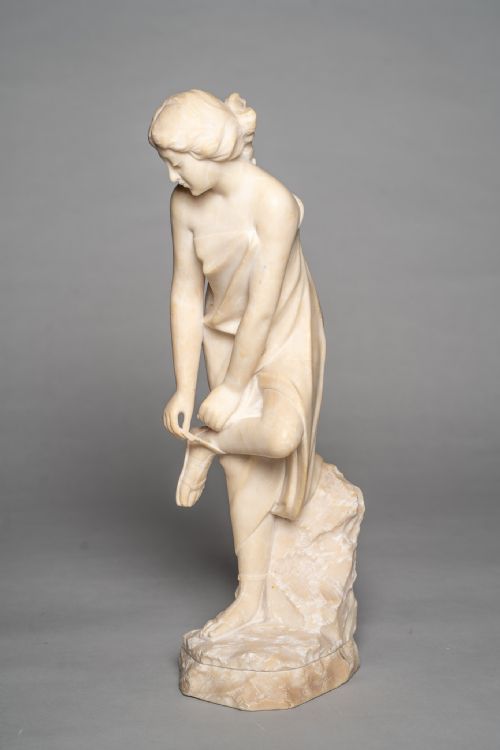
When you search for an italian alabaster statue, you enter a world of carved stone figures spanning the nineteenth century into the early twentieth century. The pieces you are most likely to meet on this page include classical busts, mythological subjects, and figures of young children or dancers.
These sculptures originate from Italian workshops, drawing on stylistic traditions from neoclassical designs to art nouveau and art deco movements. Grand tour souvenirs and grander gallery sculptures both appear among the listings, capturing the breadth of Italian stone-carving output.
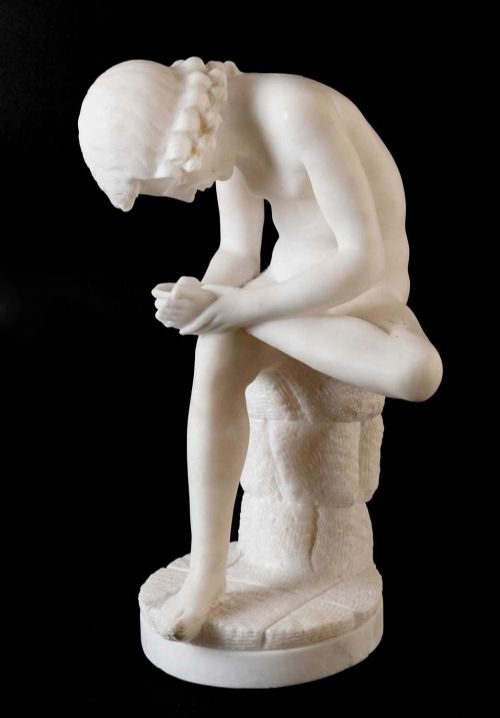
Makers and sculptors often signed their work directly into the material, ranging from detailed studies of females to historical subjects like the spinario. Collectors encounter forms that vary from cabinet-sized busts to large floor-standing sculptures.
What varies in quality
The quality of an italian alabaster statue rests on the depth of the carver's anatomical understanding and the crispness of the detail in hair, drapery, and expression. Finer examples show a master's hand in the subtle undercut of a fold or the delicate translucency of the stone.
Larger scale works and signed pieces by noted sculptors command attention for their ambitious composition and the quality of the raw block selected. The integration of mixed materials, such as contrasting marble bases or metal mounts, also distinguishes standard production from exceptional studio pieces.
Children pushing a tiny cart in solid stone remind us that nineteenth-century carvers enjoyed bringing playful domestic scenes to life.
A. Gamay·Antonio Frilli·Pugi·Cipriani·Gugielmo Pugi·P. Emilio Fiaschi
The Italian Alabaster Statue Glossary
- Alabaster
- A soft, fine-grained stone used for carving, prized for its translucency and smooth finish. It allows light to penetrate slightly beneath the surface.
- Carrara Marble
- A type of white or blue-grey marble from the city of Carrara in Tuscany, frequently used alongside alabaster for sculptural bases and figures.
- Grand Tour
- A traditional trip of Europe undertaken by upper-class Europeans, during which many small marble and alabaster sculptures were acquired as souvenirs.
- Spinario
- A Greco-Roman Hellenistic sculpture depicting a boy pulling a thorn from his foot, which inspired later antique revival figures.
- Neoclassical
- A style rooted in the art of classical antiquity, focusing on heroic or mythological subjects with balanced, restrained compositions.
Italian Alabaster Statue: Frequently Asked Questions
Where should I display my sculpture?
Place your stone figure on a sturdy table, console, or pedestal away from direct sunlight and high-traffic areas where it might be knocked. Stable indoor humidity is ideal for preserving the integrity of soft carved stone.
Keep the piece away from direct heat sources such as radiators, which can cause thermal stress to antique stone and mixed-media mounts.
How can I tell the period of a piece?
Examine the stylistic cues, such as the flowing organic lines of art nouveau or the geometric reductions of art deco. Signatures carved into the base often point to active working dates of known late nineteenth or early twentieth-century Italian sculptors.
The choice of accompanying materials, such as veined carrara marble or specific brass mount styles, also helps narrow down the decade of creation.
Are these sculptures solid stone?
Most examples listed are carved from solid blocks of natural alabaster or marble, though some larger compositions combine multiple carved sections. Bases and supporting elements frequently incorporate contrasting materials like granite or metal.
The natural weight of the stone provides inherent stability, though larger figures often feature internal pins or integrated plinths.