
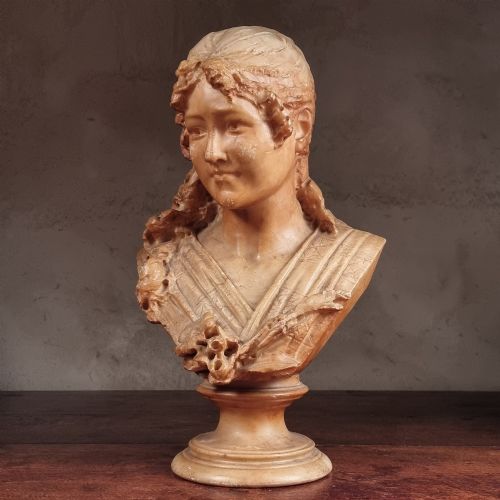
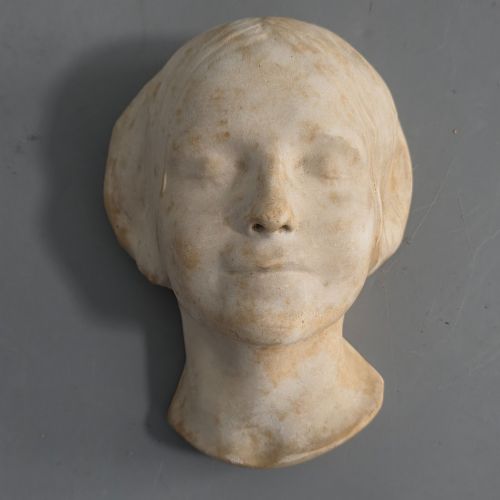


19th Century Alabaster Sculpture
A 19th century alabaster sculpture brings classical elegance and tactile warmth into a room, offering finely carved figures and busts from European workshops.
19th Century Alabaster Sculpture
How They Were Made
Sculptors utilised fine-grained stones, principally alabaster and Carrara marble, alongside mixed media additions like bronze, spelter, and wood bases. Artisans shaped these materials using chisels, rasps, and abrasive powders to achieve smooth drapery, hair texture, and polished skin tones.
Many Italian and French works relied on traditional reduction techniques and studio casting methods, sometimes combining carved stone figures with metal mounts or clock movements. Two-tone effects and veined variations in the raw material dictated how carvers articulated light across a subject's form.
Several pieces depict domestic animals, including carved Derbyshire dogs and attentive eagles, keeping watch beside classical goddesses.
What Varies in Quality
Quality rests upon the sensitivity of the carving, particularly in the rendering of facial expressions, hands, and the subtle fall of fabric. Works signed by documented sculptors or produced in established Italian and French workshops display superior anatomical precision and polish.
The selection of the stone itself dictates the visual depth of a piece, with translucent white alabaster and richly veined marbles commanding greater visual presence than opaque or heavily repaired alternatives.
Bright And Sons·Mieczyslaw Leon Zawiejski·Antonio Frilli·Pugi·Gugielmo Pugi·P. Emilio Fiaschi·R.Lusili·Etienne Maurice Falconet·A.Cipriani·Prof. E. Montony
The 19th Century Alabaster Sculpture Glossary
- Alabaster
- A fine-grained, translucent stone prized for sculpture because it permits light to penetrate slightly beneath its surface. It feels softer to the touch than marble and allows for delicate carving.
- Grand Tour
- A cultural journey undertaken by wealthy young Europeans in the nineteenth century, collecting small sculptures and plaques as travel souvenirs. These items were often reduced copies of classical antiquities.
- Neoclassical
- An artistic style drawing inspiration from the classical art and culture of ancient Greece and Rome. It emphasises restraint, proportion, and mythological subject matter.
- Spelter
- A zinc alloy commonly used in nineteenth-century manufacturing as a less costly alternative to bronze. It was frequently painted or electroplated to imitate heavier metals.
19th Century Alabaster Sculpture: Frequently Asked Questions
Where should I display a marble bust?
Place your bust on a sturdy pedestal, console table, or plant stand where it receives stable indirect light. Ensure the supporting furniture matches the weight of the stone to prevent tipping.
Keep the sculpture away from direct sunlight, radiators, and rapid temperature changes. Alabaster and marble react poorly to extreme environmental shifts.
How do I spot a Grand Tour piece?
Grand Tour sculptures typically depict famous classical statues, mythological figures, or historical personages scaled down for travel. They often feature muted patinas and specific Italian or French workshop signatures from the nineteenth century.
These pieces were collected as educational mementos by travellers touring Rome, Florence, and Paris. Their compact size made them suitable for packing and domestic display.
What is the difference between alabaster and marble?
Alabaster is a softer, gypsum-based stone that possesses a natural translucency allowing light to pass through its outer layers. Marble is a harder metamorphic rock formed from recrystallised carbonate minerals with distinct veining.
Carvers favoured alabaster for delicate interior figures due to its ease of working and warm glow. Marble was selected for both interior busts and larger architectural elements requiring greater weather resistance.