
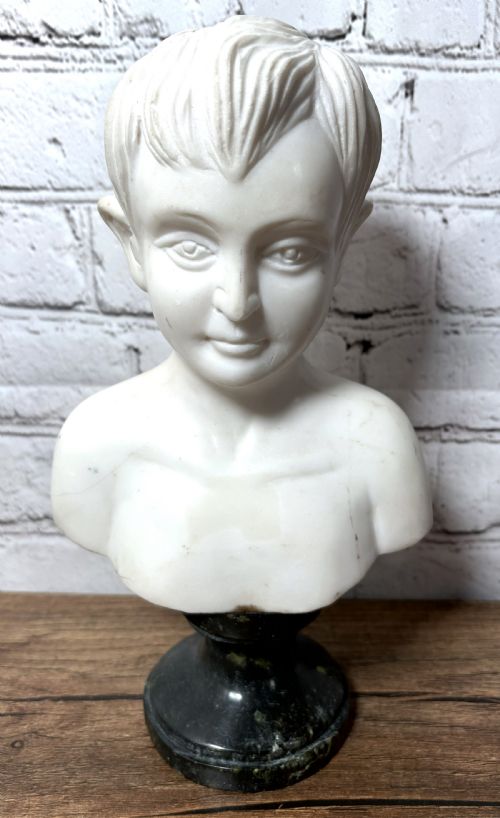


Antique Alabaster Figurine
An antique alabaster figurine brings tactile warmth and classical grace to a room, capturing carved human forms in soft, translucent stone.
Antique Alabaster Figurine
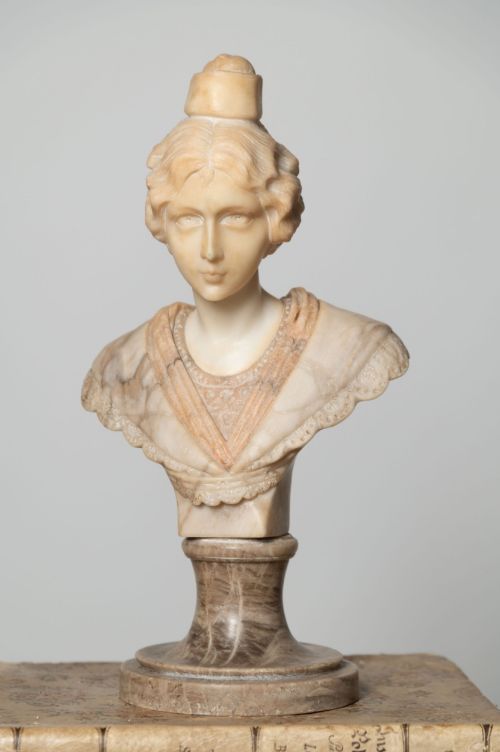
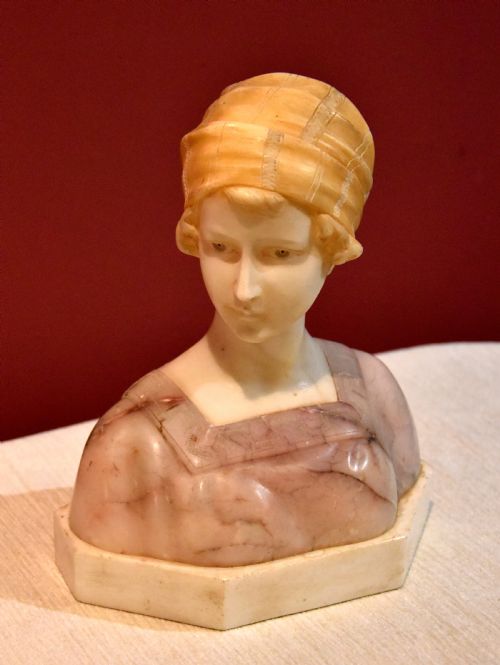
When you search for an antique alabaster figurine, you encounter carved representations of human figures, mythological deities, and portrait busts created across the nineteenth and early twentieth centuries. These works range from small domestic ornaments to substantial sculptural groups originating predominantly from French and Italian workshops.
The pieces appearing on this page span several distinct aesthetic movements, connecting Neoclassical and French Empire traditions with the flowing curves of Art Nouveau and the geometric lines of Art Deco. Many adopt classical motifs like Diana the huntress or Hestia, alongside romanticised studies of young women, children, and animals.
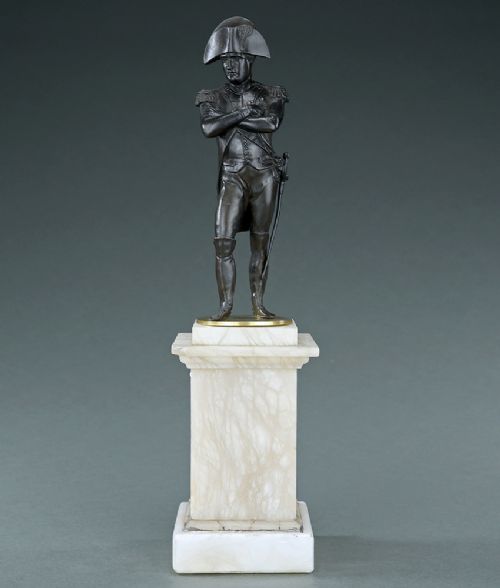
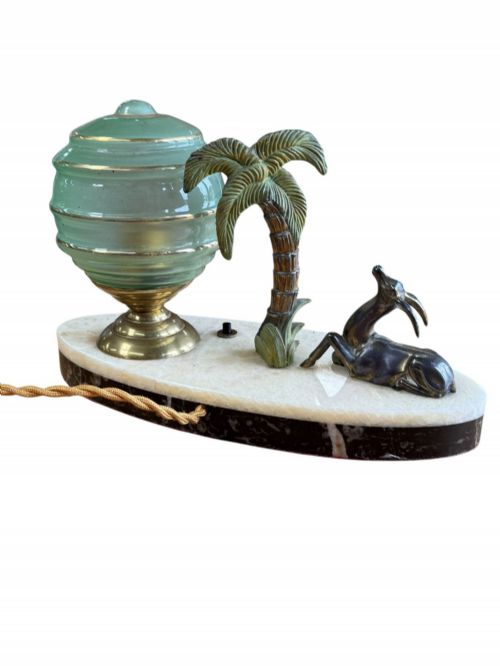
Beyond pure sculpture, the material frequently combines with other media, appearing as figural groups mounted upon contrasting marble bases or serving as glowing pedestals for spelter and bronze figures. These hybrid forms highlight how nineteenth-century makers integrated translucent stone into functional lighting and decorative objects.
How they were made
Carvers utilised blocks of natural stone and gypsum-based alabaster, often sourcing specific regional variants such as Derbyshire alabaster to achieve particular grain patterns and translucency. Skilled artisans shaped these soft minerals using chisels, rasps, and fine abrasives to render delicate drapery, hair texture, and facial expressions.
Many works incorporate mixed media, pairing carved stone elements with cast spelter or bronze components secured to marble or stone bases. Signatures and foundry marks are frequently incised directly into the soft stone surface or onto the metal elements before final finishing.
The listings span the nineteenth and twentieth centuries, incorporating materials such as alabaster, marble, bronze, and spelter within sculptural forms and table lamps.
What varies in quality
The distinction between ordinary and exceptional carving lies in the sensitivity of the hands and the depth of undercut details, where superior pieces render complex drapery and hair with lifelike softness rather than rigid stiffness. The choice of raw material also dictates quality, as flawless, evenly translucent stone without distracting mineral inclusions elevates a sculpture.
Signatures by documented makers or established studios elevate a piece significantly, reflecting the output of recognised nineteenth and twentieth-century sculptors. Furthermore, the harmony of proportion and the structural integration of the figure with its base demonstrate the underlying skill of the workshop.
Emile Guillemin·Auguste Henri Carli·Bright And Sons·Fritz Kochendorfer·Mieczyslaw Leon Zawiejski·George Van Der Straeten·Antonio Frilli·Pugi·Joseph Gott·P. Emilio Fiaschi·A.Cipriani
The Antique Alabaster Figurine Glossary
- Alabaster
- A fine-grained, soft mineral stone prized for its translucency and ease of carving. It allows light to penetrate slightly beneath the surface, giving sculpted skin a warm, lifelike glow.
- Spelter
- A zinc alloy commonly cast into figural models during the nineteenth century. It frequently appears finished to resemble bronze and is often mounted onto stone or marble bases.
- Neoclassical
- An artistic movement drawing inspiration from the classical art and culture of ancient Greece and Rome. Figures from this tradition often depict mythological subjects and historical deities.
- Bust
- A sculpted representation of a person's head, shoulders, and chest. These pieces frequently serve as portrait studies or decorative library ornaments.
Antique Alabaster Figurine: Frequently Asked Questions
What is an alabaster figurine?
An alabaster figurine is a carved sculptural object made from soft, translucent gypsum or stone. These pieces typically depict human figures, allegorical subjects, or portrait busts.
Craftsmen utilised the material's unique capacity to catch light, giving sculpted drapery and flesh a soft appearance. They were designed primarily as indoor decorative ornaments for nineteenth and early twentieth-century domestic interiors.
How do I date a figurine?
Dating relies upon stylistic markers, costume details, and prevailing artistic movements such as Art Nouveau or Art Deco. The overall aesthetic provides a primary chronological anchor.
Signatures, foundry stamps, and inscribed dates incised into the stone or metal base offer precise attribution. Comparing the subject matter to documented works by known sculptors helps narrow the period of creation.
Where were these sculptures made?
These sculptures originated predominantly across European artistic centres, with Italy and France producing a large portion of surviving works. Italian workshops often specialised in carved stone figures derived from classical traditions.
French makers frequently combined carved stone with cast metal elements or integrated them into decorative lighting. Grand Tour travellers frequently purchased these pieces as souvenirs during visits to European cultural capitals.