
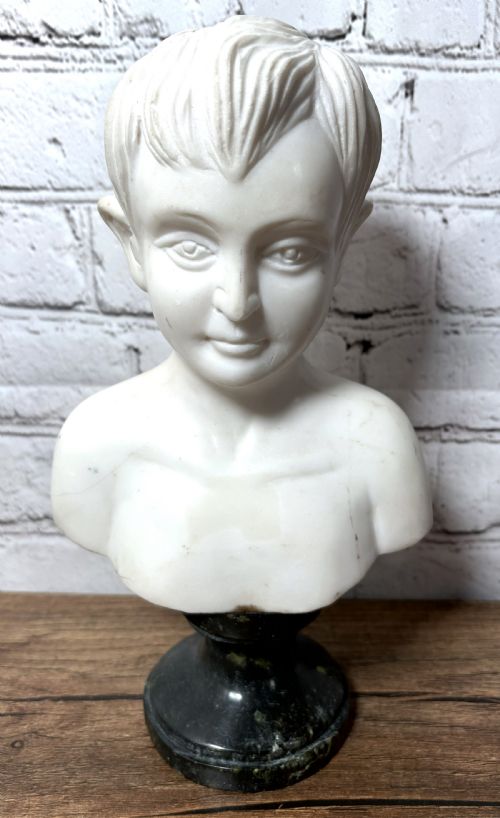


Vintage Alabaster Sculpture
These vintage alabaster sculpture pieces bring carved figures, portrait busts and decorative mounts into a room through soft, translucent stone.
Vintage Alabaster Sculpture
A vintage alabaster sculpture brings carved figures, portrait busts and decorative objects into a room through soft, translucent stone. When you search for vintage alabaster sculpture, you encounter items shaped across the nineteenth and twentieth centuries, ranging from neoclassical figures to Art Deco dancers.
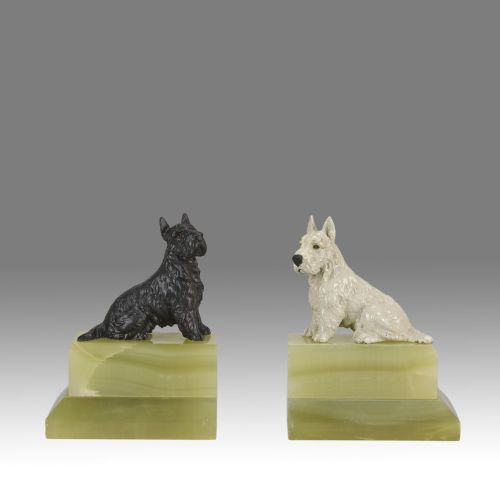
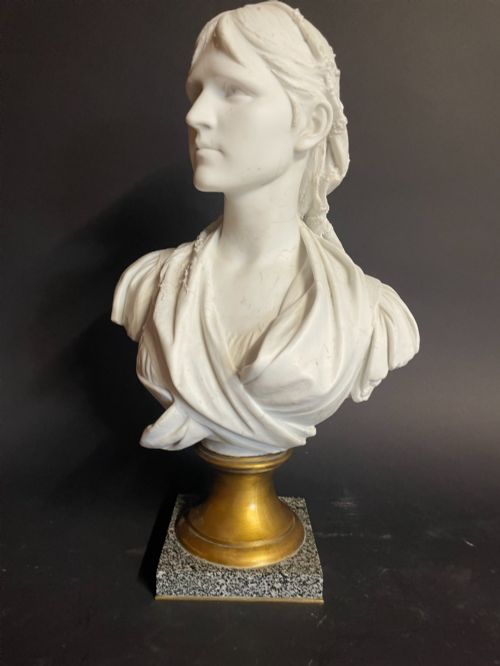
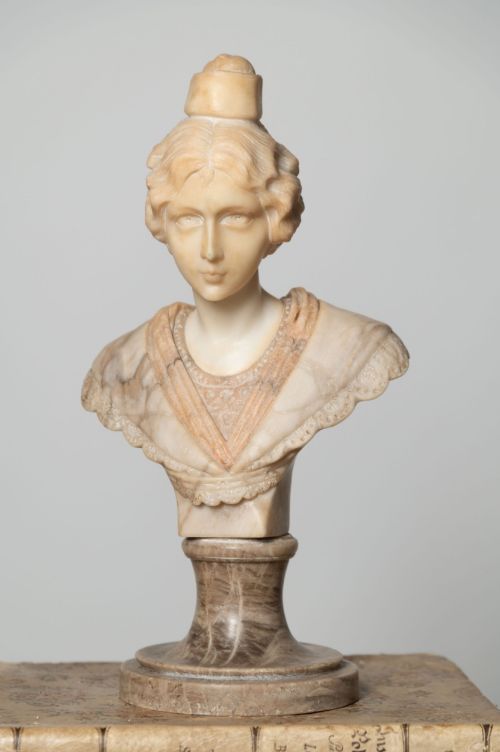
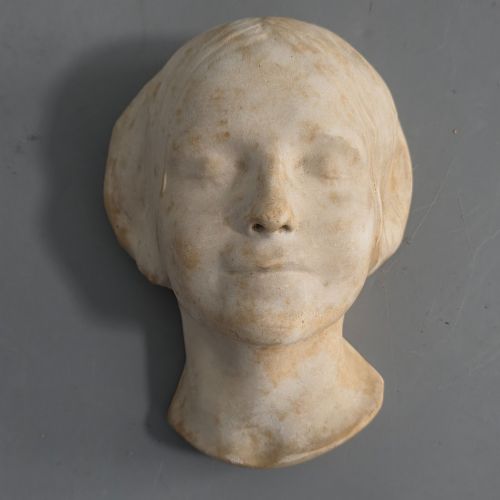
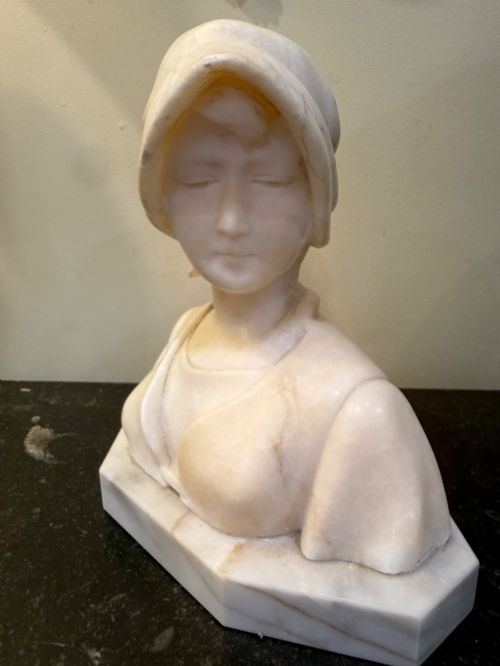
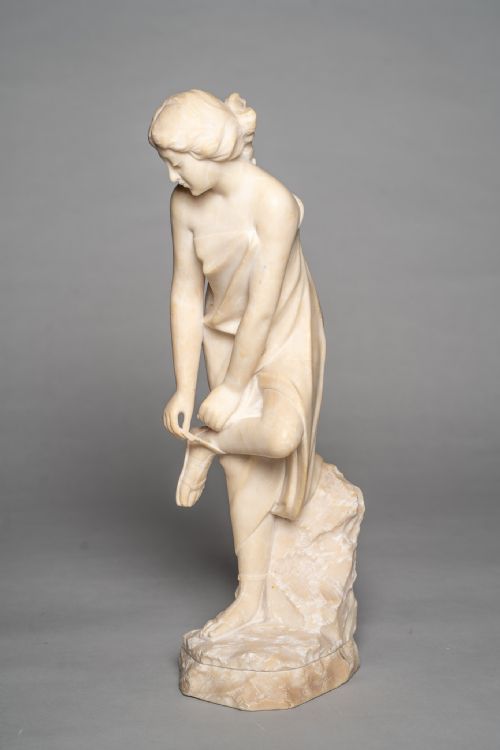
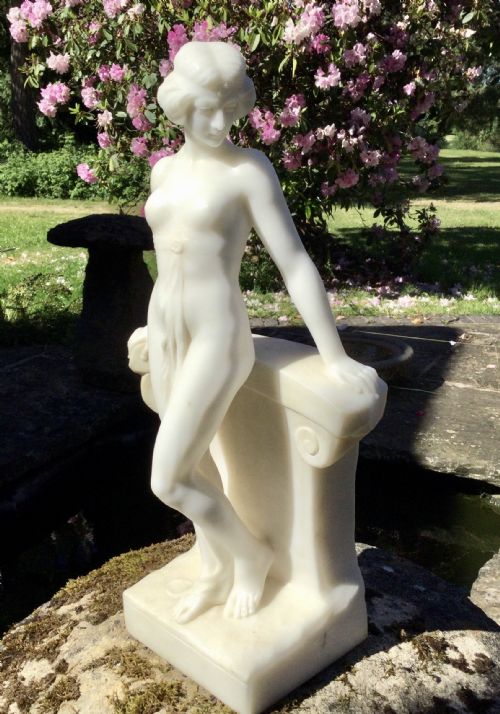
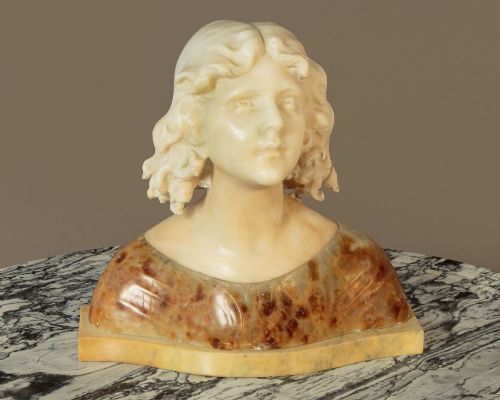
The selections on this page lean heavily toward portrait busts of young women, allegorical figures and figural groups created in Italy and France. Alongside statues of deities and animals, you find utilitarian pieces like bookends and pedestals that incorporate the stone into their design.
Materials and carving techniques
Carvers shaped these pieces primarily from alabaster, marble and stone, sometimes pairing the soft gypsum stone with contrasting elements of spelter, bronze and brass. Artisans utilised hand chisels and rasps to carve intricate drapery, hair strands and facial expressions into the material.
Makers often mounted carved alabaster figures onto heavier bases of marble or onyx to provide stability and visual contrast. Certain works combined cold-painted bronze or spelter figures with carved stone bases, creating mixed-media pieces typical of the early twentieth century.
The listings on this site span from eighteen-fifty through the nineteen-thirties, featuring materials like alabaster, marble, spelter, and cold-painted bronze.
Assessing quality in the stone
Original signatures or foundry attribution marks carved into the base or body distinguish standard decorative items from works by known sculptors. The clarity of the polish across the stone surface further separates workshop production from finer studio pieces.
Mieczyslaw Leon Zawiejski·Antonio Frilli·Joseph Gott
The Vintage Alabaster Sculpture Glossary
- Alabaster
- A fine-grained, translucent stone favoured by sculptors for its softness and ability to mimic skin. It scratches easily and dissolves in water.
- Spelter
- A zinc alloy cast into figural shapes and given a bronze-like finish, frequently used for secondary figures mounted on stone bases.
- Neoclassical
- A style drawing inspiration from classical antiquity, often rendered in marble or alabaster with draped garments and restrained poses.
- Art Deco
- A design movement of the early twentieth century defined by clean lines and stylised human or animal forms, seen here in dancers and lionesses.
- Grand Tour
- Souvenirs and copies of classical sculptures acquired by travellers in Europe during the nineteenth century, typically executed in marble or alabaster.
Vintage Alabaster Sculpture: Frequently Asked Questions
How can I tell alabaster from marble?
Alabaster feels noticeably softer than marble and allows light to pass deeper beneath its surface, creating a warm, glowing translucency. You can scratch true alabaster with a fingernail or a copper coin, whereas marble resists such pressure.
Marble displays harder crystalline structures and denser veining patterns compared to the uniform grain of fine alabaster.
What periods do these sculptures date from?
The pieces span the nineteenth and twentieth centuries, encompassing Victorian, Edwardian and Art Deco aesthetics. Most examples originate from the period between eighteen-fifty and nineteen-thirty.
Stylistic cues like clothing styles, signatures and mounting techniques help anchor each piece within its specific decade.
Where were these sculptures made?
Italy and France produced the vast majority of these carved works, drawing on deep traditions of stone masonry and foundry casting. Italian workshops specialised in portrait busts and Grand Tour figures.
French studios frequently combined carved stone with spelter or bronze elements to create decorative objects and clock garnitures.