
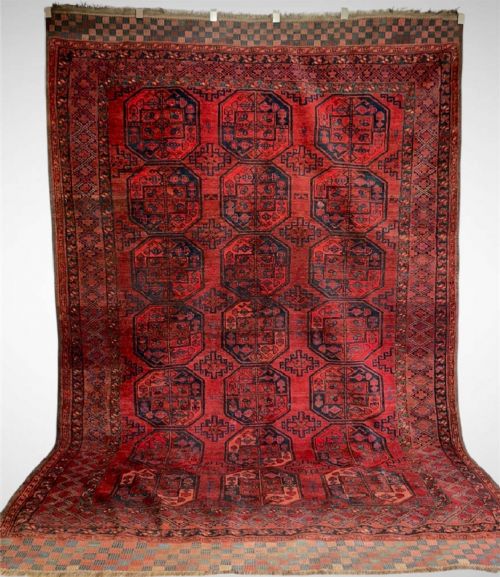


Afghan Turkmen Rug
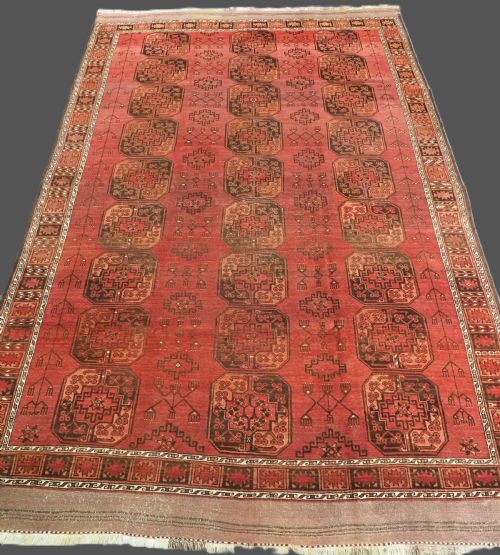
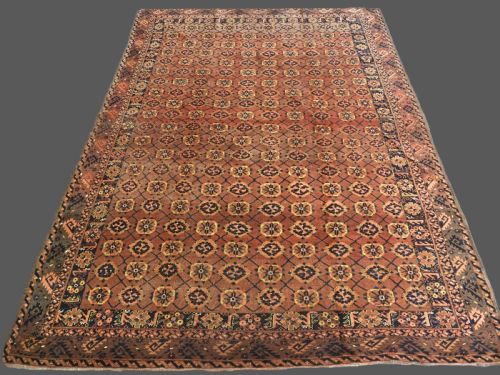
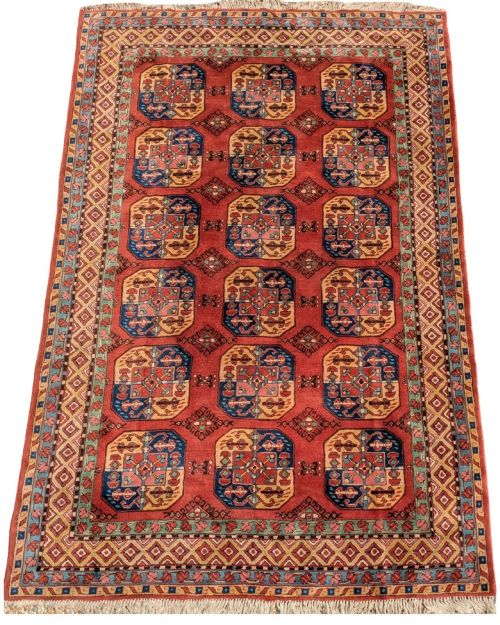
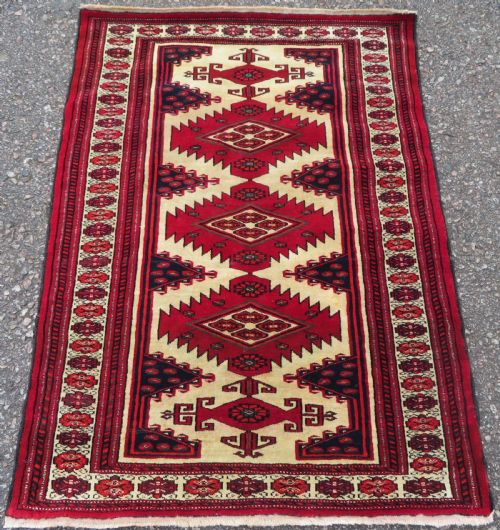
These handwoven carpets and trappings show the distinct tribal patterns of an afghan turkmen rug, prized for deep reds and durable wool construction.
Afghan Turkmen Rug
An afghan turkmen rug encompasses handwoven carpets, room-sized main carpets, prayer rugs, and tent trappings created by tribal weavers across Central Asia and northern Afghanistan. Buyers will frequently encounter room-sized carpets and smaller village formats dating from the late nineteenth century up to the nineteen-thirties.
The inventory includes specialised forms such as ensi door hangings, chuval storage bags, and mosque prayer rugs featuring double lanterns or rams horn mihrabs. These textiles reflect the traditional designs of specific sub-tribes including the Ersari and Kizil Ayak.
Weaving traditions here span large country house formats down to compact area rugs, demonstrating deep roots in nomadic and village craft. The surviving examples showcase a continuity of motifs passed down through generations of tribal makers.
How they were made
The foundation and pile rely predominantly on hand-spun wool, sometimes supported by cotton foundations or structural elements utilising horsehair and goat hair. Natural dyes provide the characteristic warm reds, deep golds, and muted tones found across the pieces.
Weavers constructed these textiles on portable or village looms, incorporating glass beads into specific trappings for decorative effect. The dense knotting and robust material selection ensure a heavy duty and hard wearing finish suitable for continuous floor use.
Occasional wedding trappings preserve whimsical glass beads intended to ward off bad fortune for travelling bridal processions.
What varies in quality
Quality depends upon the fineness of the weave, the clarity of the traditional gul patterns, and the depth achieved by natural dyes. Superior examples display precise geometric execution and balanced proportions across the field and borders.
The handling of wool preparation and dyeing creates noticeable variation in colour richness, ranging from vibrant warm reds to soft faded tones. The integrity of the wool foundation and the scarcity of specific designs also distinguish exceptional main carpets and prayer rugs from standard village output.
The Afghan Turkmen Rug Glossary
- Gul
- A repeating octagonal medallion motif central to Turkmen carpet design. Each sub-tribe utilised distinct variations of these primary guls.
- Ensi
- A cross-shaped carpet design traditionally utilised as a tent door hanging or portiere. These pieces often feature compartmentalised field patterns.
- Chuval
- A large tent storage bag face woven for domestic utility within nomadic households. Surviving examples are typically collected as flat panels or small rugs.
- Mihrab
- The arched prayer niche design depicted on mosque rugs, frequently ornamented with rams horn motifs. It directs the orientation of the worshipper.
- Kelleh
- A long, narrow carpet format designed for specific room dimensions. These elongated rugs provide runners or gallery coverage.
Afghan Turkmen Rug: Frequently Asked Questions
How do I identify an Ersari design?
Ersari designs typically display large, bold guls and rich madder red colour fields with less intricate secondary ornamentation than other tribal styles. Their carpets often span generous room sizes.
They also frequently incorporate shrub or elephant foot motifs arranged across spacious fields, distinguishing them from finer, more densely packed weaves.
What is a prayer rug used for?
Prayer rugs feature a distinct architectural mihrab arch that indicates the direction of prayer during daily worship. They were utilised as personal, portable carpets by individuals.
Collectors prize them for their concentrated symbolism, such as double lanterns or rams horn details contained within a compact format.
How do I care for an old wool rug?
Regular gentle vacuuming without a rotating brush bar prevents dirt accumulation within the hand-spun wool pile. Professional cleaning suited to natural dyes preserves the integrity of the fibres.
Keeping the textile out of direct, harsh sunlight protects the natural red and gold tones from fading over decades of display.
How are different tribal periods told apart?
Earlier pieces from the nineteenth century generally exhibit finer hand-spun wool, deeper natural dye saturation, and specific structural traits like goat hair foundations. Twentieth-century examples often shift toward standardised village production.
Examining the border structures, knot density, and secondary palette helps assign pieces to eras ranging from eighteen-eighty through to nineteen-thirty.