

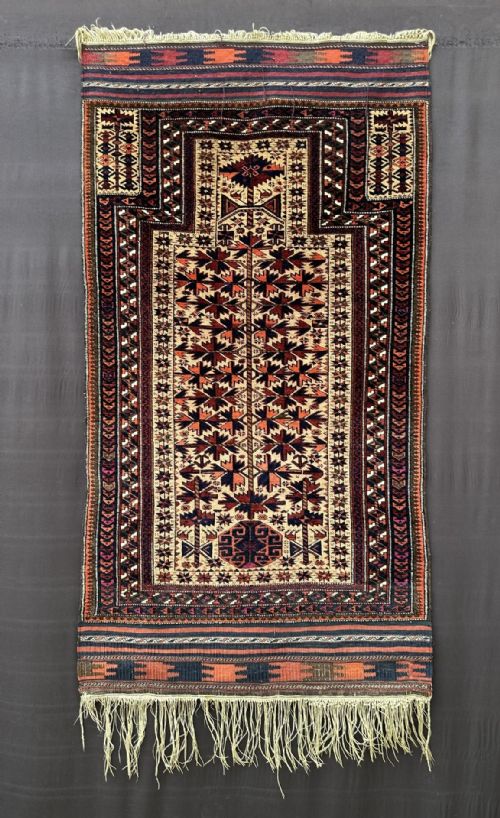


Afghan Tribal Prayer Mat
When evaluating an afghan tribal prayer mat, collectors encounter handheld woven expressions from nineteenth and early twentieth century borderlands.
Afghan Tribal Prayer Mat
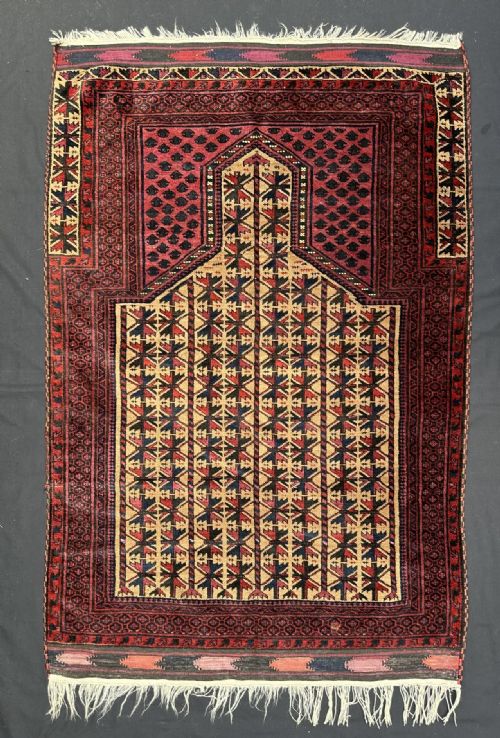
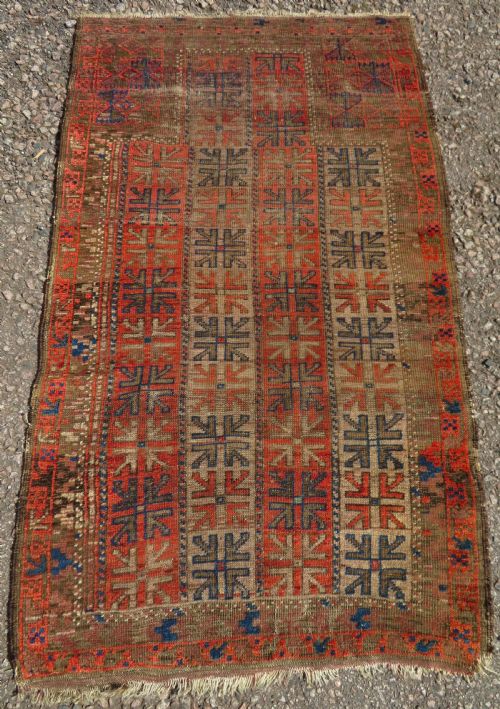
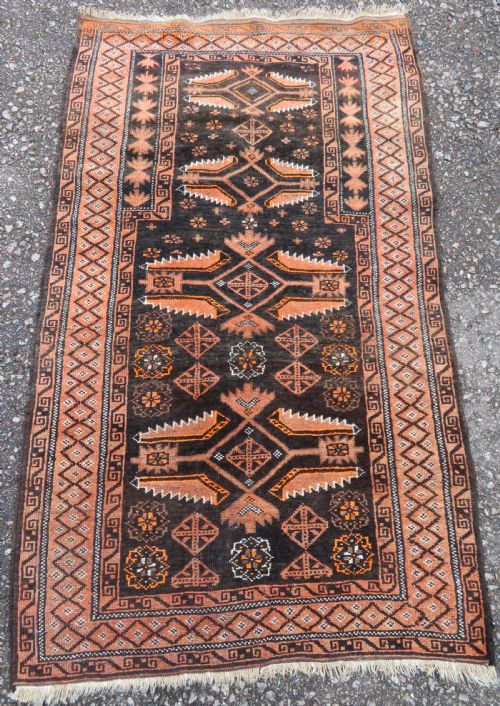
An afghan tribal prayer mat typically presents nomadic formats created across nineteenth and twentieth century village and border regions, including Baluch, Timuri, and Kizil Ayak tribal groups.
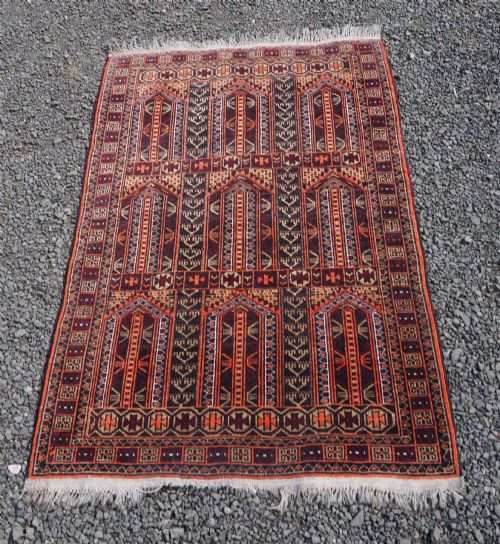
The prevailing layouts feature specific niche designs such as the single, double, or seh mihrab configuration, often accompanied by long kilim ends or mosque motifs.
Pieces frequently originate from the borderlands of north-east Persia and north-west Afghanistan, embodying regional nomadic weaving traditions from periods spanning the 1880s to the 1930s.
Materials and Construction
The construction relies on traditional textile components including wool, cotton foundations, camel hair, camel wool, and goat hair.
Weavers utilise natural dyes to achieve the colour palette of the ground and motifs, often employing mixed techniques across tribal village formats.
Certain village weavers tucked rams horns and celestial stars directly into the prayer arch.
Judging Quality and Execution
The distinction between examples rests on the fineness of the weave, the clarity of design elements such as the mihrab and stars, and the handling of natural dyes.
Condition and integrity of the wool or camel hair foundation play a role, alongside the scarcity of the format and the precision of regional tribal attribution.
The Afghan Tribal Prayer Mat Glossary
- Mihrab
- The prayer arch or niche design positioned at one end of the rug to indicate the direction of prayer. It frequently appears in single, double, or seh formats on these mats.
- Seh Mihrab
- A design featuring three prayer arches grouped across the field of the mat. This layout is a traditional hallmark found on various Baluch and village pieces.
- Kilim Ends
- Flat-woven extremities extending beyond the knotted pile section of the rug. Pashtun village pieces often display long examples of these flat-woven terminations.
- Timuri
- A tribal group associated with weaving operations in the borderlands of north-east Persia and north-west Afghanistan. Their output shares strong stylistic ties with Baluch traditions.
- Kizil Ayak
- A Turkmen tribal group known for distinctive mosque prayer rugs and village formats. Pieces attributed to them often incorporate double lanterns or rams horn motifs.
Afghan Tribal Prayer Mat: Frequently Asked Questions
What is an afghan tribal prayer mat?
An afghan tribal prayer mat is a small, handheld textile woven by nomadic or village groups in regions encompassing Afghanistan and neighbouring borderlands.
These pieces were traditionally utilised for personal prayer, featuring a distinct architectural arch known as a mihrab that directs the user during daily devotions.
How do I identify a seh mihrab design?
A seh mihrab design is immediately recognised by the presence of three distinct prayer niches woven across the upper field of the rug.
This specific layout distinguishes certain Baluch and Afghan village pieces from standard single-arch prayer formats.
What materials were used to make them?
The construction typically incorporates wool, cotton, and occasionally camel wool, camel hair, or goat hair for the pile and foundation.
Weavers relied on natural dyes to colour the fibres, creating the distinct palettes seen in pieces dating from the nineteenth and early twentieth centuries.
Where were these rugs produced?
Production centred on tribal and village regions within Afghanistan and the borderlands shared with north-east Persia.
Specific groups such as the Baluch, Timuri, and Kizil Ayak Turkmen each developed their own recognizable variations of the prayer rug format.