
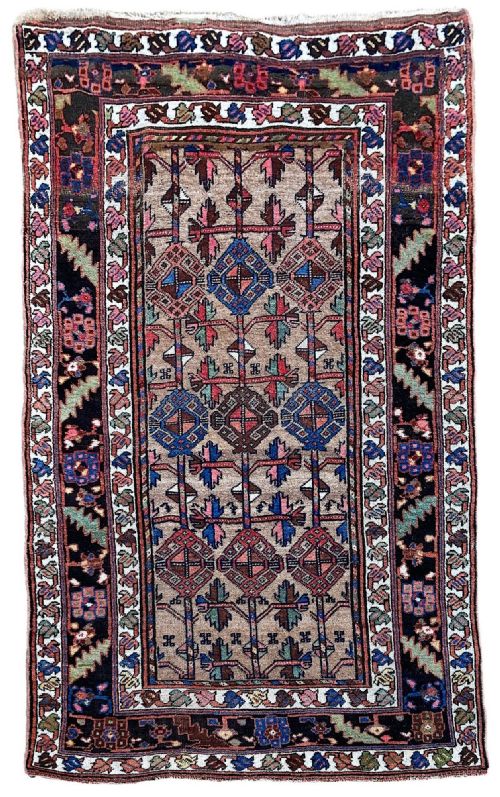


Beige Wool Tribal Rug
When you search for beige wool tribal rug, you are looking at hand-woven floor coverings that bring organic texture and rustic warmth to a room.
Beige Wool Tribal Rug
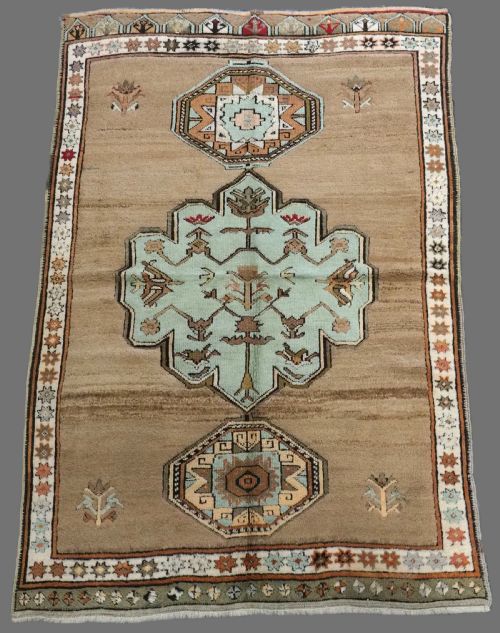
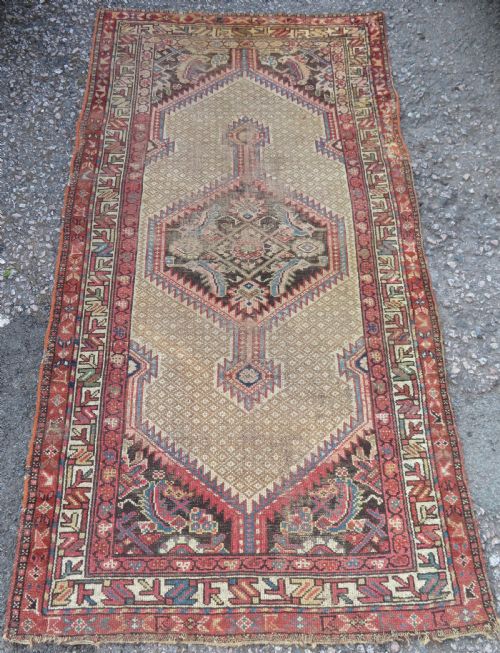
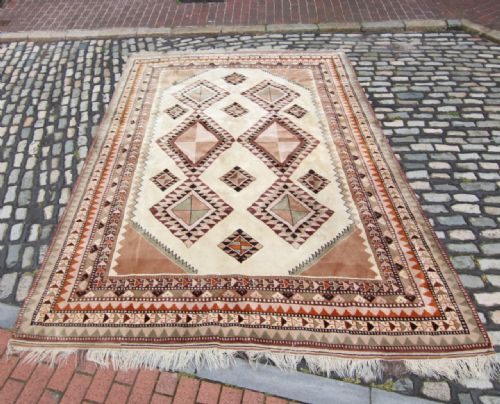
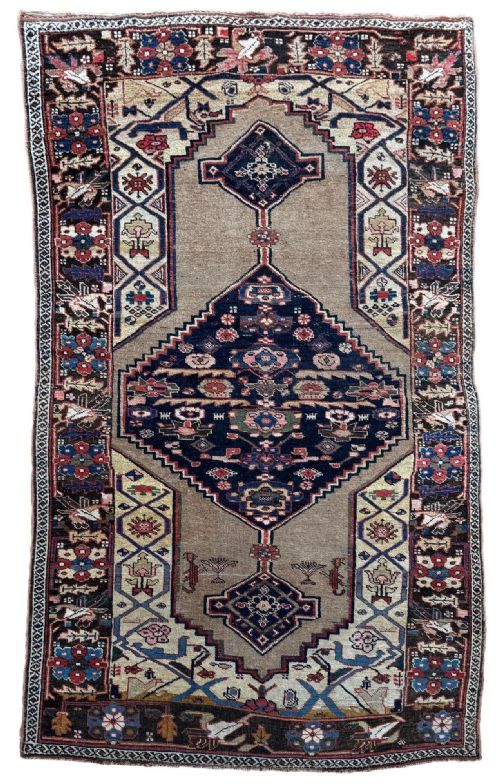
A beige wool tribal rug encompasses hand-woven floor coverings and runners originating from Persian, Anatolian, and Afghan regions. These pieces display traditional village designs, geometric motifs, and earthy fields shaped by nomadic and village weavers.
The selection includes formats ranging from square carpets and small prayer rugs to long narrow runners and decorative cushions. Production dates span across the nineteenth and early twentieth centuries, capturing periods from the eighteen-eighties to nineteen-thirty.
Regional variations appear across workshops and tribal groups such as Sarab, Baluch, Kurdish, and Afghan. Each origin brings distinct handling of neutral camel grounds and soft faded patinas.
How they were made
Weavers constructed these pieces using hand-spun wool, cotton foundations, and natural camel hair. These materials provided durable pile surfaces and sturdy structural warps.
Fibre preparation relied on traditional spinning methods to create yarns with natural variations in texture and tone. These foundational choices determined the longevity and tactile quality of the finished textile.
Several pieces incorporate genuine camel hair into the foundational weave, bringing a naturally rustic texture straight from the desert winds.
What varies in quality
Quality rests in the fineness of the weave and the integrity of the natural materials used throughout the pile and foundation. Denser knots and tightly packed structures typically indicate greater durability and refined execution.
The character of the natural wool and camel hair influences the depth of the field colours and the softness of the patina. Harmonious wear and balanced proportions distinguish finer examples from simpler village work.
The Beige Wool Tribal Rug Glossary
- Camel hair
- Animal fibre utilised in its natural undyed state to create soft neutral fields and durable tribal ground colours. It offers a distinct warm undertone that ages with a gentle patina.
- Runner
- A long and narrow format designed specifically for hallways and corridors. These rugs balance linear spaces with repeating geometric motifs.
- Prayer rug
- A small format textile featuring a distinct architectural niche or mihrab design. Weavers traditionally used these pieces for individual devotional practice.
- Hand-spun wool
- Yarn processed by hand rather than industrial machinery, producing slight irregularities in thickness. This technique gives the textile surface a lively and varied texture.
- Patina
- The soft surface appearance acquired through age and gentle wear. This characteristic alters the initial brightness of the dyes into muted tones.
Beige Wool Tribal Rug: Frequently Asked Questions
Where were these rugs made?
The pieces originate from traditional weaving centres across Persia, Anatolia, and Afghanistan. Village and nomadic communities produced them using local materials and regional design repertoires.
Specific areas include regions associated with Sarab, Baluch, Kurdish, and Afghan makers. Each location contributed distinct structural traits and colour palettes.
How do I care for wool rugs?
Maintain these textiles through gentle regular vacuuming without harsh rotating brush heads. Protect them from direct prolonged sunlight to preserve the natural dyed wool.
Address spills promptly with dry blotting rather than vigorous scrubbing. Professional cleaning suited to antique textiles helps maintain the integrity of the foundation.
What is a camel ground rug?
A camel ground rug utilises natural undyed camel wool or hair for the main field colour of the textile. This creates a warm, neutral backdrop that highlights geometric patterns and secondary motifs.
These grounds often exhibit subtle tonal shifts derived from the natural variations in the animal fibre. Over time, the material develops a characteristic soft texture.
How do I identify a runner?
Runners are distinguished by their elongated rectangular proportions, built significantly longer than they are wide. This specialised format historically suited narrow architectural spaces like corridors and entryways.
Design arrangements within these pieces adapt to the linear format through repeating medallions or continuous diagonal patterns.