




Brown Wool Baluch Mat
When buying a brown wool baluch mat, you secure a tribal woven piece rooted in Persian and Afghan borderlands.
Brown Wool Baluch Mat
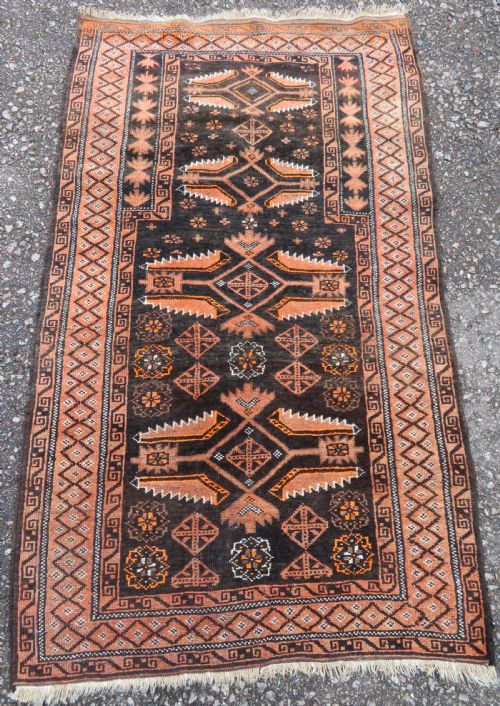
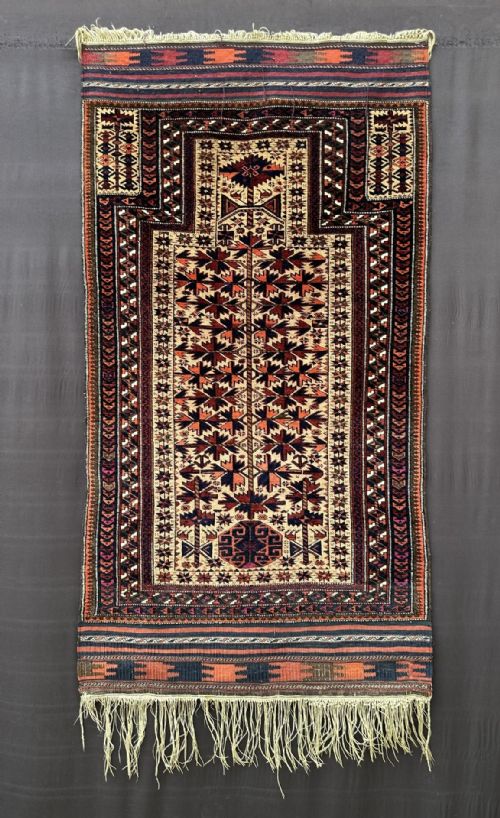
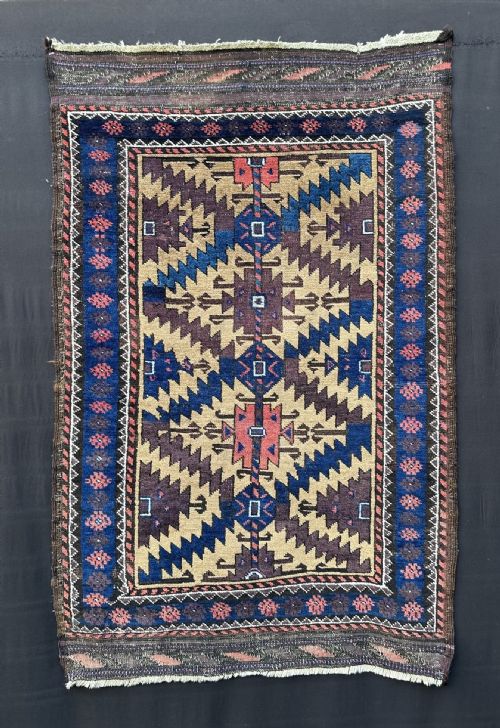
A brown wool baluch mat encompasses tribal rugs and small prayer rugs originating from nineteenth and early twentieth-century nomadic weavers across Persia and Afghanistan. These works frequently showcase traditional formats like the mihrab prayer design or small format floor coverings suited for compact spaces.
Dating primarily from the late nineteenth century through the early decades of the twentieth century, these pieces reflect distinct borderland weaving traditions. Their construction relies on durable materials intended for nomadic daily utility.
What varies in quality
Quality differences emerge through the fineness of the knotting and the complexity of the tribal design work, such as detailed shrub patterns or multi-tiered mihrabs. Superior examples display tighter pile density and exceptional wool quality from camel or sheep fleece.
The handling of natural dyes and the crispness of secondary motifs distinguish finer tribal weaves from standard productions. Preservation of the original outer selvedges and structural integrity also dictates the standing of individual rugs.
Listings span periods from the nineteenth century through the 1930s, utilising wool, camel hair, and goat hair.
The Brown Wool Baluch Mat Glossary
- Prayer rug
- A small format rug featuring a mihrab niche designed to indicate the direction of prayer. These pieces served personal devotional purposes in nomadic and village settings.
- Mihrab
- The arched architectural niche depicted on prayer rugs that points toward Mecca. In these weavings, the motif appears singly or repeated as a multiple seh mihrab.
- Seh mihrab
- A triple arch design layout displayed across the upper field of specific prayer rugs. This configuration is strongly associated with Taimani and Baluch tribal weaving.
- Pushti
- A small scatter rug or mat format used for seating or resting within a tent. These compact pieces often feature focused central medallions or tribal face designs.
- Natural dyes
- Colourants derived from organic sources such as plants and insects prior to the widespread adoption of synthetic alternatives. They impart nuanced, shifting tones across the wool pile.
Brown Wool Baluch Mat: Frequently Asked Questions
Where were these mats made?
These mats originated across the borderlands of Persia and Afghanistan through the work of nomadic and tribal groups including the Baluch, Timuri, and Taimani peoples.
Weavers produced them in regional provinces such as Herat, Ferdows, and Sistan using traditional local materials.
What is a prayer rug?
A prayer rug is a portable devotional floor covering defined by an arched niche known as a mihrab at one end.
Nomadic weavers utilised these compact formats for daily prayers while travelling or within traditional dwellings.
How do I date these pieces?
Dating relies upon evaluating structural characteristics, wool consistency, design nomenclature, and the composition of natural dye palettes.
Most surviving examples date from the late nineteenth century through the early decades of the twentieth century.
How should I care for wool rugs?
Maintain wool pile mats through gentle, regular vacuuming without rotating beater bars across the fragile ends and original selvedges.
Keep them away from direct, prolonged sunlight to preserve the organic natural dye colours.