



Persian Baluch Runner Mat
These persian baluch runner mat pieces are hand-woven tribal floor coverings that bring rich, nomadic heritage and deep indigo tones into your interior.
Persian Baluch Runner Mat
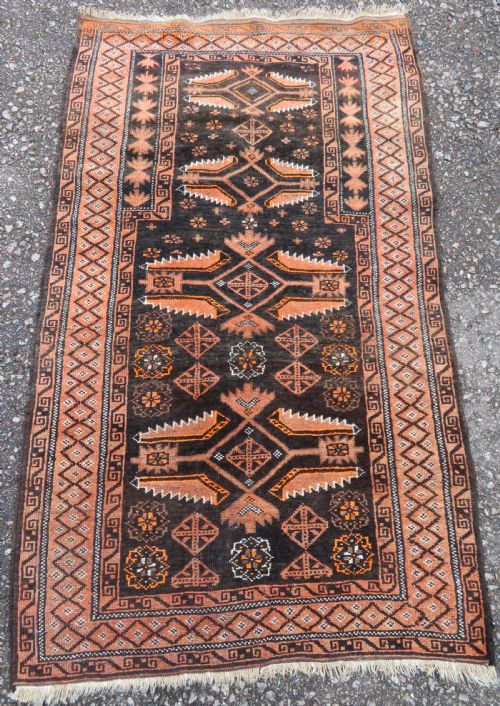
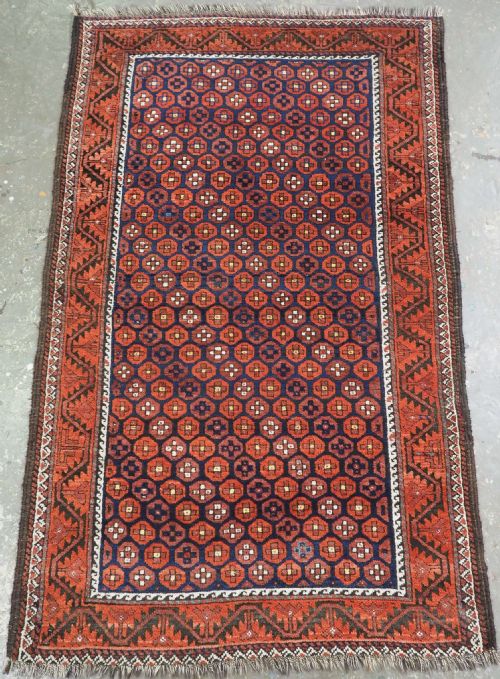
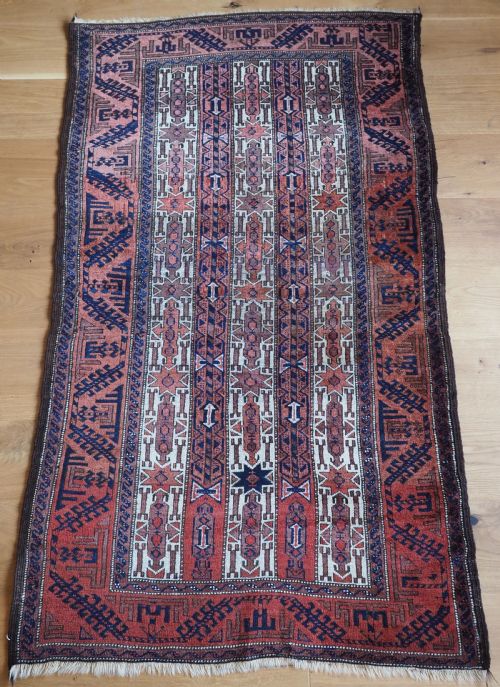
A persian baluch runner mat is a traditional tribal textile typically produced by nomadic and village weavers across the borderlands of Persia and Afghanistan. You will most frequently encounter village and tribal pieces originating from around nineteen hundred, nineteen twenty, and nineteen thirty, taking the form of compact rugs, prayer rugs, and small pushti faces.
The format varies from small prayer rugs featuring characteristic mihrab designs to longer runner mats displaying geometric motifs such as guls, shrubs, and Herati patterns. These floor coverings reflect the distinct cultural visual language of tribes including the Baluch, Djhan Beghi, Salar Khani, Timuri, and Taimani groups.
The origins span specific regions such as East Persia, Khorasan, and the broader Afghan borderlands, capturing the historic weaving traditions of pastoral communities. Every example functions as both a utilitarian floor covering and an expressive tribal work of art suited to traditional and modern spaces alike.
Factors determining quality
Quality in these tribal textiles rests upon the fineness of the knotting, the precision of the geometric layout, and the balance of the natural dye palette. Superior examples display crisp definition in complex motifs like the Herati design or large gul patterns, showing absolute control over the dense wool pile.
Nomadic weavers occasionally inserted deliberate minor flaws into repetitive geometric patterns to ward off the evil eye and claim artistic humility.
Djhan Beghi Tribe·Salar Khani Baluch·Timuri Baluch·Mahdad Khani Baluch·Taimani Sistan Baluch
The Persian Baluch Runner Mat Glossary
- Prayer rug
- A small textile featuring a mihrab or arch design indicating the direction of prayer, traditionally used for personal devotion. These rugs are scaled for individual use rather than expansive floor coverage.
- Gul
- A medallion-like primary motif repeated across the field of tribal carpets, often holding specific clan or regional identity. Each tribal group utilises distinct geometric variations.
- Sofreh
- A ceremonial or utilitarian cloth used for spreading meals or processing dough within nomadic households. These flatwoven or piled pieces serve domestic functions distinct from standard floor rugs.
- Herati pattern
- A classic Persian floral motif consisting of a central rosette enclosed by a rectangle and flanked by curved leaves. It appears frequently across fine village and tribal weaving.
- Pushti
- A small mat or face piece traditionally used as a cushion cover or small furnishing in nomadic tents. Their compact size makes them versatile decorative accents.
Persian Baluch Runner Mat: Frequently Asked Questions
How do I care for my rug?
Vacuum your textile gently without using a rotating brush roll to prevent pulling the wool pile. Professional cleaning by a specialist familiar with antique tribal wool is recommended when necessary.
Keep the piece out of direct, continuous sunlight to preserve the natural tones of the dyes. Rotating the runner mat periodically ensures even wear across the surface over time.
Where were these rugs made?
Production centres historically span the borderlands of northeast Persia and northwest Afghanistan. Nomadic and village weavers in regions like Khorasan created these pieces for daily use and cultural expression.
Different tribal confederations, including the Baluch and Timuri groups, developed distinct visual dialects. These regional variations appear in the specific choice of geometric symbols and border structures.
Can I use these as floor runners?
These textiles function effectively as accent runners or small floor coverings in low-to-medium traffic areas of the home. Their durable wool construction handles everyday movement while adding warmth to hallways or entryways.
Pairing the runner mat with an appropriate breathable underlay prevents slipping and protects the antique foundation fibres. Avoid placement in damp spaces to maintain the integrity of the wool and cotton materials.
How do I identify a prayer rug?
Prayer rugs are distinguished by a pronounced pointed arch or mihrab shape at one end of the design field. This architectural motif directs the orientation of the textile during personal use.
Such rugs are typically smaller in scale than general floor carpets, designed for individual placement. The field within often contains symbolic shrub or geometric prayer motifs.