


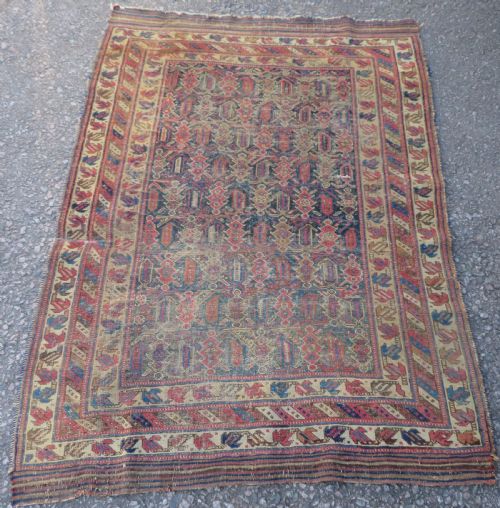
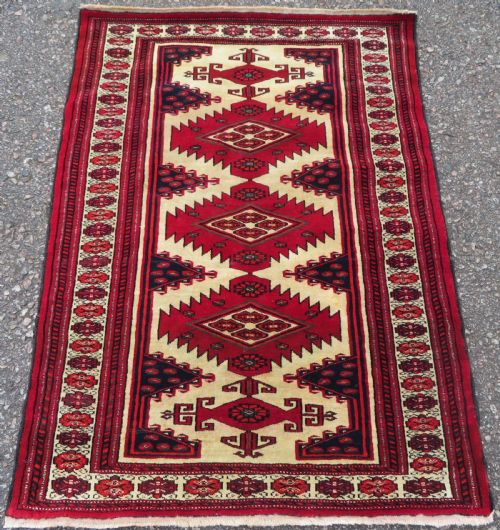
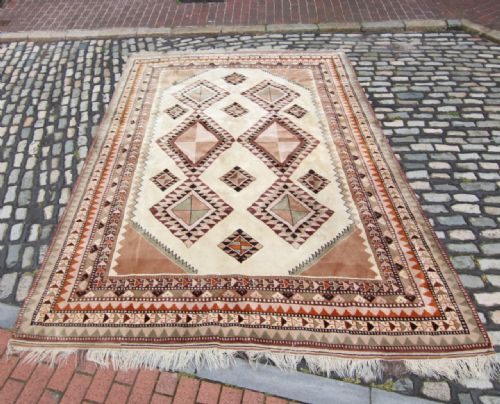
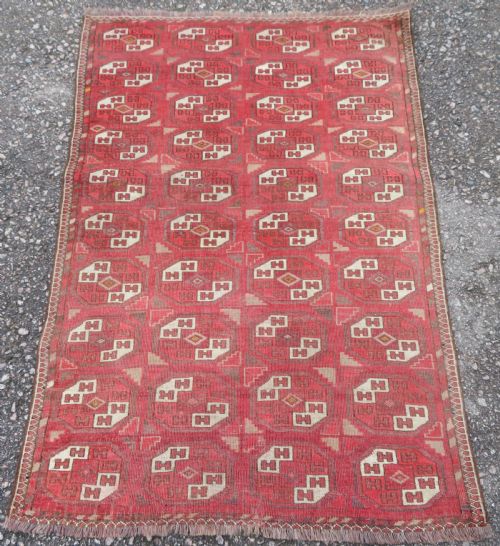
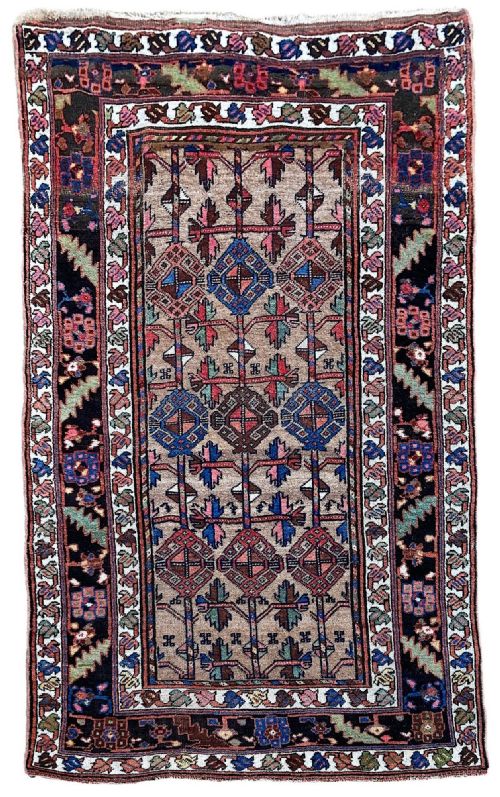
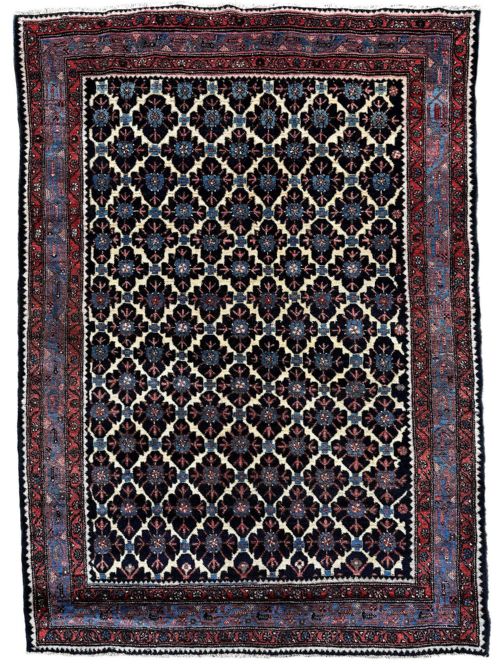

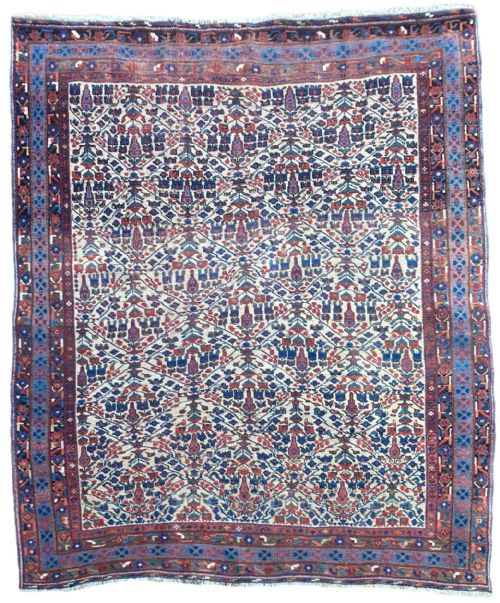


Geometric Pattern Area Rug
A geometric pattern area rug grounds a room with tribal motifs and disciplined layouts drawn from Persian, Turkmen and Caucasian traditions.
Geometric Pattern Area Rug
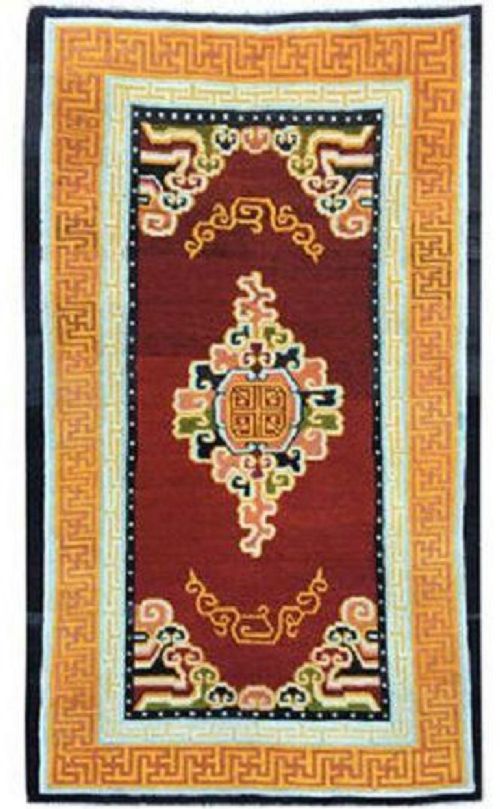
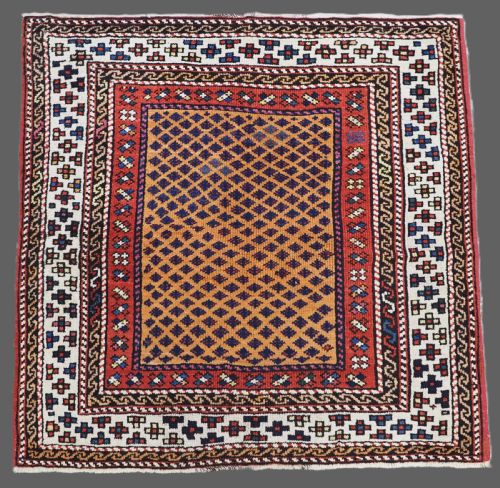
A geometric pattern area rug brings together traditional village and tribal weaving traditions from Central Asia, Persia, Anatolia and the Caucasus. These floor coverings rely on repeated angular motifs, lattice designs and medallions rather than floral curves.
The pieces encountered here span from the nineteenth century into the twentieth century, taking the form of area rugs, carpets, runners and flat-weave kilims. Buyers find village works alongside nomad tribal pieces created for everyday domestic use or specific cultural functions.
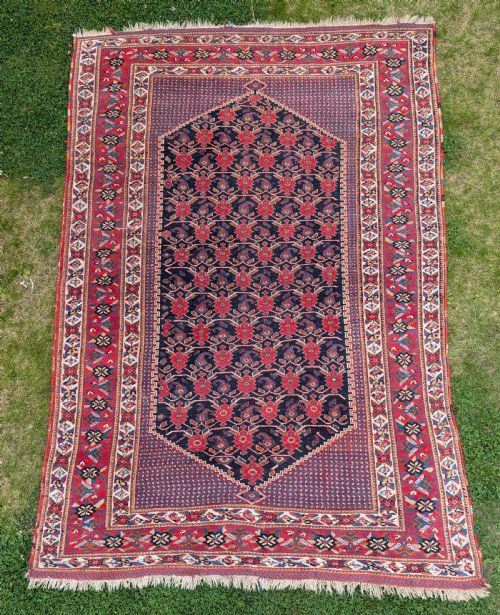
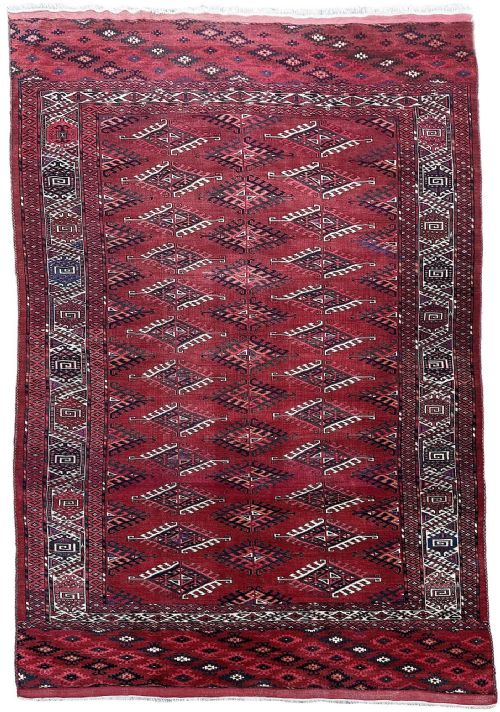
Tribal groups such as the Yomut, Ersari, Afshar and Kazak dominate the selection, each bringing distinct regional palettes and disciplined geometric compositions to their floor coverings.
How they were made
The construction of these floor coverings relies on wool and cotton foundations combined with hand-spun wool pile. Weavers utilised natural dyes to achieve deep earthy tones, reds, golds and blues.
Knotting and flat-weaving techniques produce durable textiles designed to withstand generations of floor use. Hand-knotting allows for precise angular layouts, while flat-weave kilims use interlocking weft threads to build sharp linear patterns.
Certain nineteenth-century tribal door rugs still carry the original pocket structure once meant to ward off evil spirits at the tent entrance.
What varies in quality
Quality rests in the crispness of the drawing and the saturation of the natural dyes used across the wool pile. Tightly packed knots and fine hand-spun wool create greater durability and sharper definition in the geometric repeat.
The integrity of the original borders and selvedges marks the difference between a well-preserved survivor and a heavily altered piece. Handling determines the weight and drape of the wool, distinguishing village output from finer tribal weaving.
The Geometric Pattern Area Rug Glossary
- Kilim
- A flat-woven carpet or rug produced without a pile by tightly interweaving warp and weft strands. These textiles often feature sharp geometric layouts.
- Kazak
- A style of rug originating from the Caucasus region known for bold primary colours and strong geometric medallions. They display heavy wool pile and tribal iconography.
- Yomut
- A Turkmen tribal group recognised for distinctive main carpets featuring repeating gul motifs and geometric lattice structures. Their weaving employs rich madder red dyes.
- Gul
- A medallion or repeating octagonal motif used in Turkmen carpet design. Each tribal subgroup utilises characteristic variations of these geometric emblems.
- Afshar
- A tribal group from southern Persia producing smaller rugs with repeating boteh or geometric lattice patterns. The output is characterised by deep indigo and terracotta hues.
Geometric Pattern Area Rug: Frequently Asked Questions
How do I identify a tribal rug?
Tribal rugs show asymmetric structures, geometric motifs like guls or latchhooks, and regional colour palettes derived from natural dyes. They lack the precise symmetry found in urban workshop carpets.
Weavers working in tribal contexts relied on inherited memory rather than drawn cartoons, resulting in small irregularities within the repeating patterns.
Where were these rugs made?
The origins span Central Asia, Persia, the Caucasus and Anatolia, encompassing nomadic and village production centres. Turkmen, Afshar, Kazak and Kurdish weavers created the majority of these pieces.
Each region developed distinct structural characteristics and wool preparations that tie the textile to its specific geographical source.
How should I care for wool rugs?
Wool rugs require gentle regular vacuuming without a rotating beater bar to protect the hand-knotted pile. Professional cleaning suited to natural dyes preserves the integrity of the fibres.
Keeping the textile out of direct, prolonged sunlight prevents the natural dyes from fading unevenly across the surface.
What is the difference between a carpet and a rug?
Carpets traditionally refer to larger floor coverings designed to span significant room areas, often produced in main tent or room sizes. Rugs encompass smaller formats including area sizes, mats and runners.
Nomadic tent doors and smaller village formats are classified by specific functional names rather than general room dimensions.