

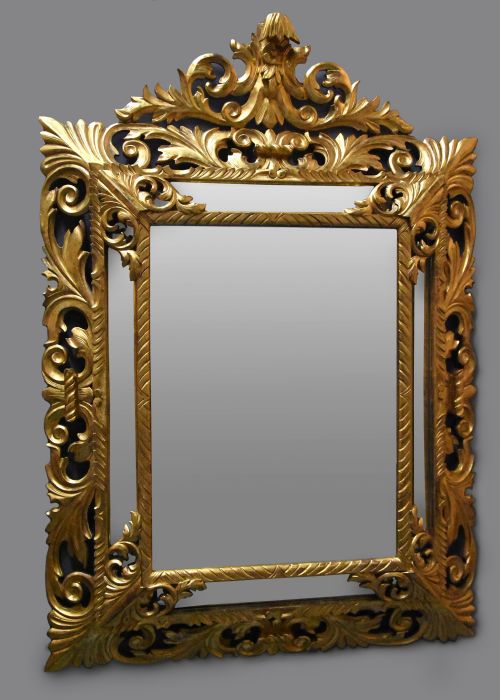

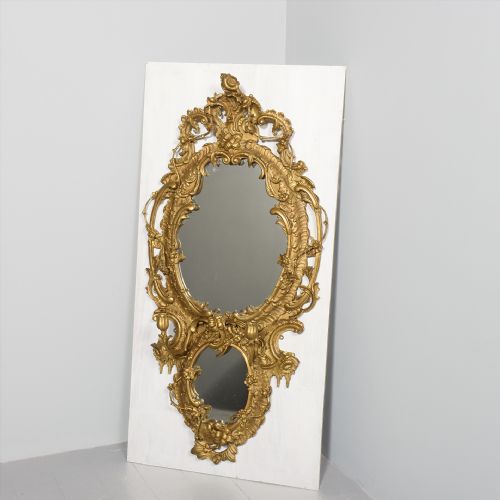
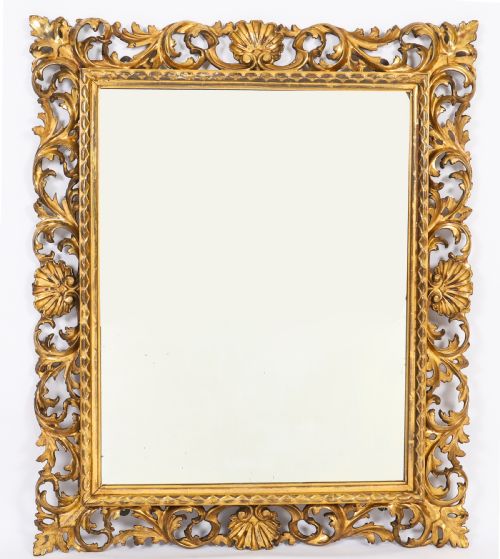

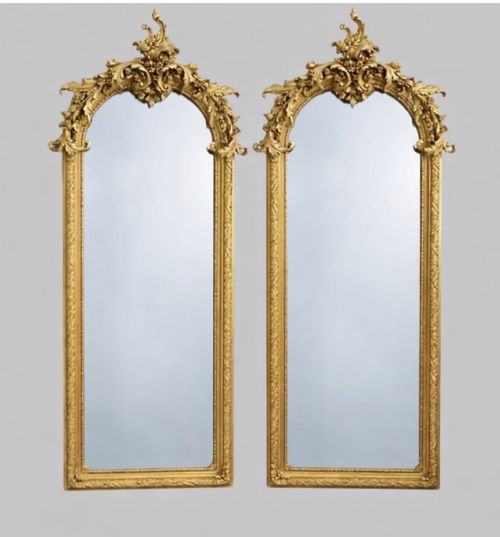
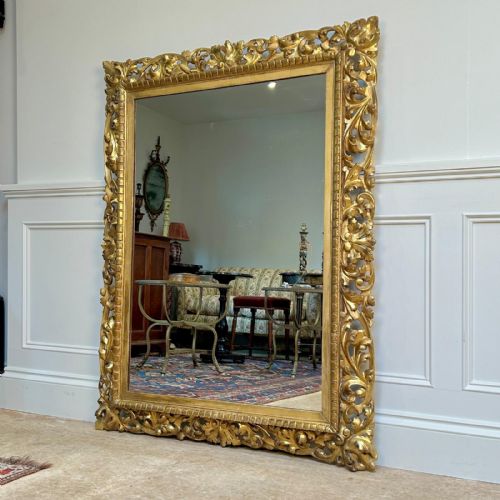


Acanthus Leaf Frame
An acanthus leaf frame brings classical botanical carving into an interior, framing mirrors and pictures with deep sculptural scrolls.
Acanthus Leaf Frame
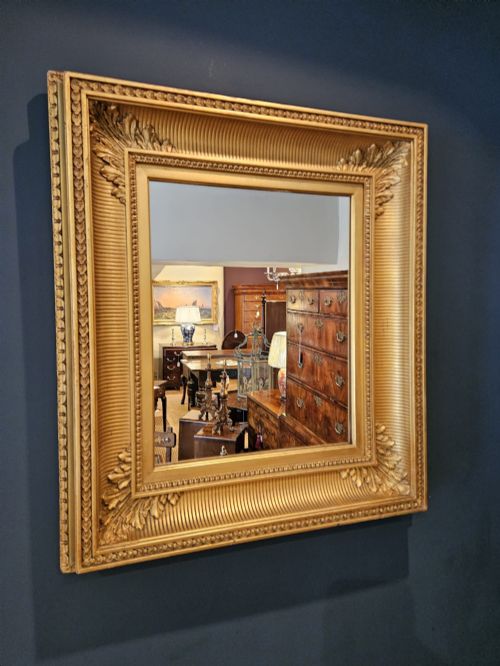
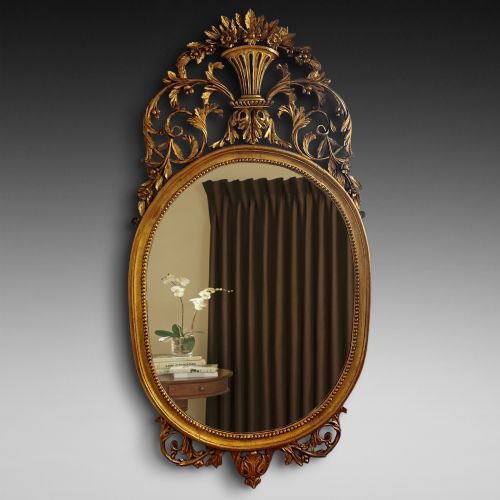
An acanthus leaf frame combines functional utility with exuberant botanical ornamentation, commonly taking the form of wall mirrors, picture frames, and overmantel mirrors. The pieces appearing most frequently across this selection date from the nineteenth century, though earlier eighteenth-century Georgian and seventeenth-century Baroque examples also emerge.
Makers and workshops predominantly shaped these borders into Rococo, Italian Baroque, and Florentine styles, drawing heavily on French Rococo and Rococo Revival influences. Alongside mirrors and picture frames, the inventory includes rarer domestic fixtures such as window pelmets and table mirrors.
The underlying structure frequently supports glass, wood, and oak, often shaped into oval, archtop, or cushion configurations. Buyers encounter both grand, decorative overmantel centerpieces and small-proportioned wall hanging variants.
Materials and Construction Techniques
Artisans built the primary substrate using carved wood, oak, or limewood, applying hand-chiseled techniques to form the intricate lobes of the acanthus foliage. This carved wooden foundation provided the structural rigidity necessary for heavy wall installations and large overmantel mirrors.
Surfaces were frequently finished with gesso to smooth the wood grain before receiving applications of gold leaf, parcel gilt, or silver and gold leaf. Composition material was occasionally utilised for repetitive decorative mouldings alongside traditional carved elements.
Early carvers occasionally tucked tiny hidden imperfections into dense leaf scrolls, proving that even Baroque artisans occasionally needed to rush before tea time.
Assessing Craftsmanship and Execution
The distinction between standard production and exceptional quality rests upon the depth and sharpness of the hand carving within the acanthus foliage. Superior examples display undercut leaves and crisp, confident scrolls that reveal the direct touch of the woodcarver rather than uniform machine moulding.
Surface treatment further separates the tiers of quality, with genuine gold leaf and skilled burnishing retaining a warm, luminous reflectivity over centuries. Poorer examples rely on flat composition ornament and heavy, indiscriminate over-gilding that obscures the underlying botanical detail.
The Acanthus Leaf Frame Glossary
- Giltwood
- Wood that has been coated with gold leaf over a prepared gesso ground. This finish provides a durable and brilliant metallic sheen characteristic of formal antique frames.
- Gesso
- A plaster-like mixture applied to wooden frames as a base for gilding and fine detailing. It allows artisans to carve intricate secondary ornamentation before applying gold leaf.
- Rococo Revival
- A nineteenth-century design movement that emulated the asymmetrical scrolls, shell motifs, and naturalistic foliage of the eighteenth-century Rococo period. It heavily influenced the ornamentation found on Victorian mirror frames.
- Cushion Frame
- A mirror or picture frame with a broad, rounded profile resembling a squab cushion. This form gained popularity during the seventeenth and nineteenth centuries to showcase rich wood grain or elaborate carvings.
- Pelmet
- A decorative wooden framework placed above a window or mirror to conceal fixings and drapery. Surviving antique examples are frequently carved with acanthus and gilt finishes matching contemporary mirror designs.
Acanthus Leaf Frame: Frequently Asked Questions
How do I date an acanthus leaf frame?
Dating relies on examining the construction methods of the wooden carcass, the composition of the gesso, and the specific stylistic vocabulary of the carving. Eighteenth-century pieces often display hand-bewn joinery and deep, organic gesso layering beneath the gold leaf.
Later nineteenth-century revival pieces may utilise machine-planed timber or composition ornament alongside the carved acanthus foliage. Checking the backboards and fixings provides further clues regarding the period of manufacture.
Where should I hang a giltwood mirror?
Giltwood mirrors with acanthus decoration traditionally function as focal points above mantelpieces, console tables, or as principal wall art in reception rooms. Their reflective glass and metallic surfaces amplify natural light within smaller or darker spaces.
Positioning them away from direct, harsh sunlight and moisture protects the delicate gold leaf and gesso ground from premature degradation.
Are these frames made of solid wood?
The primary structural frames typically consist of solid timber such as oak, limewood, or pine, chosen for stability and carving capability. However, the intricate surface relief of the acanthus leaves is frequently built up using gesso and composition material over the wooden base.
This hybrid construction allowed carvers and gilders to achieve high-relief botanical details that would be structurally unstable if carved entirely from a single piece of wood.
What is a Florentine frame?
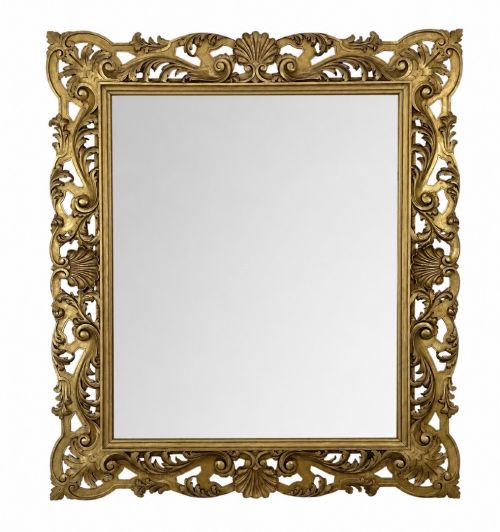
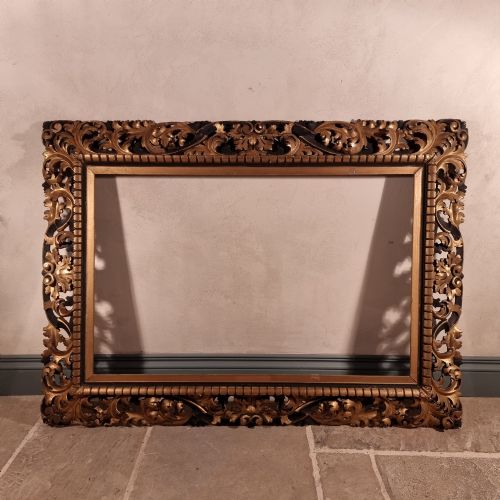
A Florentine frame originates from workshops in Florence, Italy, and is characterised by deep, sweeping mouldings covered in ornate pierced work and rich gilding. These pieces frequently feature prominent acanthus scrolls and classical Italianate motifs designed to frame paintings or mirrors.
They range in scale from small portrait formats to large wall-hanging mirrors intended for grand domestic interiors.