


9ct Gold Pearl Clasp
A 9ct gold pearl clasp secures multi-strand necklaces and bracelets, combining precious metal with lustrous gems for fastening elegance.
9ct Gold Pearl Clasp
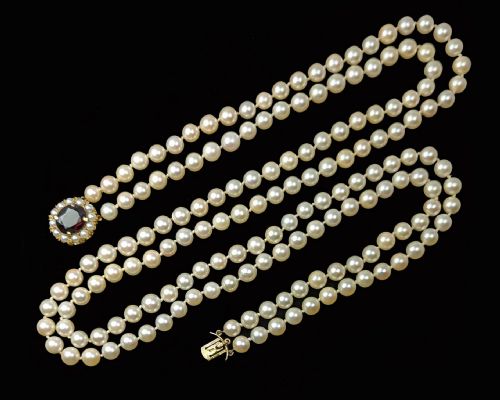
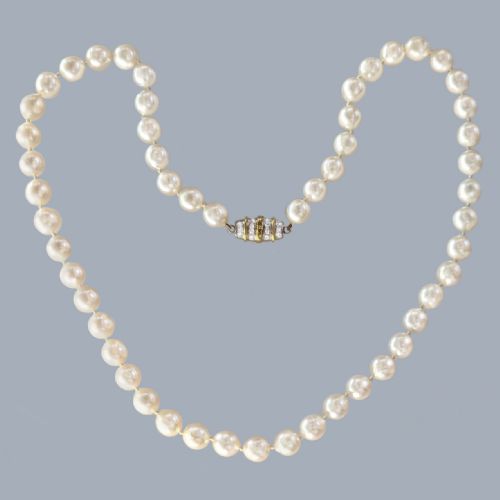
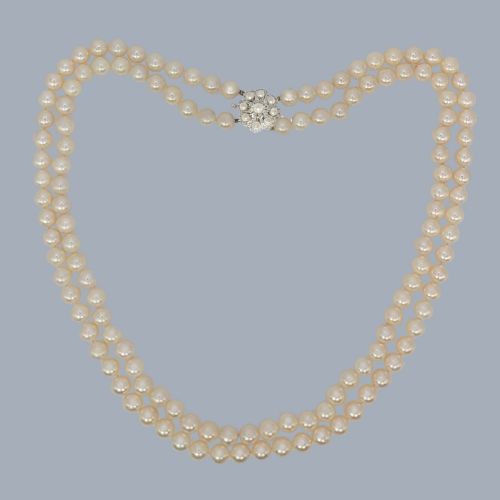
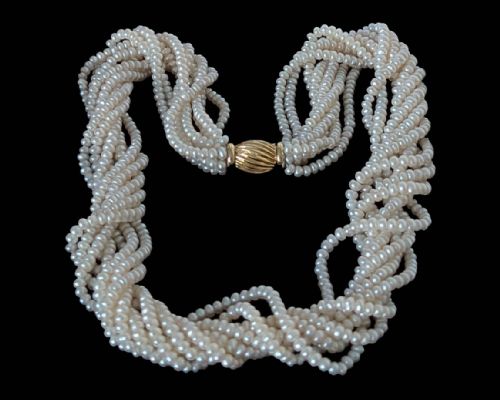
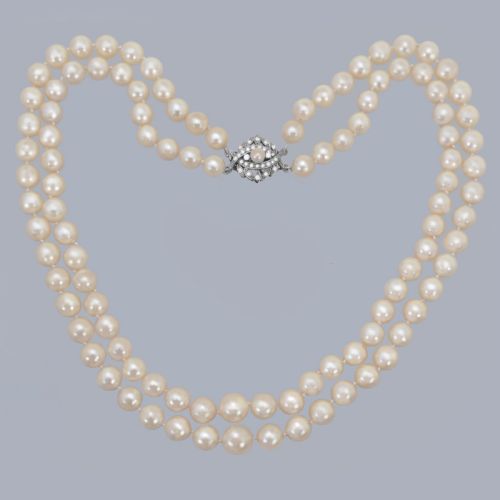
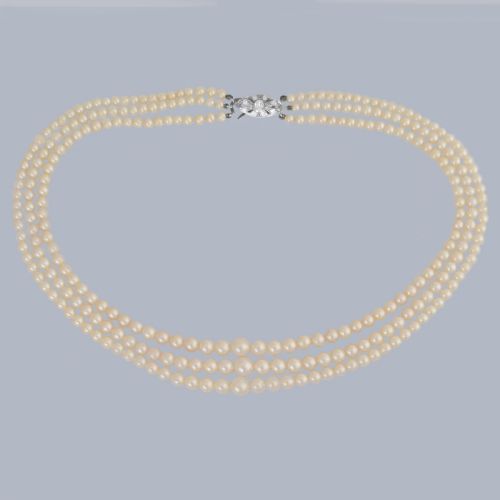
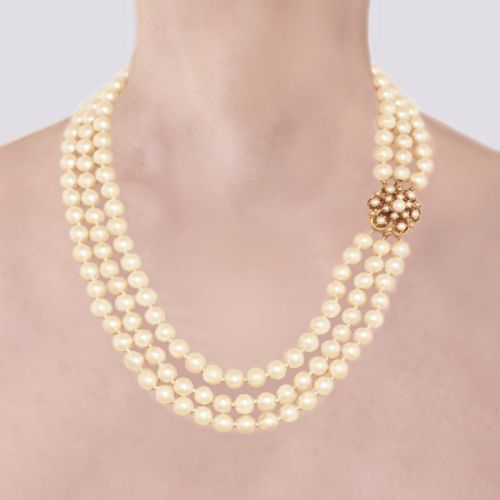
A 9ct gold pearl clasp is typically found securing vintage and antique necklaces and bracelets featuring cultured, freshwater, or natural pearls. These items range from single strands to multi-strand arrangements, often incorporating gemstones such as garnets, sapphires, rubies, amethysts, and diamonds within the clasp mount.
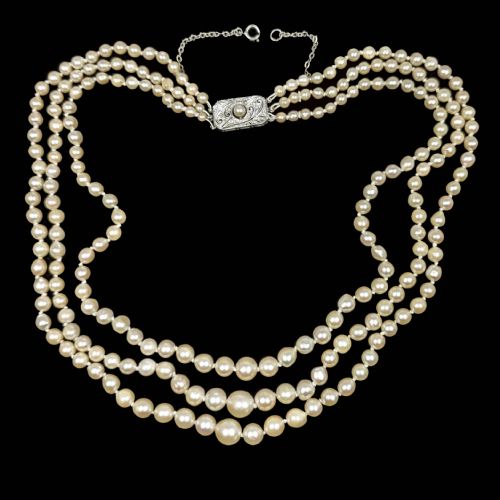
The pieces recorded span from the Victorian and Edwardian eras through the 1930s, 1940s, 1950s, and 1960s. Mid-century examples dominate the selection, showcasing structured double and triple-strand pearl necklaces alongside matching bracelets equipped with secure box or padlock fastenings.
How they were made
The clasps are constructed from 9ct yellow or white gold, often shaped into floral clusters, foliate motifs, or geometric boxes to house central gemstones or pearl accents. Silk thread is traditionally utilised for stringing the pearls, frequently finished with hand-knotting between individual beads to secure them.
Many necklaces and bracelets incorporate integrated tongue-in-box mechanisms within the gold work, ensuring the decorative face of the clasp locks firmly into place. Hallmarks stamped into the gold provide official confirmation of the metal purity and assay office origin.
Several vintage strands arrive newly restrung, proving that even pearls appreciate a good spring clean after decades of hard service.
What varies in quality
Quality in these pieces is dictated by the calibre of the pearls and the complexity of the gold and gemstone work on the fastening. Uniformity in pearl size, orient, and lustre separates standard strands from finer examples, while multi-stone gem-set gold clasps require superior goldsmithing.
The integrity of the construction also distinguishes the range, particularly the robustness of the box mechanism and whether the silk stringing has been recently renewed to maintain proper tension across multiple strands.
Cropp and Farr
The 9ct Gold Pearl Clasp Glossary
- Cultured pearl
- Pearls formed with human intervention by inserting a nucleus into an oyster or mollusc. They form the primary bead material across the mid-century pieces.
- Seed pearl
- Very small natural or cultured pearls, often utilised in historic cluster designs and delicate Edwardian or Victorian jewellery. They create dense textured patterns on the clasp face.
- Padlock clasp
- A heart-shaped or rectangular locking mechanism common on antique Victorian and Edwardian bracelets. It functions both as a functional fastener and a decorative centrepiece.
- Box clasp
- A secure fastening where a curved metal tongue snaps into a hollow box, frequently hidden beneath a decorative cluster of gold and gemstones. It provides safety for multi-strand necklaces.
- Graduated pearls
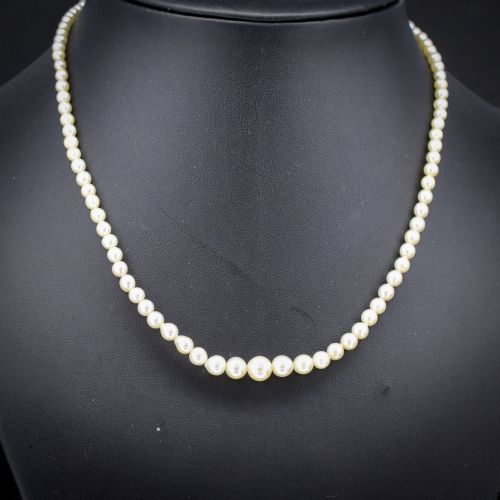
- Pearls arranged in order of size, typically decreasing from the largest bead at the centre front to smaller beads near the fastening. This technique ensures a balanced drape around the neck.
9ct Gold Pearl Clasp: Frequently Asked Questions
How do I secure a box clasp?
A box clasp is fastened by gently pushing the curved metal tongue into the receiving housing until it clicks firmly into place. Many designs also feature a side safety figure-of-eight catch for extra security.
To release the mechanism, lift the safety catch if present and press the tongue slightly to disengage it from the housing without pulling on the pearls.
How should I store my pearl necklace?
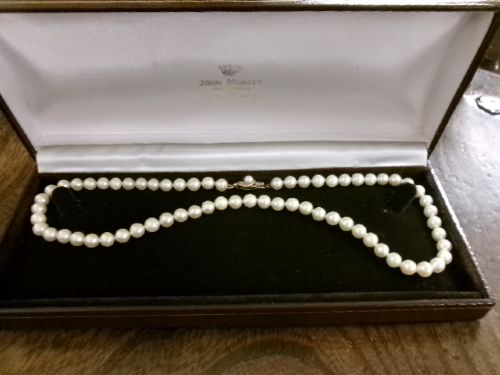
Pearls should be stored flat in a soft pouch or lined jewellery box to prevent the silk thread from stretching and to protect the lustre from scratching against harder gems. Keeping them away from direct cosmetics and perfumes preserves the surface.
Because 9ct gold is durable, the main vulnerability lies in the stringing material, which benefits from relaxed storage rather than hanging vertically under weight.
How do I date a pearl clasp?
Dating relies on a combination of the gold hallmarks stamped onto the clasp, the overall style of the mounting, and the stringing technique. Mid-century pieces often display clean geometric or floral cluster forms, while Edwardian and Victorian versions utilise padlock designs or seed pearl work.
Assay office stamps and date letters on the gold provide the most precise chronological marker for the fastener.
Why are some pearls hand-knotted?
Hand-knotting involves tying an individual knot in the silk thread between each pearl, preventing the beads from rubbing against one another and causing wear. This technique also ensures that if the strand breaks, only a single pearl is lost rather than the entire set.
It is a standard indicator of careful construction found across finer vintage pearl necklaces and bracelets.