

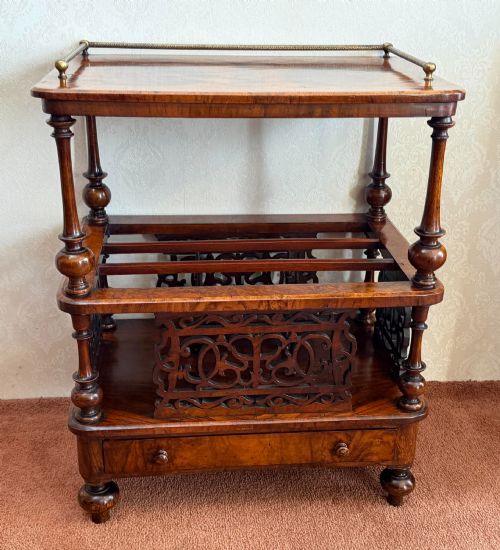
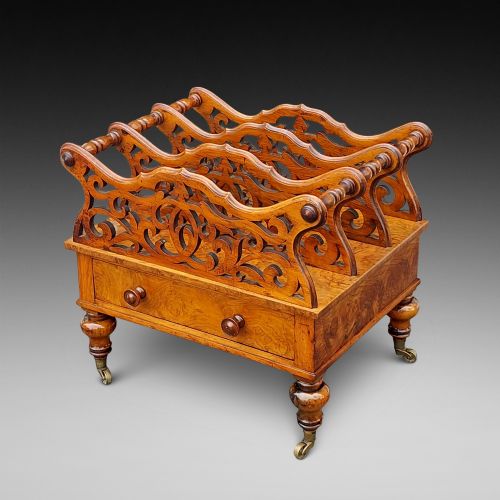


19th Century Walnut Canterbury
A 19th century walnut canterbury is a practical nineteenth-century rack for music sheets and periodicals, prized for figured grain and partitioned convenience.
19th Century Walnut Canterbury
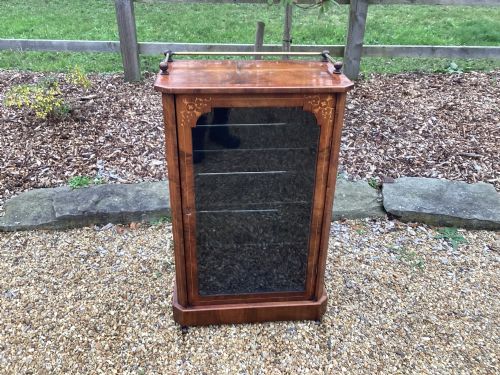
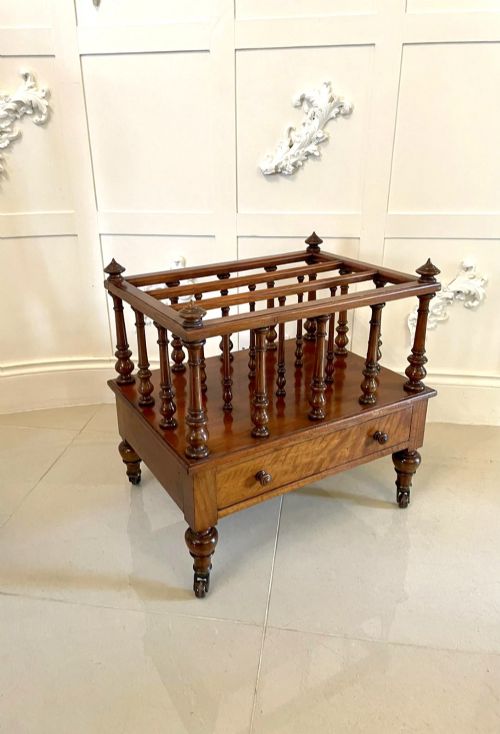
A 19th century walnut canterbury is a distinct Victorian piece designed originally to hold sheet music or newspapers within divided wooden compartments. The listings show forms ranging from simple magazine racks to multi-tiered whatnot tables and music cabinets.
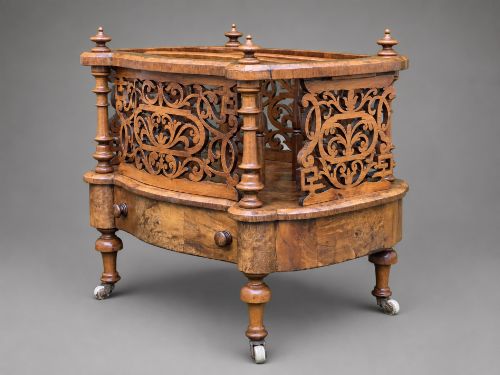
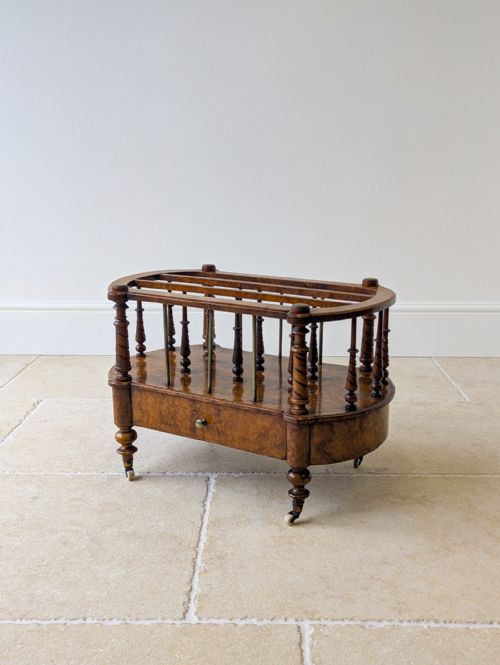
Most examples found here date from the Victorian period, frequently showing figured burr walnut veneers, inlaid marquetry, or serpentine shaping. Buyers frequently encounter pieces combining the traditional slated rack base with a lower drawer or an upper tabletop supported by slender turned pillars.
Materials and construction methods
Cabinet makers utilised solid walnut and decorative burr walnut veneers over secondary timbers, often accentuating the surfaces with detailed wood inlay and marquetry. Brass castors, metal mounts, and ceramic elements frequently complete the mobility and detail of the lower sections.
Structural embellishments rely on pierced fretwork, turned spindles, and carved partitions to divide the compartments securely. Ormolu mounts appear on specific French-influenced examples alongside copper and brass hardware.
19th Century Walnut Canterbury Retail Price Guide 2026
Typical asking prices for 19th century walnut canterbury among the pieces listed under this phrase on Sellingantiques today, from the lower quarter to the upper quarter. They describe what is for sale here now, not the wider market.
Listings demonstrate forms ranging from simple open magazine racks to multi-tiered whatnot tables, music stands, and enclosed music cabinets.
Factors of craftsmanship and distinction
Quality rests upon the choice of burr walnut veneer and the precision of the inlaid marquetry across the main body and shelves. Superior execution shows in crisp fretwork piercing and the balanced proportions of combined whatnot or music cabinet designs.
Substantial proportions and integrated drawer construction elevate certain pieces above standard partitioned racks. The refinement of turned supports and the inclusion of original castors or metal mounts further separate standard models from finer workshop productions.
The 19th Century Walnut Canterbury Glossary
- Canterbury
- A low stand with partitioned vertical sections used originally for holding sheet music or periodicals. It typically includes a small base drawer and turned legs fitted with castors.
- Burr Walnut
- A sliced veneer taken from the knotted growth of a walnut tree, producing swirling, highly decorative grain patterns. Cabinet makers prized this timber for surface decoration on Victorian furniture.
- Whatnot
- An open set of multiple shelves used for displaying ornaments or books, frequently integrated into the upper structure of a canterbury. These pieces combine tiered display space with lower storage compartments.
- Marquetry
- Decorative patterns formed by fitting together thin slices of various wood veneers onto a surface. It appears on panelled fronts and tabletops of nineteenth-century furniture.
- Fretwork
- Ornamental perforated woodwork created by cutting intricate patterns through a thin board. Victorian makers applied this technique to partition dividers and gallery rails.
19th Century Walnut Canterbury: Frequently Asked Questions
What did they use a canterbury for?
These pieces served as dedicated storage holders for sheet music, folios, and daily newspapers near a piano or sitting room chair. The vertical partitions kept unbound papers upright and tidy.
Over time, makers expanded the form to incorporate drawers and open display shelves, allowing the furniture to function as a small side table or music cabinet.
How do I spot burr walnut?
Burr walnut displays distinctive, swirling grain patterns filled with small circular clusters and knot formations. This decorative veneer comes from irregular growths on the walnut tree.
Cabinet makers reserved these highly figured slices for prominent exterior surfaces like tabletops, drawer fronts, and main panels.
Are music cabinets different from standard racks?
Music cabinets enclose the storage area behind doors rather than leaving the vertical partitions open to the room. They protect fragile paper collections from dust.
Both forms share the nineteenth-century walnut construction, but cabinets often provide tiered whatnot tops or secure internal shelving.
Where should I place one today?
A canterbury fits well beside a sofa or desk to hold current magazines, journals, or writing portfolios. The compact footprint suits smaller living spaces.
Examples featuring an upper whatnot shelf or work top also function effectively as decorative side tables for lamps and ornaments.