


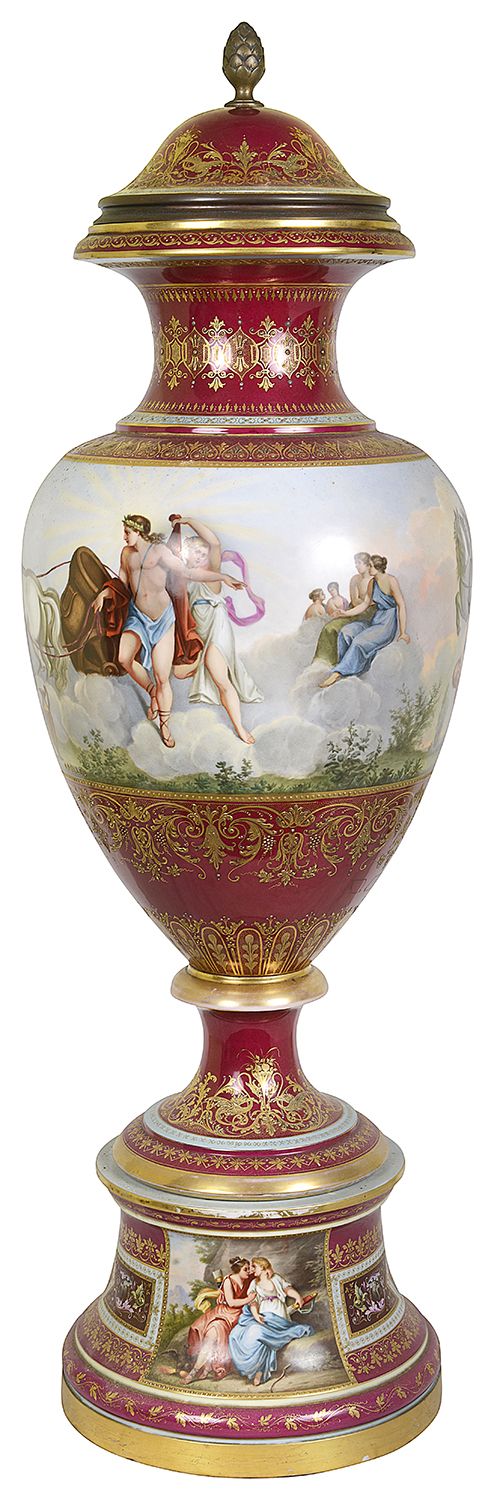
19th Century Vienna Porcelain
These 19th century vienna porcelain pieces bring classical painted scenes and rich gilding into a room.

19th Century Vienna Porcelain
When you search for 19th century vienna porcelain, you encounter a specialised body of ceramics created during the nineteenth century, including the decades around eighteen-eighty and eighteen-ninety. The selection on this page centres on decorative chargers, cabinet plates, lidded urns, and vases.
Most items on this page showcase figurative subjects drawn from classical mythology and history, such as Bacchus and Ariadne, the birth of Adonis, or the wise and foolish virgins. Alongside large chargers and vases, the evidence includes chocolate cups, ewers, trays, and table pieces.
The physical objects range from single cabinet plates signed by artists like Wagner to large pairs of lidded vases and garnitures. These ceramics often adopt neoclassical revival and historicist forms that echo earlier European periods.
How they were made
Makers shaped fine ceramic bodies into vessels, chargers, and plaques, applying hand-painted polychrome scenes with careful brushwork. Enamel colours provide the palette for narrative figure work and romantic subjects.
Gold leaf, gilding, and gilt finish the borders and handles, framing the painted panels. Ormolu and wood mountings appear on select items, combining metalwork and joinery with the porcelain.
19th Century Vienna Porcelain Retail Price Guide 2026
Typical asking prices for 19th century vienna porcelain among the pieces listed under this phrase on Sellingantiques today, from the lower quarter to the upper quarter. They describe what is for sale here now, not the wider market.
Materials documented across the inventory include porcelain, enamel, gold leaf, gilding, gilt, giltwood, ormolu, and wood.
What varies in quality
The standard of 19th century vienna porcelain rests primarily upon the skill of the hand-painted decoration and the crispness of the gilded ornament. Pieces featuring detailed narrative scenes signed by known painters command attention for their artistic execution.
The weight and presence of the physical form also distinguish the range, from small chocolate cups to large paired urns and monumental chargers. The application of gold leaf and the preservation of the painted enamel surface complete the assessment of an individual piece.
Wagner·Johner
The 19th Century Vienna Porcelain Glossary
- Charger
- A large decorative plate intended for display rather than service. These items often provide a wide canvas for mythological or historical painted scenes.
- Gilding
- The application of gold leaf or gilt to ceramic surfaces. This technique highlights handles, rims, and borders with reflective metallic brilliance.
- Garniture
- A set of three or more matching decorative vessels designed to sit together on a mantelpiece or sideboard. They typically comprise a central lidded vase flanked by smaller matching pieces.
- Ewer
- A large jug with a wide spout and shaped handle, derived from historical water vessels. In nineteenth-century porcelain, they serve purely decorative functions.
- Enamel
- Vitreous material fused to the ceramic body through firing to create durable coloured designs. It forms the primary medium for the figurative artwork on these objects.
19th Century Vienna Porcelain: Frequently Asked Questions
How do I identify 19th century vienna porcelain?
These pieces are identified by their nineteenth-century manufacture, porcelain body, and hand-painted classical or mythological scenes. They frequently feature heavy gilding and distinctive cabinet forms.
Look for signed panels, classical subject matter, and period characteristics such as neoclassical revival styling.
Were these items meant for daily use?
Most of these objects were created for display in cabinets, on sideboards, or upon mantelpieces. Items like cabinet plates, large chargers, and decorative urns served as visual art.
Even functional forms like chocolate cups and ewers functioned primarily as decorative works of art within nineteenth-century interiors.
How should I display these porcelain pieces?
These items require stable display surfaces away from direct sunlight to protect the enamel colours and gold leaf. Large chargers and plaques suit wall hanging or specialised stands.
Vases, urns, and garnitures look best placed on mantelpieces or tables where their hand-painted details remain visible.
What subjects appear on the painted panels?
The painted decoration draws heavily from classical mythology, including figures like Bacchus, Ariadne, and Venus. Biblical scenes, historical moments, and romantic couples also feature prominently.
Artists rendered these narratives in fine detail across plates, chargers, and the bodies of large vases.