
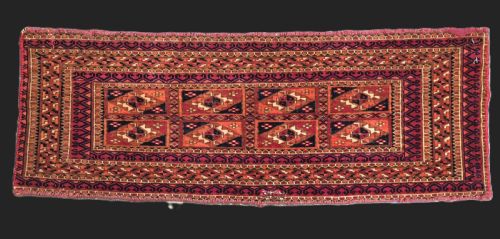
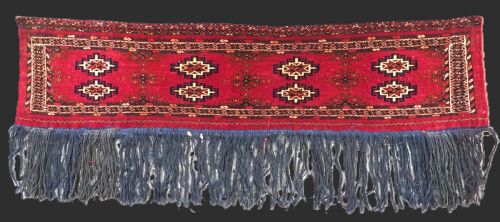
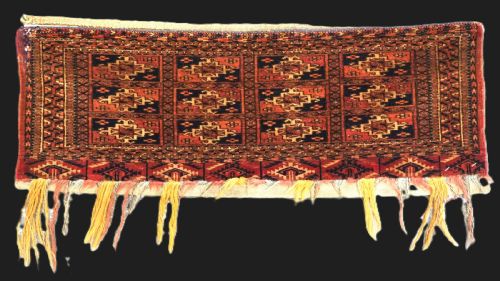


19th Century Tribal Bag
When you examine a 19th century tribal bag, you hold a piece of nomadic heritage shaped by skilful hands for practical storage.
19th Century Tribal Bag
The 19th century tribal bag encompasses utilitarian woven containers created by nomadic and village groups across Central Asia, the Caucasus, and Persia.
Buyers will encounter specific forms such as torbas, chuvals, mafrash storage bags, and tent-pole okbash woven for household organisation and dowry purposes.
Most pieces date from the mid to late nineteenth century, reflecting traditional tribal patterns passed down through generations of weavers.
How they were made
Weavers utilised hand-spun wool and cotton foundations, often incorporating goat hair for durability along the edges and backs.
Natural dyes provide the rich colour palettes characteristic of these textiles, sometimes accented with silk highlights.
Techniques range from standard pile weaving to flat-woven soumac and intricate brocade structures.
Certain specialised containers were woven exclusively to house wooden tent poles during nomadic migrations.
What varies in quality
The fineness of the weave and the precision of the drawing dictate the visual impact of the design.
Completeness alters the character of a piece, distinguishing intact examples with original backs and hanging loops from surviving textile fragments.
The 19th Century Tribal Bag Glossary
- Torba
- A small horizontal wall bag used by Turkmen tribes for domestic storage.
- Chuval
- A large tent bag traditionally used for storing bedding and household goods.
- Mafrash
- A rectangular storage bag or panel associated with Caucasus and Shahsavan weaving.
- Gul
- A medallion or repeated octagonal motif characteristic of Turkmen carpets and bags.
- Soumac
- A flat-weave technique where coloured weft threads wrap around the warp yarns.
19th Century Tribal Bag: Frequently Asked Questions
How were tribal bags used?
Nomadic communities utilised these woven containers inside tents for storing clothing, bedding, and smaller personal possessions.
Many examples also served decorative functions or formed part of a bride's dowry collection.
How do I hang a textile bag?
Many surviving pieces feature original hanging loops or sturdy wool backs that facilitate secure wall mounting.
Supporting the weight evenly across a flat wooden batten helps preserve the structural integrity of the textile.
What is a torba?
A torba is a specific format of Turkmen bag, typically wider than it is tall, designed to hang inside the yurt.
These pieces often display distinct tribal guls and careful geometric drawing.
How are different tribes identified?
Weavers expressed their tribal identity through specific structural palettes, border arrangements, and characteristic medallion designs.
Tekke, Saryk, Yomut, and Ersari groups each developed recognizable stylistic vocabularies.