


Handwoven Tribal Trappings
Handwoven tribal trappings are practical nomadic weavings made for domestic and ceremonial use that bring rich colour and texture to interior spaces.
Handwoven Tribal Trappings
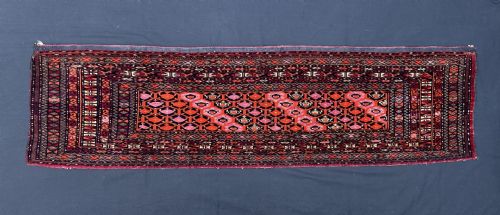
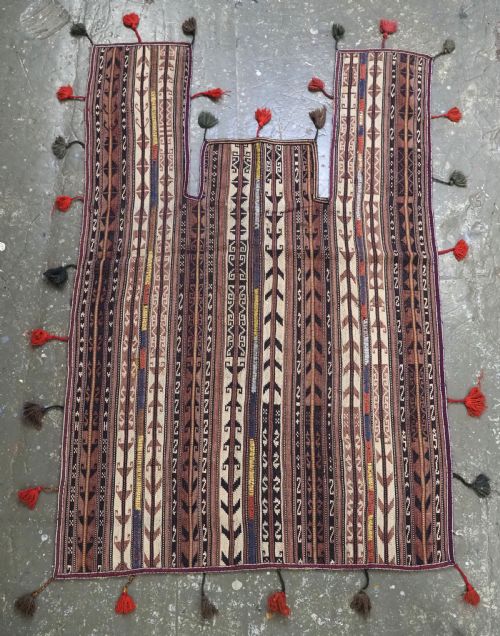
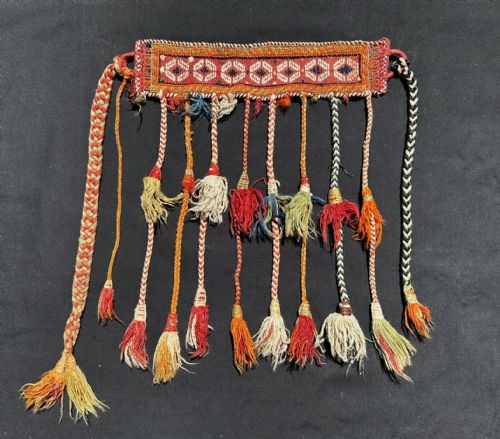
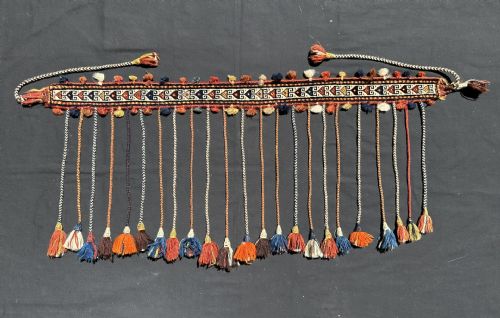
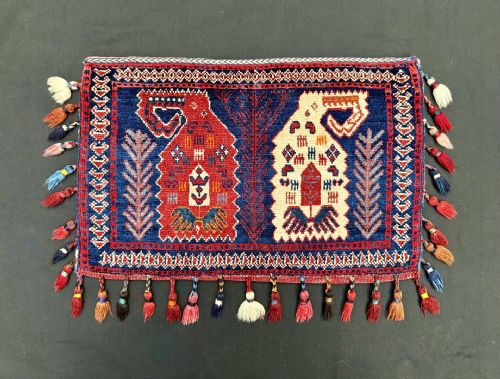
Handwoven tribal trappings comprise practical and ceremonial items produced by nomadic and settled tribes across Central Asia, Afghanistan, and Persia. These pieces include storage bags, torba faces, horse blankets, and camel neck dress garments that served specific functions in tribal life. Such weavings reflect the distinct cultural traditions and visual vocabulary of groups including the Turkmen, Qashqai, Baluch, and Afshar.
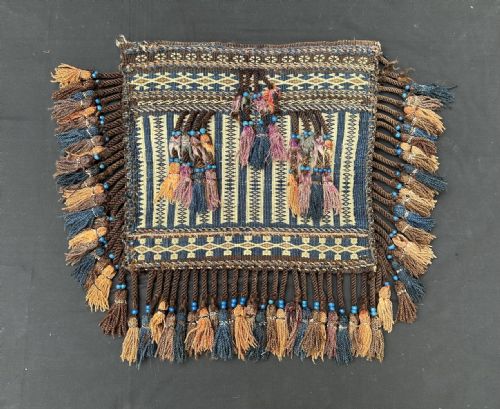
On this page, the selection centres on nineteenth and early twentieth-century examples representing specific regional groups and weaving traditions. Buyers will encounter specialised formats such as asymmetric torba faces, ceremonial horse covers, and vanity bags created with traditional techniques. These items connect collectors directly to the utilitarian art forms of nomadic societies.
How they were made
The construction of these textiles relies primarily on wool foundations combined with wool pile and flatwoven structures. Natural dyes provide the enduring palette seen across the pieces, lending depth to the traditional motifs.
Selected examples incorporate additional materials such as cotton for structural stability and glass beads for decorative enhancement. Weavers utilised dense knotting techniques to ensure durability for items subjected to daily domestic use or ceremonial transport.
Several horse blankets and camel neck dress garments survive in this collection, preserving the festive attire once worn by bridal animals during nomadic wedding processions.
What varies in quality
Quality in these textiles depends on the density of the weave and the precision with which tribal motifs are executed. Finer knotting allows for sharper definition in complex patterns such as guls and curled leaf designs.
The choice of natural dyes and the preservation of original elements, including backing textiles and complete formats, distinguish superior examples. Condition and structural integrity further separate standard utilitarian objects from finely preserved dowry pieces.
The Handwoven Tribal Trappings Glossary
- Torba
- A small storage bag produced by Turkmen and other Central Asian tribes. These pieces were traditionally hung inside the yurt for household storage.
- Gul
- A medallion motif repeated across carpet designs, serving as an emblem for specific tribes and clans. Each group utilised distinct variations of these primary forms.
- Asmalyk
- A ceremonial camel trapping shaped as a pentagon, created for wedding processions and dowry displays. These items were mounted on the flanks of the bridal animal.
- Natural Dyes
- Colourants derived from plant, insect, and mineral sources before the introduction of synthetic alternatives. They yield rich tones that mellow gracefully over time.
Handwoven Tribal Trappings: Frequently Asked Questions
What are tribal trappings used for?
These textiles served practical and ceremonial roles within nomadic households, functioning as storage containers, horse covers, and wedding decorations.
Nomads utilised them in daily life and for festive occasions such as weddings, where animals wore decorative trappings.
How do I care for antique wool textiles?
Protect antique wool textiles by keeping them out of direct sunlight to prevent natural dyes from fading over time.
Vacuum them gently with a mesh screen covering the nozzle to remove dust without disturbing the wool fibres.
How can I tell different tribal designs apart?
Tribal designs are distinguished by specific structural motifs, colour palettes, and regional patterns unique to each weaving group.
Turkmen groups often feature repeated gul medallions, while Persian nomadic pieces display different geometric and animal decorations.
What is a dowry weaving?
Dowry items were finely made textiles produced by women as part of their marriage preparations for nomadic life.
These pieces often display superior weave density and careful attention to traditional design details.