





19th Century Swedish Bench
A 19th century swedish bench brings architectural restraint and pale painted warmth to an interior, built for durability and quiet northern elegance.
19th Century Swedish Bench
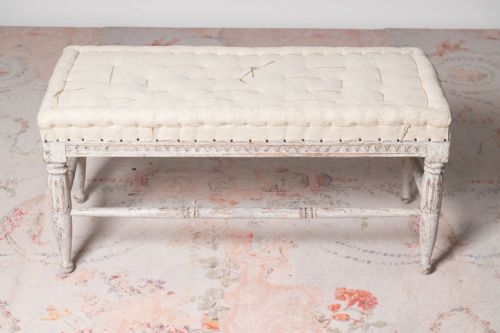
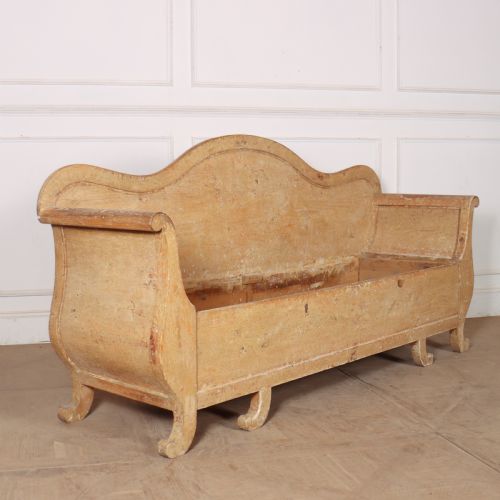
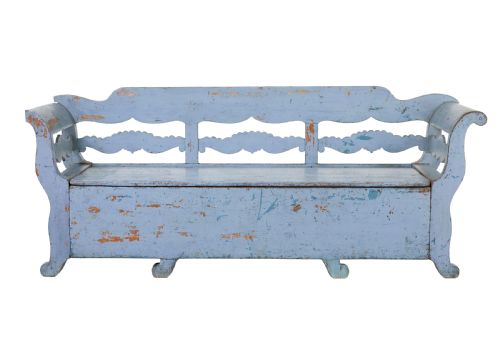
A 19th century swedish bench spans utilitarian pine workbenches and refined painted settees. Buyers encounter regional forms ranging from simple rustic settle benches to sophisticated Empire and Gustavian designs.
The selection includes large painted pine seating, children's beechwood benches, and satin birch stools. These pieces reflect both domestic Scandinavian country life and formal urban drawing-room tastes.
How they were made
Makers utilised native softwoods and hardwoods like pine, birch, and beech for structural frames. Surfaces were frequently treated with paint, or left as plain wood.
Fine upholstery fabrics and linen appear on framed settees and stools, while decorative pieces incorporate giltwood details. Construction relies on traditional joinery suited to daily domestic service.
Even a humble children's beechwood bench receives the same careful proportions as a grand salon sofa.
What varies in quality
The distinction lies between utilitarian workshop pieces and high-style urban furniture. Architectural carving and sophisticated painted finishes elevate certain forms above plain rustic pine.
Proportion and the integrity of the original wood or paint layers dictate the visual impact. Pieces demonstrating clear stylistic adherence to Gustavian or Swedish Empire ideals command greater attention.
John Tesch
The 19th Century Swedish Bench Glossary
- Gustavian
- The Swedish neoclassical style characterised by restrained symmetry and pale finishes. It draws inspiration from French Louis XVI design.
- Settle bench
- A high-backed wooden seat designed to block drafts in domestic interiors. Many examples incorporate hidden storage beneath the hinged seat.
- Giltwood
- Timber treated with a thin layer of gold leaf or powder. This technique highlights carved architectural motifs on formal settees.
- Satin Birch
- A prized timber featuring a lustrous grain pattern. It appears frequently in polished Biedermeier seating.
19th Century Swedish Bench: Frequently Asked Questions
How do I identify a Gustavian piece?
Gustavian pieces display neoclassical symmetry, fluted legs, and light painted finishes. They reflect French influence adapted to northern aesthetics.
Look for restrained carvings and pale tones that distinguish them from heavier rustic country furniture.
Are these benches comfortable to sit on?
Many wooden settles and pine benches were built for utility rather than lounging. Upholstered settees and birch stools offer softer seating.
Adding loose linen cushions helps make firm wooden seats more practical for daily use.
Where were these benches used originally?
They served in farmhouse kitchens, hallways, and grand drawing rooms across Sweden. Painted pine versions stood in rural homesteads.
Giltwood and birch settees furnished urban residences and formal reception spaces.
How should I care for painted wood?
Dust regularly with a dry cloth and avoid harsh chemical cleaners. Protect surfaces from direct sunlight to preserve historic paint.
Maintaining stable indoor humidity prevents timber movement and flaking paint layers.