

19th Century Study Desk
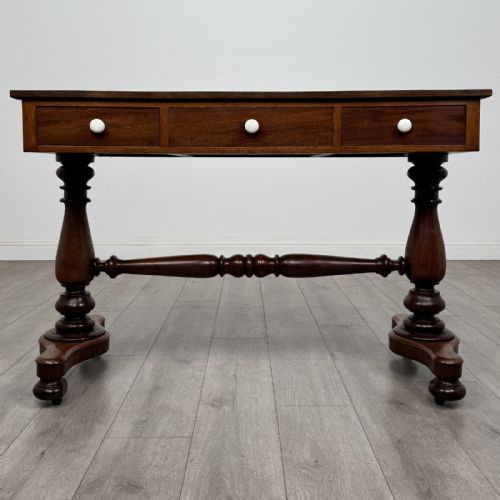
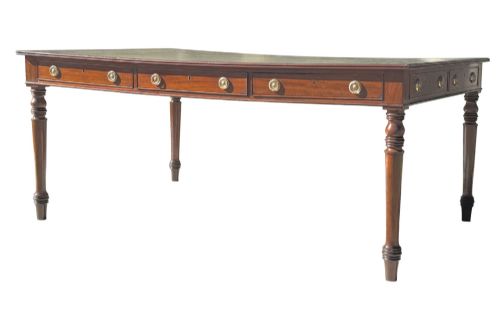
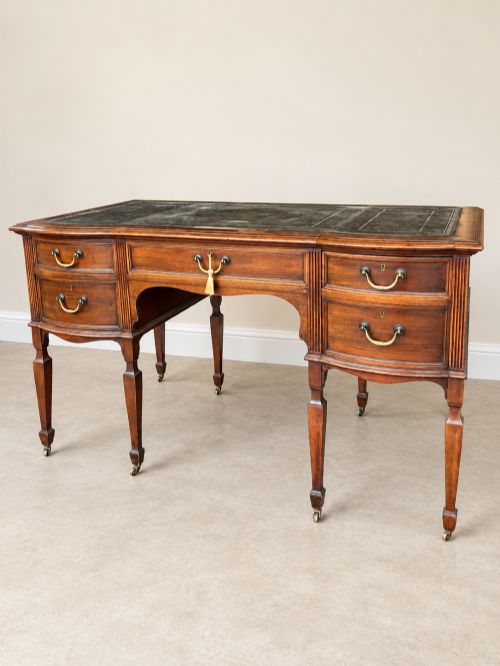
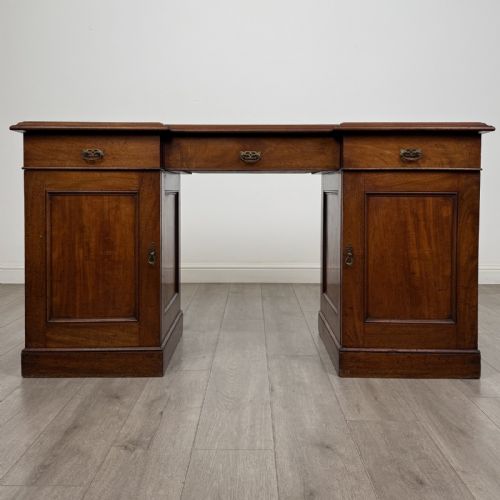
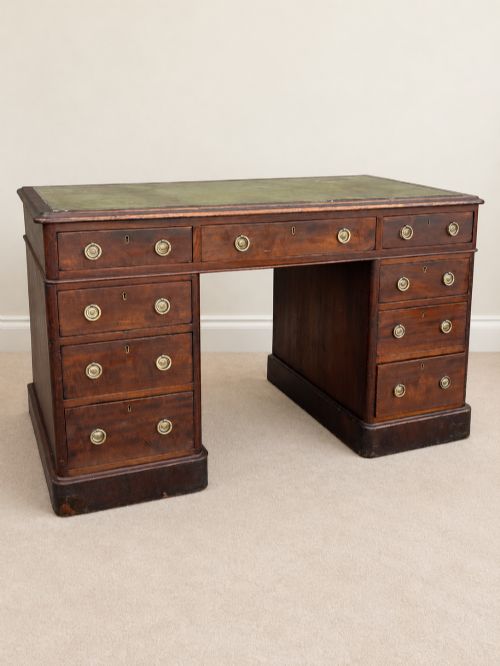
A 19th century study desk brings heavy timber and leather writing surfaces into a modern room.
19th Century Study Desk
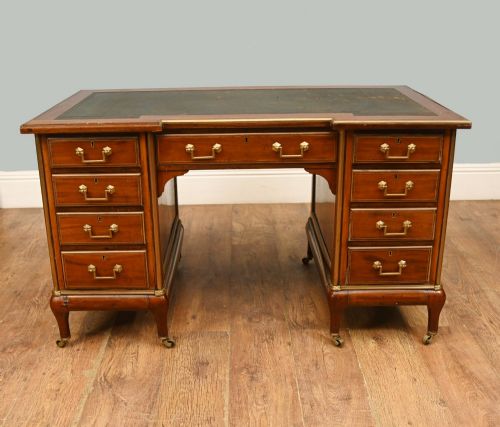
A 19th century study desk spans twin pedestal forms, partners tables, and single drawer writing surfaces built for daily use. These pieces emerge from periods including the Victorian era, Regency, and William IV, showing styles from simple Georgian lines to Louis XV Revival.
Mahogany dominates the selection on this page, accompanied by walnut, rosewood, and kingwood. Buyers meet both English pedestal formats with leather inserts and French freestanding writing tables featuring parquetry or marquetry.
Forms range from compact single-sided writing tables to large partners desks designed for two people to work opposite each other. Library tables and matching desk chairs complete the selection available to collectors.
How they were made
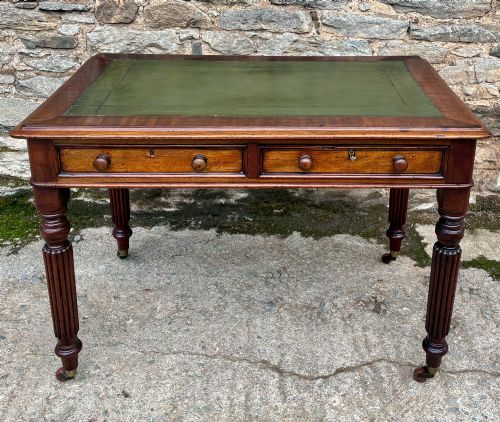
Cabinet makers constructed these desks using solid timbers like mahogany, oak, and walnut, frequently applying veneers of rosewood, kingwood, and burr walnut across flat surfaces. Drawer linings typically utilise secondary woods such as pine or oak, joined with hand-cut dovetails.
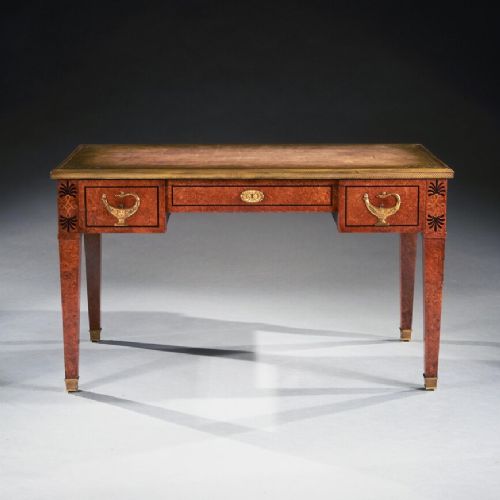
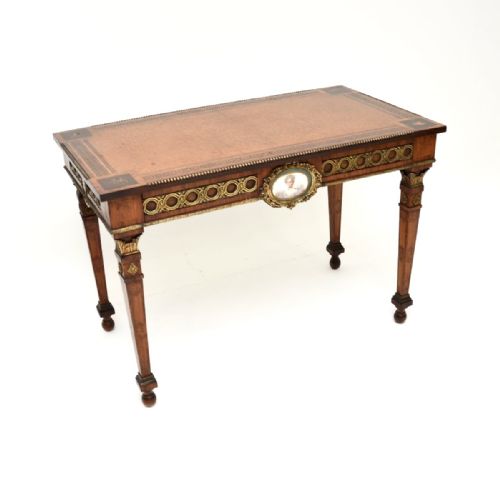
Writing surfaces incorporate inset panels of leather, often tooled with blind or gilt decoration around the perimeter. Ormolu mounts, gilt bronze, and brass handles provide metal detailing on French revival and high-status English pieces.
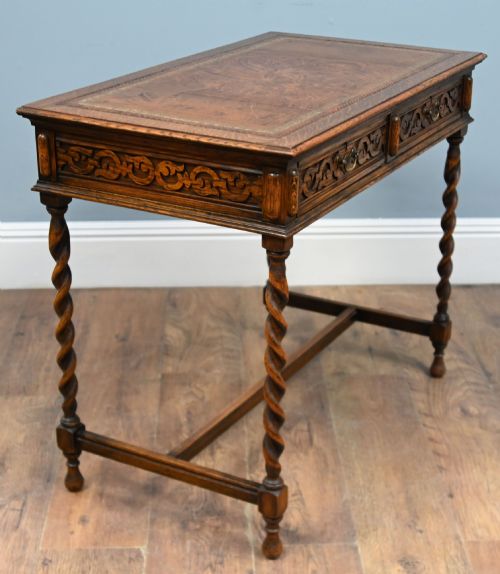
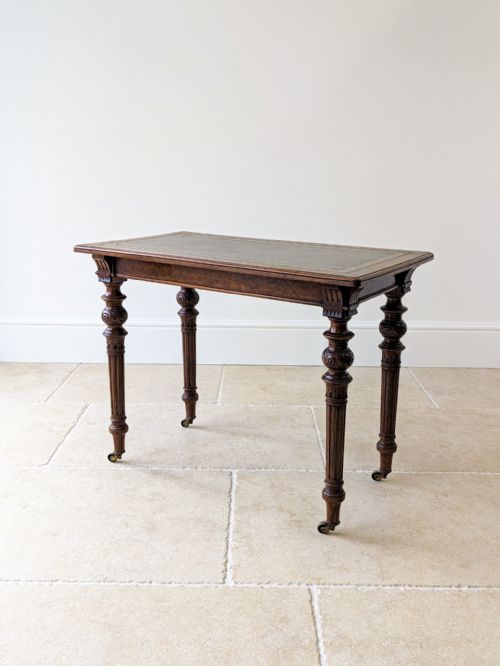
Structural turns include barley twist legs on Victorian examples, alongside tapered legs, fluted columns, and plinth bases on pedestal desks. Marquetry and parquetry techniques introduce geometric or floral patterns in contrasting timbers.
19th Century Study Desk Retail Price Guide 2026
Typical asking prices for 19th century study desk among the pieces listed under this phrase on Sellingantiques today, from the lower quarter to the upper quarter. They describe what is for sale here now, not the wider market.
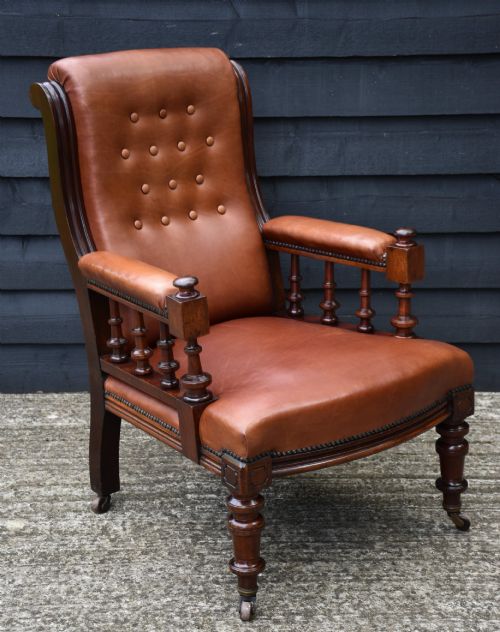
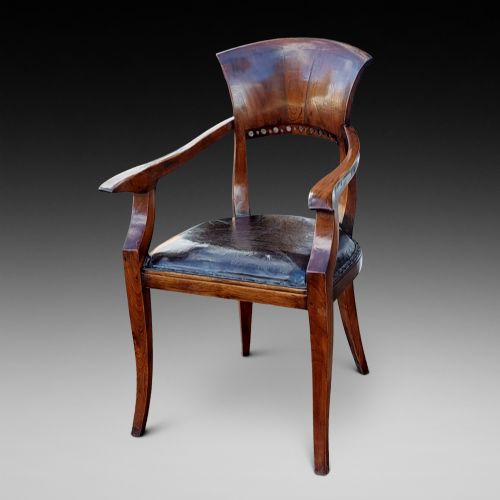
Some nineteenth-century study chairs arrive with revolving mechanisms and Gothic walnut frames built for long hours of reading.
What varies in quality
Quality rests in the selection of timber veneers and the precision of the cabinet work, particularly around drawer construction and joint tightness. Desks featuring finely figured mahogany or matched burr walnut stand apart from plain utility pieces.
The sophistication of decorative elements, such as chased ormolu mounts, hand-tooled leather surfaces, and intricate marquetry inlay, defines the upper tier of production. Maker attribution through stamps or labels elevates a piece further.
Heal and Son·Trollope and sons
The 19th Century Study Desk Glossary
- Partners desk
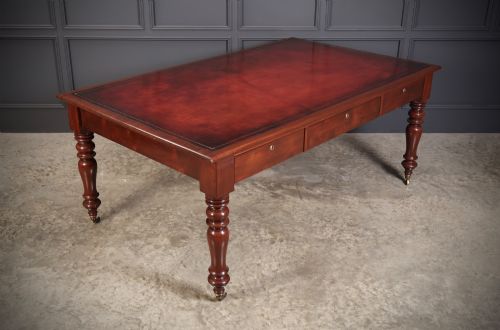
- A large desk designed with drawers and cupboards on both sides so two people can work facing one another. These pieces usually feature a full-sized leather writing surface.
- Pedestal desk
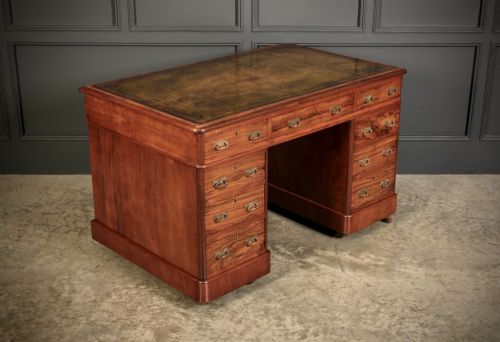
- A form comprising a top surface resting on two separate drawer pedestals or banks of drawers. A central kneehole sits between them.
- Ormolu
- Gilt bronze mounts cast and chased to ornament the corners, legs, and aprons of French-style furniture. The finish gives a bright gold appearance against dark woods.
- Parquetry
- A geometric mosaic of wood veneers arranged in patterns like cubes or chevrons. It appears on the top surfaces of French writing tables.
- Marquetry
- The art of forming decorative pictures or scrollwork using thin slices of different coloured woods. Makers applied this technique to kingwood and walnut desks.
19th Century Study Desk: Frequently Asked Questions
What is a partners desk?
A partners desk is a double-sided writing table built with drawers and cupboards accessible from both front and back. This configuration allowed two individuals to sit opposite each other in a library or study.
Such pieces usually command a larger footprint than standard single-sided pedestal desks and feature expansive leather writing surfaces.
How do I care for the leather top?
Leather writing surfaces require gentle cleaning with a damp cloth and occasional treatment with specialist leather balms to prevent cracking. Avoid using harsh chemical cleaners or placing hot cups directly on the material.
Maintaining the natural moisture of the hide keeps the gilt tooling bright and preserves the antique surface.
Where were these desks used?
These desks served in private libraries, home offices, and administrative study rooms throughout the nineteenth century. Wealthy households utilised partners desks in central rooms while smaller writing tables found places in bedrooms or parlours.
Today, they function as practical workspace furniture in contemporary home offices.
How do I tell Victorian from Regency?
Regency desks, dating from the early part of the century, often display cleaner neoclassical lines, rosewood or maple timbers, and brass inlay. Victorian pieces, produced from the eighteen thirties onward, tend toward heavier proportions, mahogany construction, and revival styles.
Examining the drawer construction and secondary woods helps confirm the period of manufacture.