



19th Century Stemware
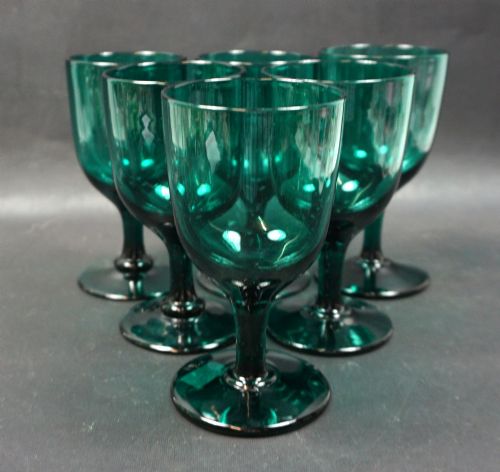
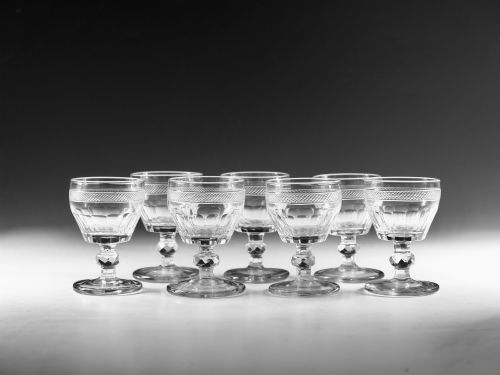
These 19th century stemware pieces bring tactile weight and rich colour to the table through hand-blown glass, cut crystal, and silver.
19th Century Stemware
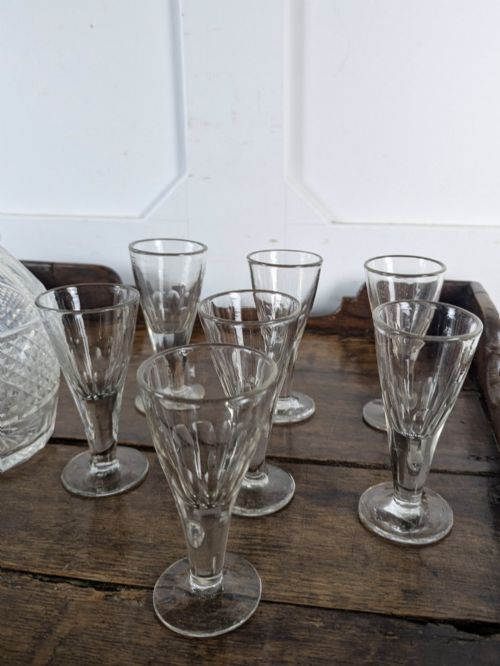
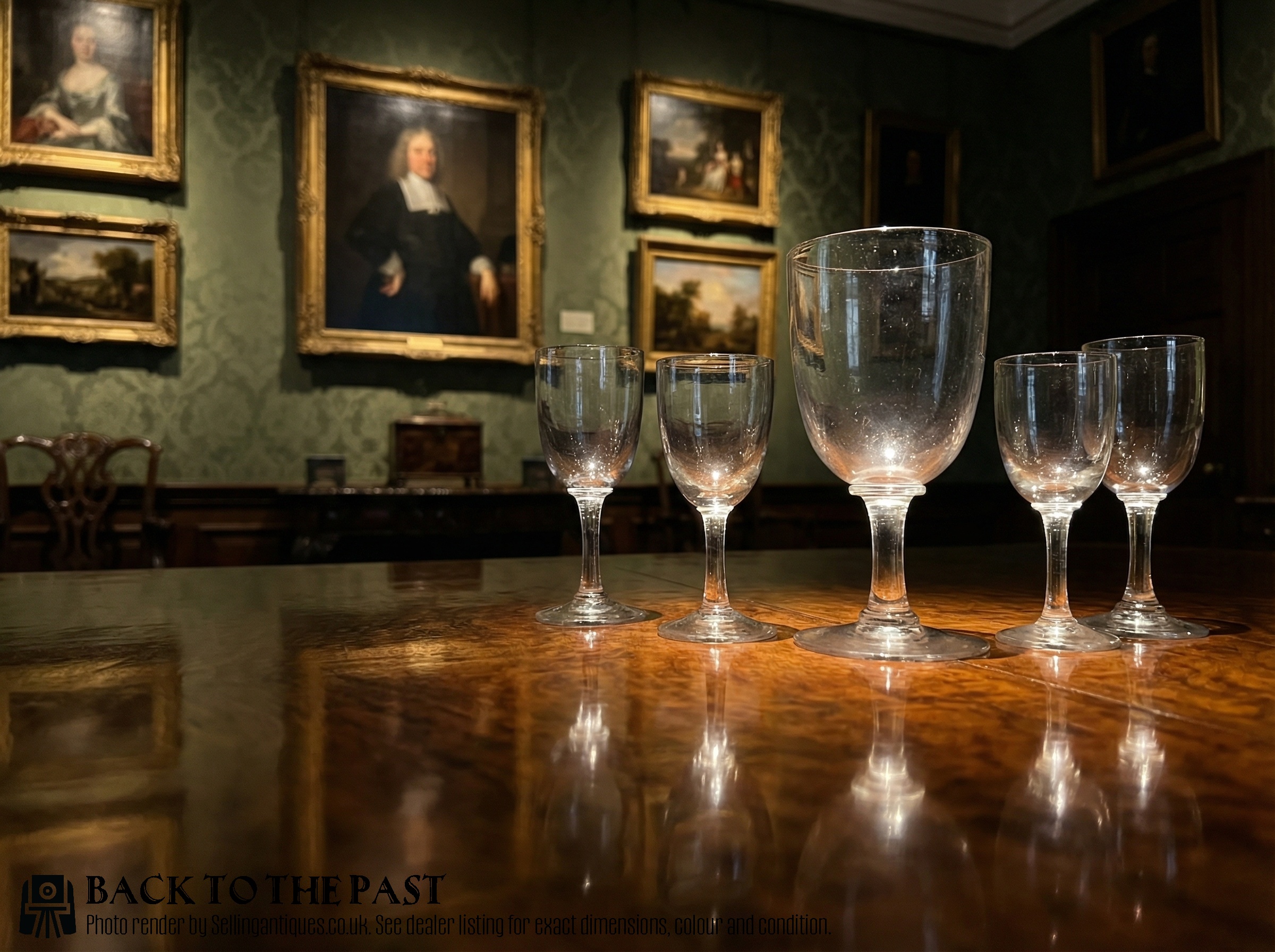
When you search for 19th century stemware, you encounter drinking vessels spanning the Georgian, Regency, and Victorian periods. The selection on this page ranges from heavy rummers and ale glasses to delicate sherry flutes and champagne coupes.
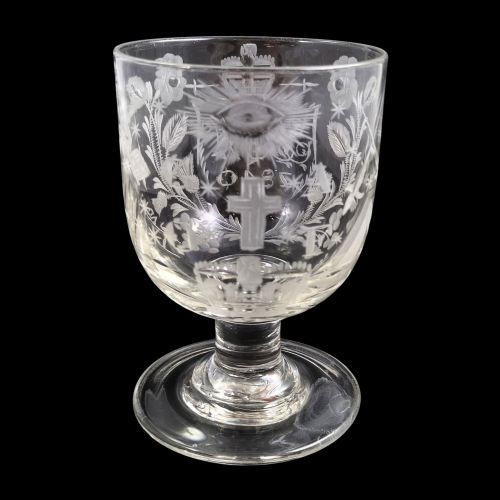
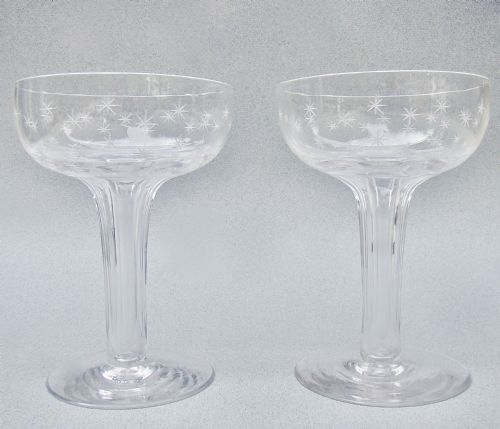
Wine glasses in vibrant hues such as cranberry, vaseline green, and deep amethyst dominate the later Victorian examples. Meanwhile, earlier pieces lean towards clear lead glass with intricate wheel-engraving or hobnail cutting.
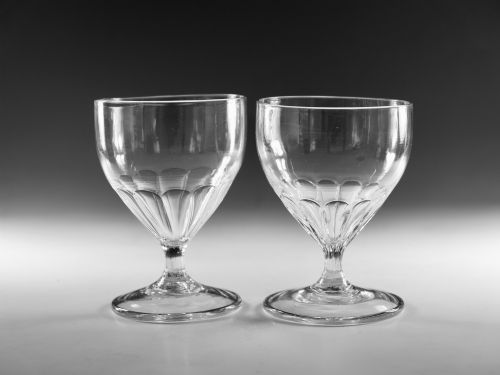
Forms vary from sturdy bucket rummers designed for daily toasts to slender champagne glasses and Chinese export silver goblets. Most items originate from English or Scottish glasshouses, alongside occasional continental European examples.
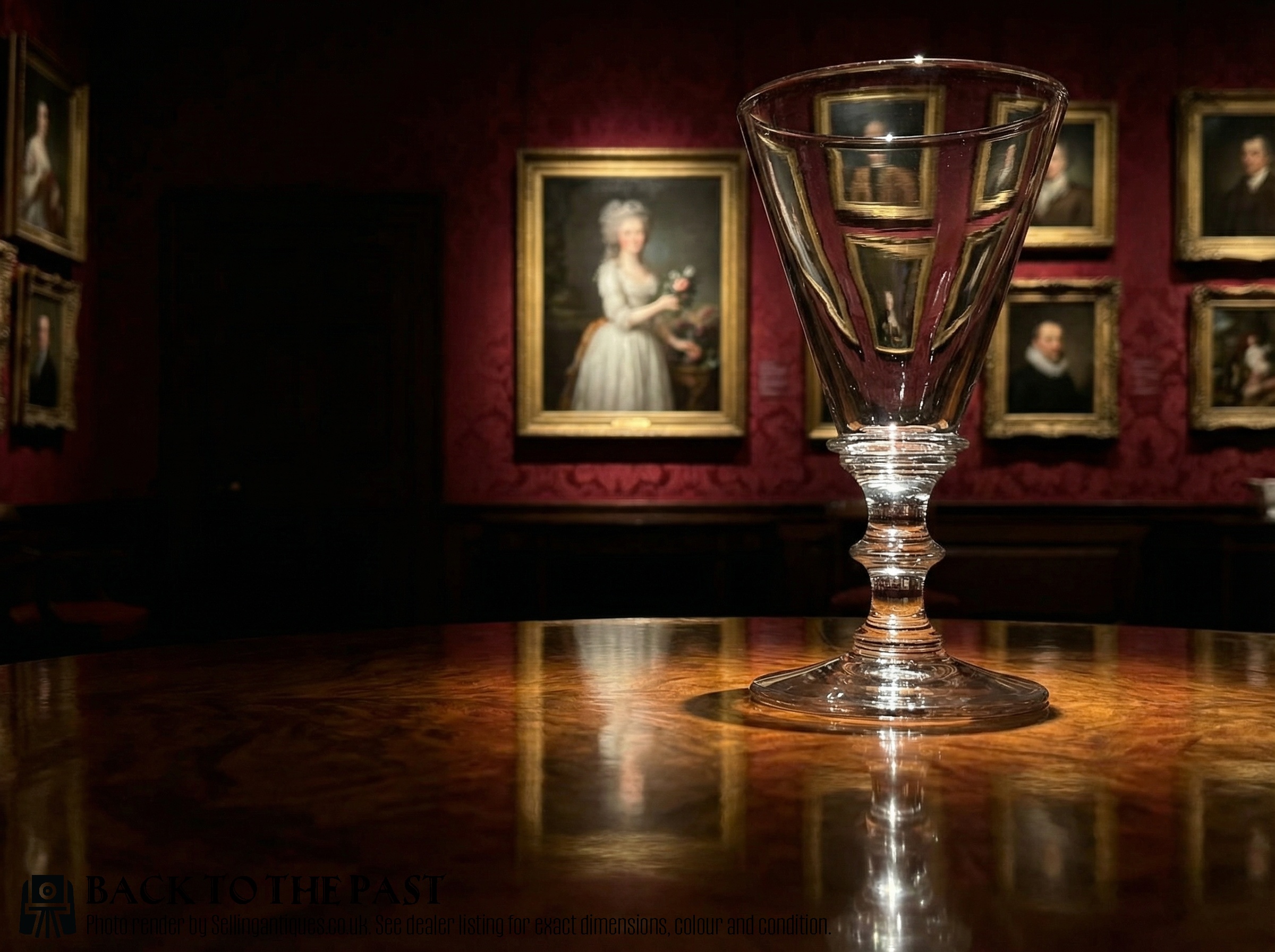
How they were made
Glassmakers produced these pieces using traditional hand-blowing techniques, gathering molten lead glass or coloured glass on a pontil iron before shaping the bowl and pulling or applying the stem. Pontil marks remaining on the undersides of feet confirm this manual method.
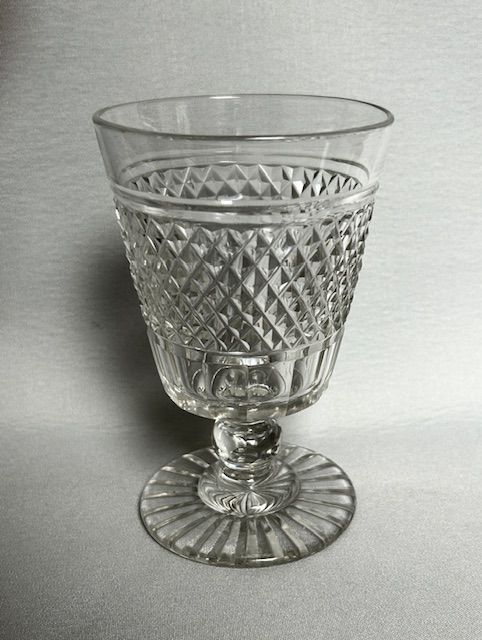
Decoration relied heavily on wheel-cutting, star-etching, and intaglio engraving to carve floral motifs, armorial crests, and geometric patterns into the surface. Some specialised pieces also utilised acid-cut cameo techniques or cased layers of red over crystal.
Listings feature lead glass, cranberry glass, and vaseline glass across Georgian and Victorian periods.
What varies in quality
Depth and precision of the wheel-cut facets dictate much of the standard in cut glass pieces, where crisp edges catch the light sharply. In engraved items, the fluidity and detail of motifs like hop and barley or fruiting vines separate skilled hands from simpler workshop output.
The resonance and clarity of the lead glass or the depth of saturated colour in cranberry and green glass set different tiers of production. Consistency across matched sets, balanced wall thickness, and proportion between bowl, stem, and foot distinguish superior examples.
Stevens & Williams·Wang Hing & Co Hong Kong
The 19th Century Stemware Glossary
- Rummer
- A large, sturdy drinking glass popular in the Georgian and Regency periods, typically featuring a short stem and a bucket or ovoid bowl. These vessels often held ale, rum, or wine.
- Lead glass
- Glass containing a high proportion of lead oxide, which increases weight, brilliance, and softness for easier cutting and engraving.
- Pontil mark
- The rough scar left on the base of a hand-blown glass vessel where the pontil rod was snapped off after shaping.
- Cased glass
- Glass made by fusing a layer of coloured glass over a layer of clear crystal, allowing artisans to cut through the outer layer to reveal contrasting colours beneath.
- Thumb-cut
- A decorative pattern of rounded, shallow indentations cut into the exterior surface of a glass bowl or stem to provide a secure grip.
19th Century Stemware: Frequently Asked Questions
Can I use these glasses daily?
Many people enjoy using their antique stemware for special dinners and quiet evenings alike, appreciating the substantial feel of lead glass in the hand. Care should simply be taken around modern dining tables.
Because these vessels are handmade and irreplaceable, hand washing and careful storage away from crowded cupboards will preserve them for future use.
How do I tell Georgian from Victorian stemware?
Georgian stemware tends to feature heavier lead glass, simpler bowl forms, and robust knopped or plain stems intended for tavern or dining table use. Engraving often includes civic or agricultural motifs like hops and barley.
Victorian pieces frequently embrace vibrant colours such as cranberry, vaseline, and amber, alongside elaborate star-etching, thumb-cutting, and slender profiles suited to fashionable parlour gatherings.
Are matched sets common from this era?
Large matched sets are uncommon because nineteenth-century glassware was produced by hand in smaller workshops where individual variation between pieces was standard practice. Surviving sets usually show slight hand-blown differences.
Assembling a usable gathering relies on finding groups with consistent colour, height, and decorative motifs rather than factory-identical uniformity.