


19th Century Sporting Engraving
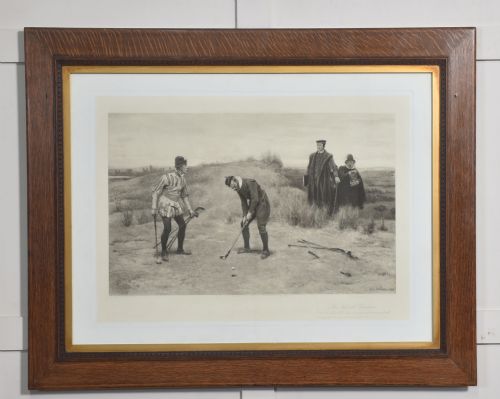
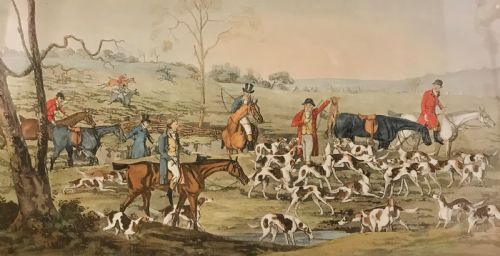
These 19th century sporting engraving pieces capture the drama of equestrian races, hunts and rural pastimes, offering a direct window into historical pursuits.
19th Century Sporting Engraving
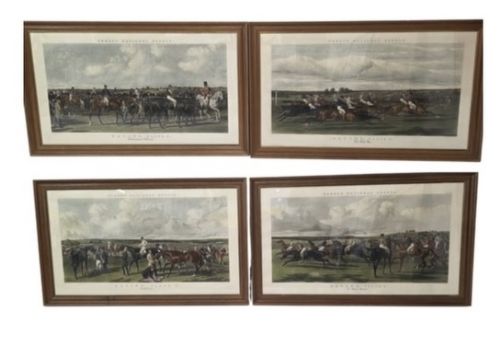
A 19th century sporting engraving brings together framed works depicting horse racing, hunting scenes, canine subjects and athletic contests. The selection on this page relies heavily on Victorian and Georgian examples, often presented as complete sets of four or as large individual wall art pieces.
Buyers will find familiar equestrian and hunting motifs dominated by the works of artists like Henry Alken and Francis Calcroft Turner. These framed prints and aquatints span the Regency to the late Victorian decades, recording rural sports and racing champions.
Materials and techniques
These works are printed using ink on paper, frequently enhanced with hand-colouring or watercolour to heighten the visual detail of the racing and hunting scenes. Many pieces incorporate framing materials such as wood, oak, gilt wood and glass to protect the delicate paper surfaces.
Copper and other metals were utilised in the original printing plates for these engravings and aquatints, producing the fine lines visible across the period works. Related objects like powder flasks demonstrate complementary metalworking skills from the same era.
The listings span the Georgian, Regency and Victorian periods, incorporating paper, ink, watercolour, glass, oak and gilt wood.
Variations in quality
The standard of an engraving rests upon the crispness of the inked lines and the fidelity of the secondary hand-colouring. Works that retain their original tones without excessive fading command greater visual presence on the wall.
Framing choices also distinguish the works, with period gilt wood and oak frames providing context that modern replacements lack. Complete sets that remain together in their original arrangement hold a different status compared to isolated individual prints.
Henry Alken·Charles Hunt·Francis Calcroft Turner·J. C. Dollman
The 19th Century Sporting Engraving Glossary
- Engraving
- A printmaking technique where an image is incised into a metal plate, usually copper, holding ink within the grooves to transfer onto paper under pressure.
- Aquatint
- A variant of etching that produces tonal areas resembling watercolour washes, frequently utilised alongside line engraving for coloured sporting prints.
- Lithograph
- A planographic printing process based on the repulsion of oil and water, widely adopted during the nineteenth century for reproducing detailed artwork.
- Gilt wood
- Wood coated with a thin layer of gold leaf or gold paint, commonly found on nineteenth-century picture frames.
19th Century Sporting Engraving: Frequently Asked Questions
How do I display these prints?
These framed works suit traditional wall art placements in libraries, studies or hallways where their subject matter can be appreciated up close. Keeping them out of direct sunlight preserves the paper and any applied watercolour.
Matching the period frame style to the room helps integrate the pieces into an interior scheme, particularly when hanging complete sets of four together.
Are these prints hand-coloured?
Many nineteenth-century sporting prints feature delicate hand-colouring applied over the ink impression to bring out the details of the red coats, horses and landscape elements.
Examining the surface under magnification often reveals the subtle brushwork distinct from modern mechanical colour printing.
What subjects are most common?
Horse racing, fox hunting and equestrian portraits dominate the selection, alongside rarer depictions of canine subjects, pedestrian athletes and traditional rural games.
Sets depicting four distinct stages of a hunt or race appear frequently across the Victorian and Georgian periods.
How can I tell the age?
Dating relies on published dates inscribed on the paper, the style of the engraving technique, and the construction of the accompanying wood or gilt frames.
Paper characteristics and period printing methods provide further clues to whether a piece originates from the Georgian, Regency or Victorian eras.