




19th Century Porcelain Platters
These 19th century porcelain platters span English, European and Asian workshops, offering substantial decorative chargers and serving dishes prized for their hand-painted detail.
19th Century Porcelain Platters
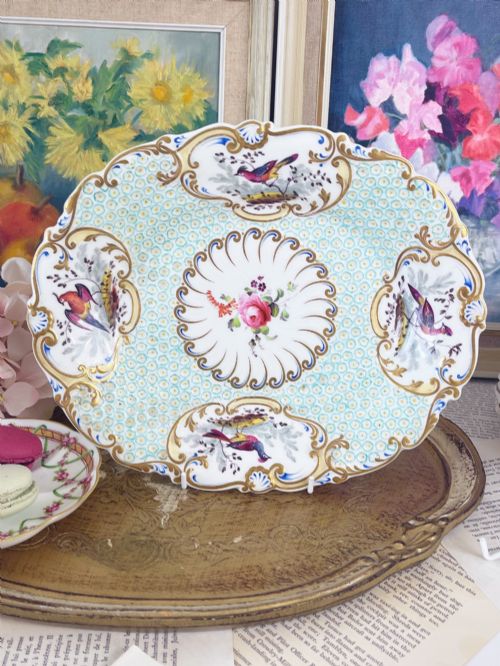
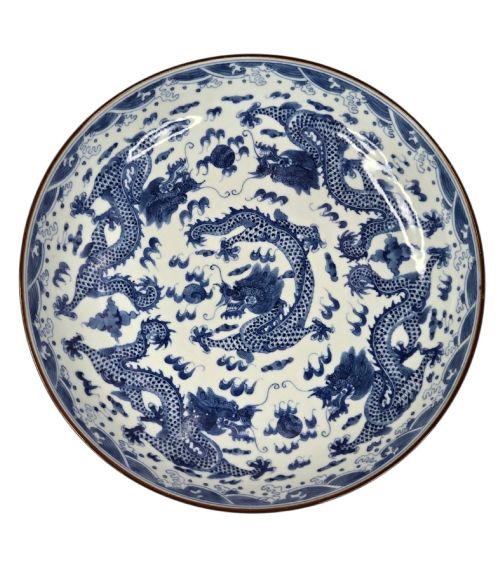
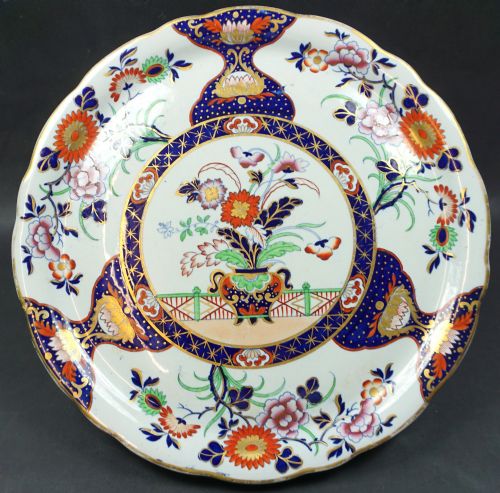
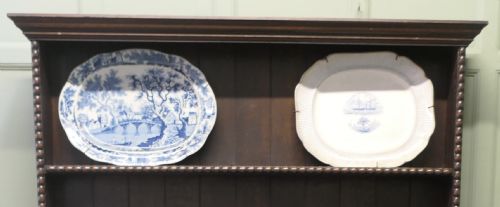
When searching for 19th century porcelain platters, collectors encounter a diverse array of serving dishes, decorative chargers, and large trays originating from English factories, continental European kilns, and Japanese export houses. The selection ranges from cobalt blue and white domestic wares to elaborately painted mythological scenes on large display plates.
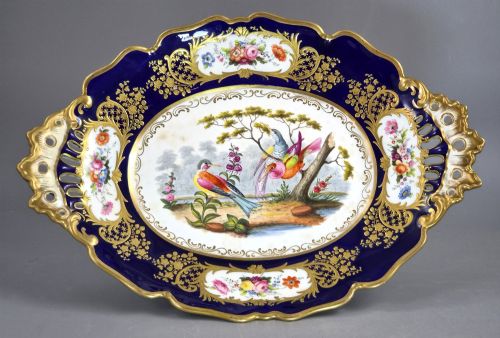
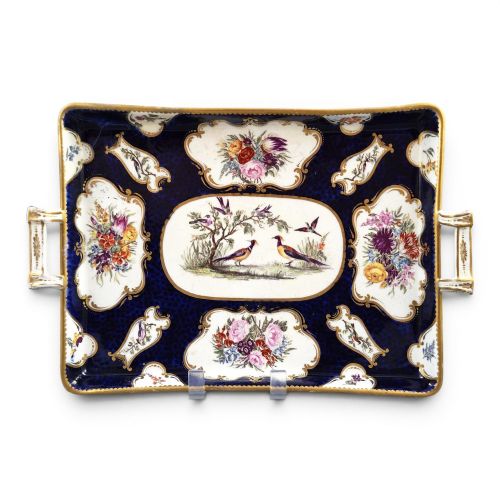
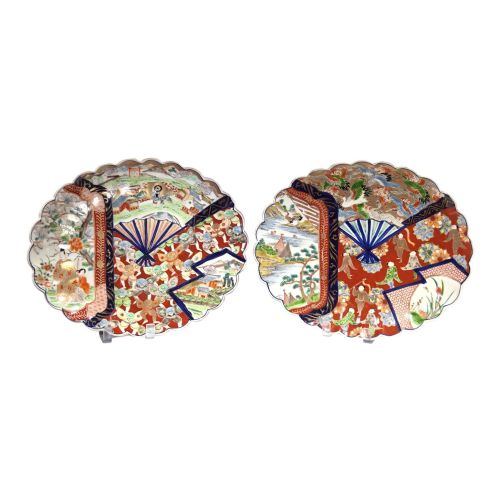
English examples frequently demonstrate floral motifs, botanical studies, or exotic birds associated with traditional potteries, whilst French and Austrian items often display historical or classical figure paintings. Alongside these, large Japanese Imari chargers and Chinese Canton porcelain plates appear prominently in the selection, reflecting international trade and aesthetic exchanges of the period.
How they were made
The manufacture of these pieces combines traditional ceramic body preparation with sophisticated glaze application, often utilising cobalt underglaze for deep blue tones or enamel colours for pictorial subjects. Many items incorporate gilding, gold leaf, and intricate hand-painted detailing applied over the fired glaze.
European workshops frequently combined hard-paste porcelain or earthenware bodies with specialised decorative techniques, sometimes integrating bronze mounts or champlevé enamel into the finished serving piece.
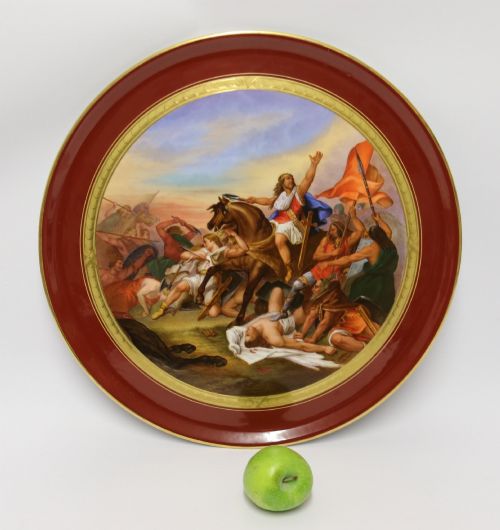
Several platters depict dramatic historical events and mythological tales, including Bacchus, Ariadne, and the Battle of Tolbiac.
What varies in quality
The standard of painting distinguishes finer examples from everyday tableware, particularly in the precision of brushwork on pictorial chargers depicting classical scenes or detailed botanical studies. The crispness of cobalt underglaze transfer printing and the richness of applied gold leaf or gilding also separate standard production wares from exhibition-grade pieces.
The complexity of the moulded form, such as scalloped edges, twin handles, or heavy relief work, contributes significantly to the distinction between basic serving dishes and high-status decorative chargers.
H R Daniel·Coalport·Hicks & Meigh·Rockingham Pottery·Minton·Samson·Ridgway·Spode
The 19th Century Porcelain Platters Glossary
- Charger
- A large decorative plate or platter intended primarily for display rather than standard dining service. These substantial pieces often measure significant diameters and feature prominent painted or blue and white designs.
- Imari
- A traditional Japanese style of porcelain decoration characterised by a distinctive palette of cobalt blue, iron red, and gold. These pieces were widely produced for export during the Meiji period.
- Cobalt Underglaze
- A blue pigment applied to the ceramic body before the application of a clear glaze and subsequent high-temperature firing. This technique ensures the colour remains permanently protected beneath the glassy surface.
- Champlevé Enamel
- A technique where troughs or cells are hollowed out of a metal surface, such as bronze mounts, and filled with vitreous enamel paste before firing. It frequently appears on ornate continental European centrepieces and trays.
19th Century Porcelain Platters: Frequently Asked Questions
Were these platters used for dining?
Many items functioned as practical serving dishes, dessert services, and cheese dishes for the dining table during the Georgian and Victorian eras.
Larger chargers and heavily gilded pieces were often intended for display on sideboards or walls rather than daily culinary use.
How do I identify Japanese Imari chargers?
Japanese Imari pieces from this era typically feature dense patterns combining deep cobalt blue and rust red with gold leaf highlights.
They frequently display traditional floral and panel motifs across wide, scalloped or circular charger formats.
What is Flow Blue porcelain?
Flow blue is a distinct transfer-printed ceramic technique where the cobalt blue pigment intentionally bleeds slightly into the surrounding white glaze during firing.
This creates a hazy, soft-edged effect across plates, children's services, and serving dishes.