
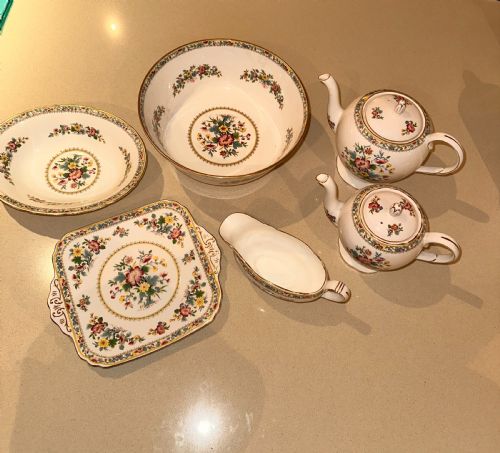


Gilded English Porcelain Platter
A gilded english porcelain platter brings hand-painted birds, botanical studies and rich cobalt borders straight to the table from Georgian and Victorian dining rooms.
Gilded English Porcelain Platter
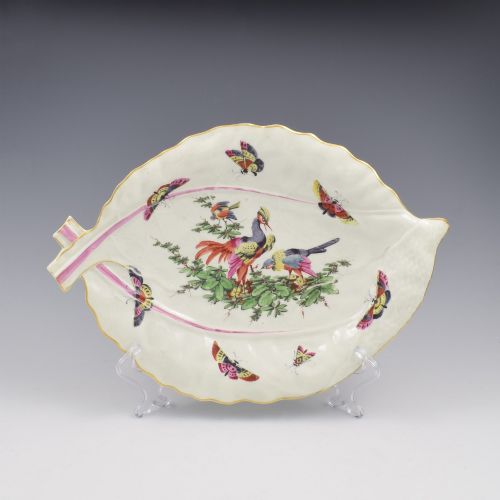
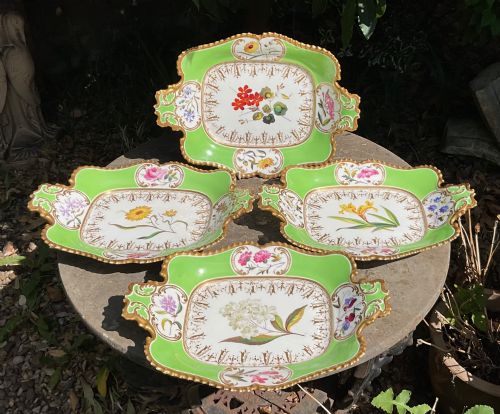
A gilded english porcelain platter encompasses serving dishes, oval plates, cabinet plates and decorative trays created across the eighteenth and nineteenth centuries. Buyers searching for a gilded english porcelain platter encounter forms ranging from First Period Worcester leaf dishes to Regency dessert services and Victorian cabinet pieces.
Standards of execution
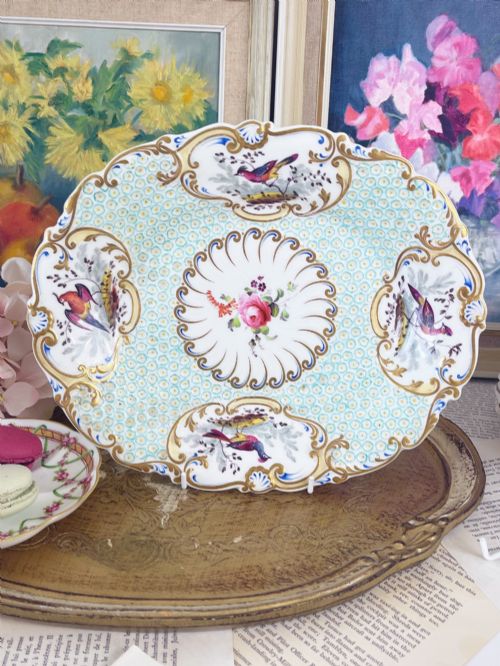
The standard of hand-painting separates ordinary utility wares from exceptional cabinet pieces, particularly in the precision of brushwork on botanical studies, fancy birds and armorial crests. Superior examples display subtle shading and confident line work executed by skilled factory hands or independent decorators.
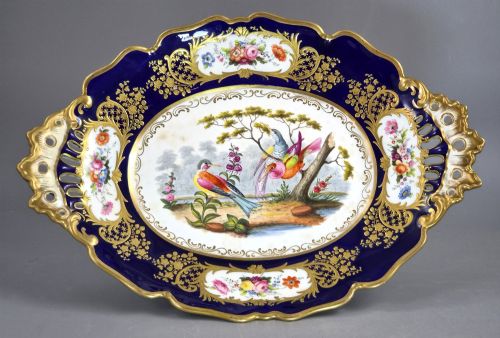
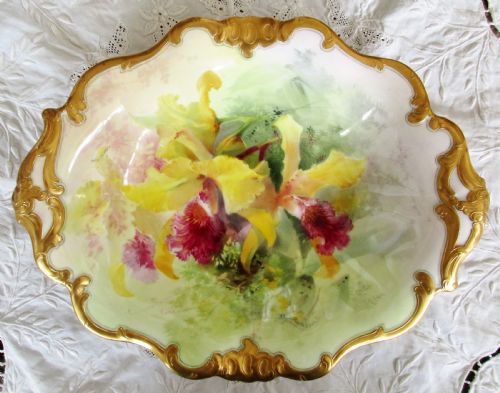
The application and preservation of the gold leaf or gilding dictates visual impact, with heavier chased or burnished gold adding depth to the rim and handles. Pieces retaining bright, untracked gilding reflect careful handling and superior initial firing.
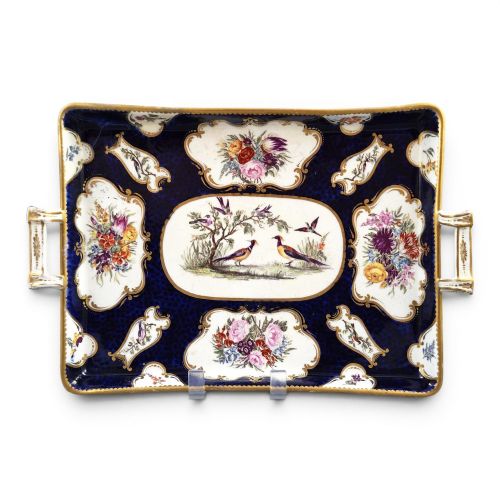
Several plates capture remarkably intense expressions on hand-painted fancy birds that seem entirely unimpressed by their fine gilt borders.
Royal Crown Derby·H & R Daniel·Coalport·Chamberlains Worcester·Hicks & Meigh·Royal Doulton·James Giles·Copeland·Hicks Meigh and Johnson·Royal Worcester·Ridgway·Spode·Barr Flight and Barr
The Gilded English Porcelain Platter Glossary
- Soft-Paste Porcelain
- An artificial porcelain body composed of white-burning clay and glass frits, fired at lower temperatures than hard-paste porcelain. It creates a warm, creamy translucent ground typical of eighteenth-century English factories.
- Bone China
- A porcelain body containing bone ash, developed in England to improve durability and whiteness while maintaining translucency. It forms the base for many nineteenth-century cabinet and service plates.
- Gilding
- The application of gold leaf or gold powder to the ceramic surface to accent rims, handles and borders. It is often burnished to achieve a bright metallic shine.
- Imari
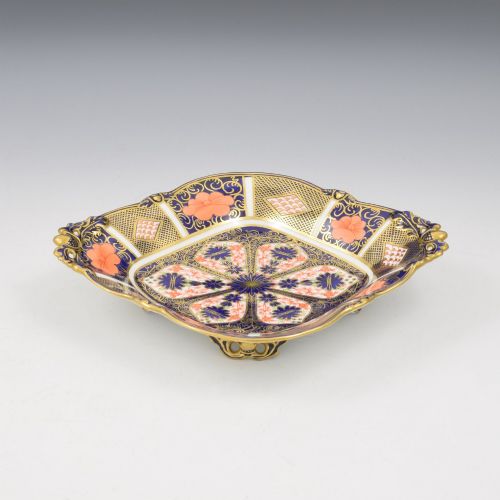
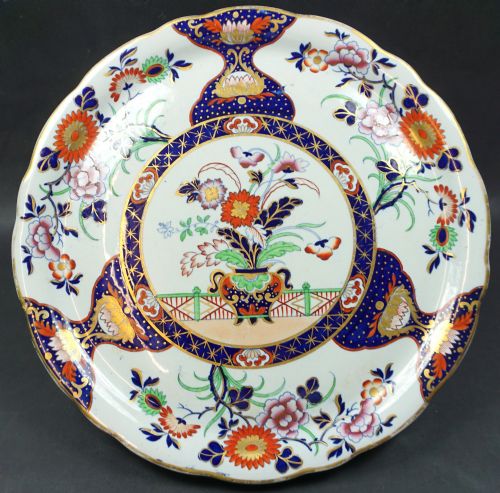
- A decorative style inspired by Japanese export wares, featuring a palette of underglaze cobalt blue, iron red and abundant gold. English factories adapted these patterns during the Regency period.
- Cabinet Plate
- A decorative plate intended for display on a wall or within a cabinet rather than for daily dining use. These pieces typically feature elaborate hand-painted scenes or botanical specimens.
Gilded English Porcelain Platter: Frequently Asked Questions
What are gilded english porcelain platters?
These items are ceramic serving dishes, trays and plates produced by historic English factories and decorated with hand-painted motifs and gold leaf accents.
They functioned primarily as tableware for desserts and fine dining or as decorative cabinet pieces in period homes.
How do I care for antique porcelain?
Wash these pieces gently by hand using lukewarm water and mild detergent, avoiding abrasive sponges that can damage the enamel and gilding.
Keep them away from modern dishwashers and microwaves to preserve the delicate gold leaf and historical glaze.
Can I use these platters for food?
Many of these pieces were originally created for serving desserts, fruit and cheese in nineteenth-century dining rooms.
Modern use is acceptable for dry or cold foods, provided the piece is washed by hand afterward.
How do I identify different periods?
Study the paste body, weight and decorative style, noting that eighteenth-century pieces often use soft-paste porcelain while Victorian items utilise bone china.
Factory marks on the underside help confirm the manufacturer and decade of production.