



English Bone China Serving
English bone china serving pieces bring elegance to the table, combining refined porcelain bodies with hand-painted botanicals, birds, and rich gilding from past centuries.
English Bone China Serving
English bone china serving plates, dishes, and platters represent the finest traditions of British ceramic manufacturing across the Georgian, Regency, and Victorian periods. When you search for english bone china serving, you find items designed for functional dining and decorative display, ranging from large platters to delicate cabinet dishes.
The pieces appearing on this page span the nineteenth and early twentieth centuries, with a strong representation of nineteenth-century forms. Makers utilised porcelain and bone china to create durable yet translucent servingware adorned with intricate hand-painted motifs.
Forms include oval fish dishes, entree dishes, pierced serving trays, and dessert plates. These items reflect stylistic shifts from Regency elegance through Rococo Revival exuberance to traditional Edwardian and early twentieth-century artistry.
How they were made
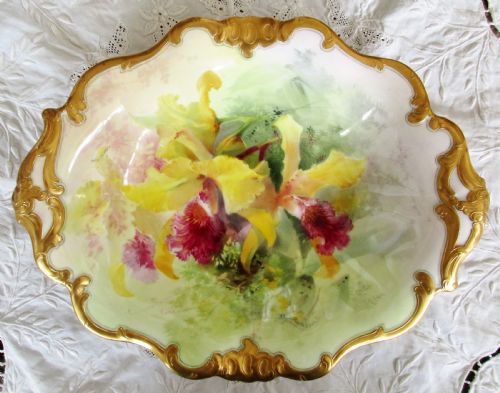
Potters shaped bone china and porcelain into serving dishes before applying detailed hand-painted decoration, often featuring botanical studies, exotic birds, and fruit. Artisans integrated gold leaf and gilt highlights to accentuate the moulded borders and scalloped rims.
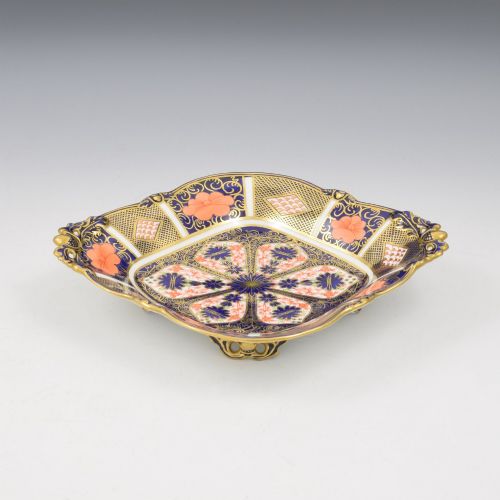
Specialised techniques included intricate piercing on trays and polychrome enamel work, exemplified by English Imari patterns and hand-painted artist signatures. Firing processes achieved the characteristic translucency and strength associated with historic British kilns.
Current listings feature serving pieces in bone china and porcelain, decorated with gold leaf, enamel, and gilt.
What varies in quality
Quality in these serving pieces rests upon the precision of the hand-painting, the complexity of the enamel work, and the preservation of the gold gilt. Hand-painted botanical or ornithological subjects by named artists elevate a piece above standard floral transfers.
The crispness of moulded details, such as pierced borders or embossed Rococo scrolls, distinguishes superior production. Weight, balance, and the translucency of the bone china body further separate standard service items from exceptional cabinet pieces.
Royal Crown Derby·H and R Daniel·Royal Doulton·Coalport·Royal Worcester·Flight Barr and Barr·Barr Flight and Barr·Bloor Derby
The English Bone China Serving Glossary
- Bone china
- A type of porcelain composed of clay, feldspar, and bone ash, developed in England to achieve greater strength and a bright white body. This material allows for thin-walled vessels that retain high durability.
- Entree dish
- A covered serving vessel used during formal meals for side dishes or main courses. These pieces often feature matching covers and decorative finials.
- Imari pattern
- A decorative style inspired by Japanese export wares, characterised by a palette of underglaze blue, iron red, and abundant gold gilt. English potteries adapted this aesthetic during the Georgian and Regency eras.
- Gilt
- A thin layer of gold applied to the surface of the porcelain, often used to highlight rims, handles, and borders. The preservation of this gilding contributes to the visual appeal of antique servingware.
- Pierced
- A technique where clay is cut through before firing to create openwork patterns along the rim of a dish or tray. This adds decorative lightness to heavy serving pieces.
English Bone China Serving: Frequently Asked Questions
Can I use antique serving dishes for food?
While these pieces were originally made for dining, age and historic glazes mean many collectors prefer to use them for display or gentle service.
Hand-painted enamels and gold gilt can wear with modern detergents and dishwashers, so careful hand washing is essential if utilised.
How do I date an antique serving plate?
Dating relies on maker marks, paste characteristics, and stylistic clues such as Regency shapes or Victorian floral painting.
Comparing the form and pattern number with factory archives often narrows production down to a specific decade.
What is the difference between porcelain and bone china?
Bone china incorporates animal bone ash into the traditional paste of kaolin and petuntse, resulting in a warmer, whiter, and more translucent body.
English potteries pioneered this mix to create servingware that was both delicate in appearance and robust enough for daily use.
How should I display cabinet dishes safely?
Cabinet dishes and serving trays require stable plate stands with rubberised or cushioned grips to prevent scratching the glaze.
Keep them away from direct sunlight to protect the stability and vibrancy of historic hand-painted enamels over time.