
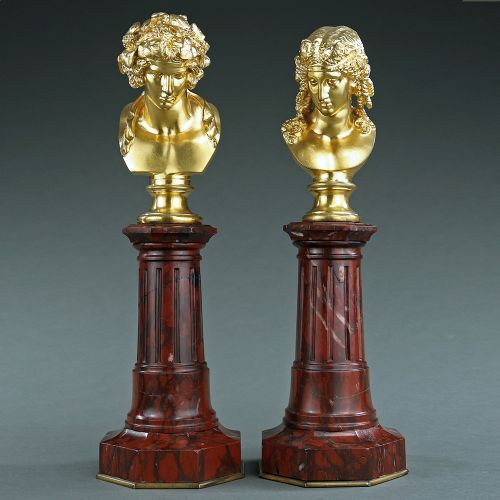
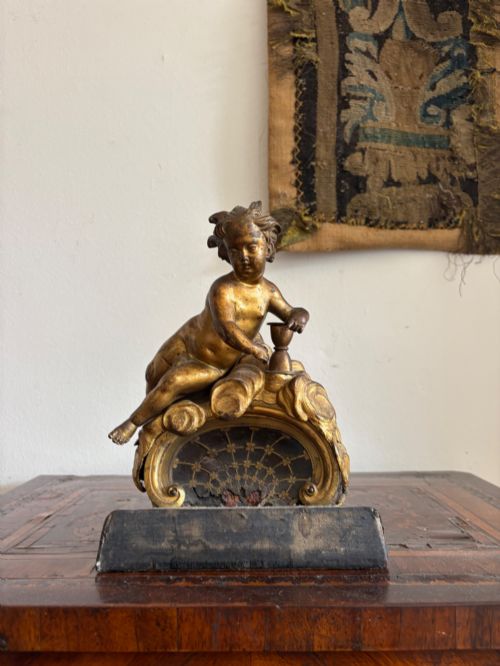
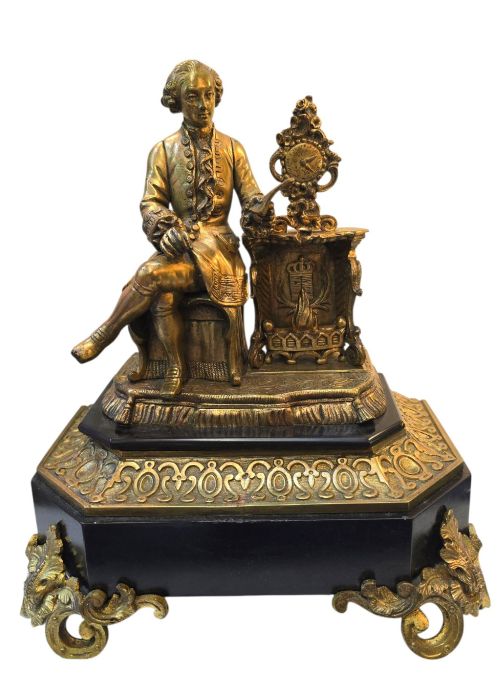
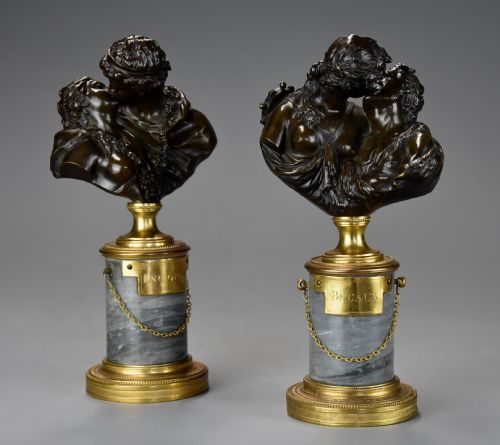

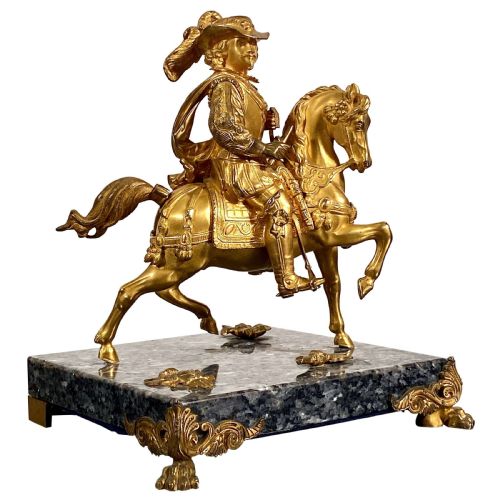


19th Century Ormolu Statue
A 19th century ormolu statue brings French neoclassical elegance and golden warmth to a mantelpiece.
19th Century Ormolu Statue
A 19th century ormolu statue encompasses French figural sculptures, animalier studies, and decorative mounts fashioned during the nineteenth century. These pieces frequently combine cast metals with carved stone bases, reflecting classical and neoclassical tastes.
Buyers encounter subjects ranging from mythological figures and historical leaders to charming animal studies and putti. Many of these works originate from French workshops spanning the Victorian era and earlier decades of the nineteenth century.
Formats extend beyond standalone statuettes to incorporate functional items such as mantel clocks, inkstands, and lamp bases. The presence of gilt bronze or ormolu defines the visual character across these diverse sculptural objects.
Materials and construction
Craftsmen utilised bronze and gilt metal, applying mercury gilding or modern electroplating techniques to create the characteristic ormolu surface. This golden finish contrasts with patinated bronze elements to emphasise sculptural depth and detail.
Many figures are mounted upon heavy plinths constructed from red marble or onyx. These stone bases provide structural stability and visual weight, often secured with threaded bolts or pins extending from the base of the bronze figure.
Materials recorded on this page include gilt bronze, patinated bronze, marble, onyx, and ormolu.
Judging the execution
The crispness of the chasing and hand-finishing separates standard castings from exceptional examples. Skilled metalworkers refined the raw cast surfaces with chisels and files to sharpen facial expressions, hair texture, and drapery folds.
The integrity of the gilding and the quality of the stone mount heavily influence the overall character. Uniform golden lustre and tightly fitted marble or onyx plinths demonstrate superior workshop standards.
Jean Antoine Houdon·Antoine Louis Barye·Christophe Fratin·Jean Jacques Pradier·Victor Paillard
The 19th Century Ormolu Statue Glossary
- Ormolu
- Gilt bronze produced by applying a mixture of gold and mercury to a bronze base, or through later electrogilding methods. This technique creates a rich golden finish that resists tarnishing.
- Patinated bronze
- Metal treated with chemical solutions to produce a darkened or antiqued surface tone. This treatment highlights sculptural contours by creating contrast against brighter gilt elements.
- Grand Tour
- Cultural travel undertaken by nineteenth-century Europeans to study classical antiquities. Figures acquired during these journeys often replicated famous sculpture in miniature bronze.
- Animalier
- A nineteenth-century sculptural style focused on realistic depictions of animals in action or repose. Prominent French makers specialised in capturing wildlife and domestic hounds with anatomical precision.
19th Century Ormolu Statue: Frequently Asked Questions
How do I clean an ormolu statue?
Dust the surface gently with a soft, dry brush to prevent accumulation in recessed details. Avoid harsh chemical cleaners or abrasive cloths that can strip the delicate gilt layer.
Moisture can damage both the bronze and any underlying stone base. Keep pieces away from direct sunlight and damp environments to preserve the finish.
Were these statues made as lamps?
Many nineteenth-century figural bronzes and torchere columns were later adapted for electrical wiring to serve as table lamps. Original lamps from this era also exist alongside converted decorative figures.
Check the base or interior channels for evidence of drilling when determining whether a lamp fitting is a later addition.
What is the difference between bronze and ormolu?
Bronze is an alloy of copper and tin used as the primary casting metal for these sculptures. Ormolu refers specifically to the gold finish applied to the bronze surface.
Many pieces combine both materials, featuring dark patinated bronze bodies alongside bright ormolu mounts and highlights.
How can I tell a French nineteenth century piece?
French pieces frequently exhibit stylistic traits rooted in neoclassical and empire traditions, alongside precise chasing work. Foundry marks, signatures, and stamps on the bronze surface provide direct attribution to French workshops.
The materials, such as specific types of marble and onyx plinths, also align with nineteenth-century manufacturing standards in Paris.