





19th Century Orientalist Bronze
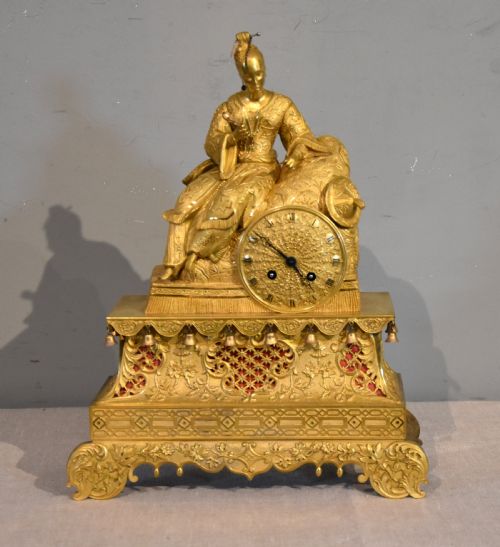
19th century orientalist bronze figures, clocks, and lamps bring nineteenth-century romantic visions of North Africa and the Near East into interior spaces.

19th Century Orientalist Bronze
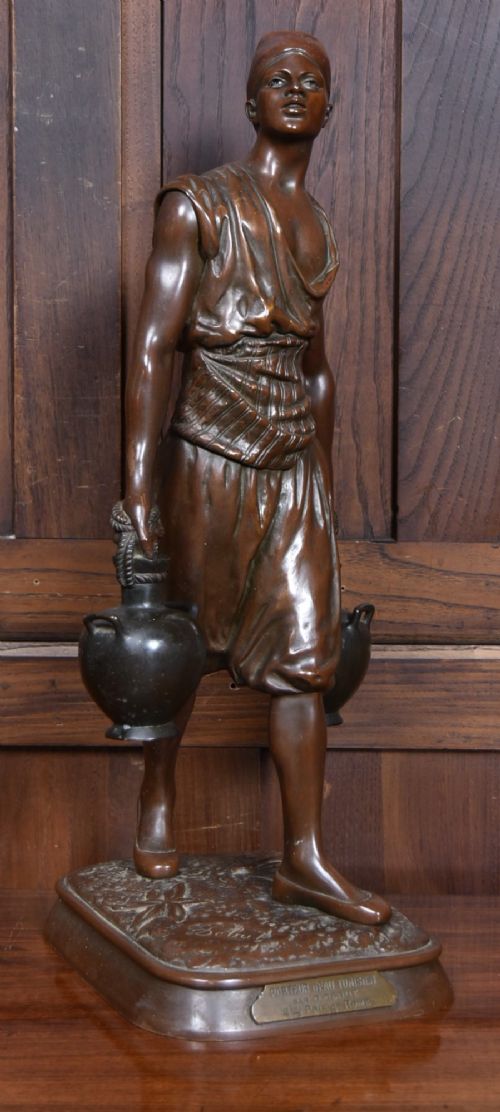
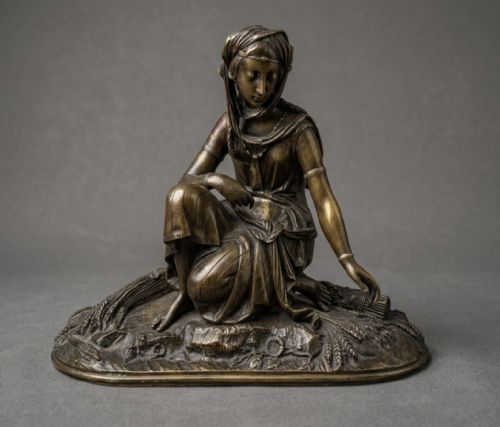
A 19th century orientalist bronze captures figures, animals, and architectural elements from non-Western cultures through European eyes during the Victorian era. These works range from small tabletop studies of water carriers and snake charmers to large mantel clocks and garniture sets.
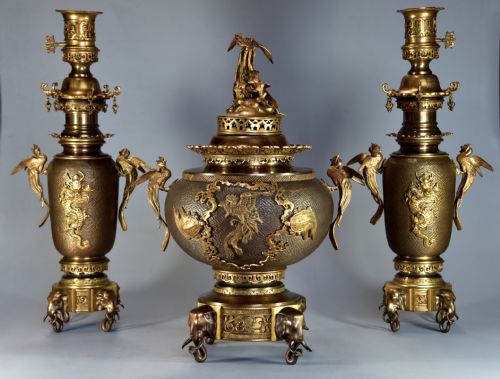
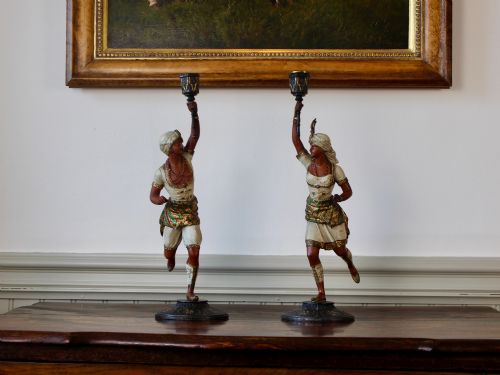
The objects frequently depict Arab merchants, sentinels, and musicians alongside Japanese and Chinese motifs, reflecting a broader 19th-century fascination with distant lands. Figures appear alongside utilitarian forms such as candlesticks, incense burners, and wall-lights.
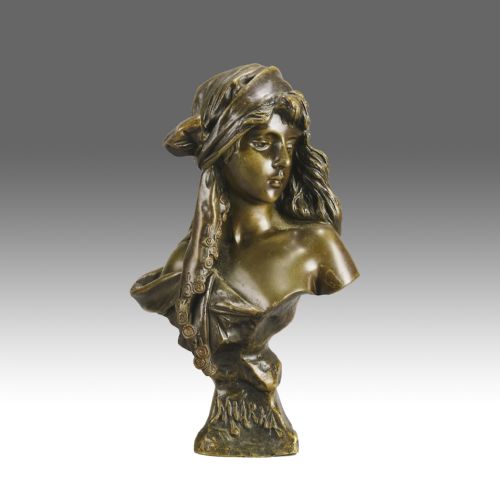
French workshops and Continental foundries produced the majority of these pieces, blending realistic anatomical study with theatrical costume and ornamentation. Buyers encounter both signed cabinet sculptures and unsigned decorative items designed for domestic display.
Materials and foundry techniques
Foundries utilised traditional lost-wax casting and sand-casting methods to shape the metal into complex figural poses and decorative accessories. Molten bronze filled detailed moulds before cooling, allowing artisans to capture intricate folds of fabric and facial expressions.
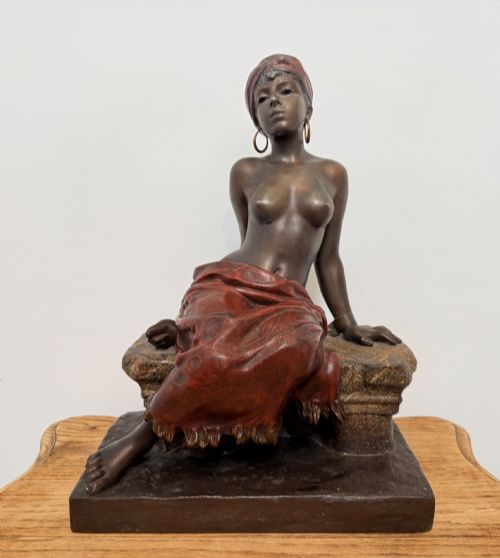
Makers applied varying surface treatments, including dark patination, fire gilding to create ormolu, and cold-painted enamelling using polychrome pigments. Some domestic items also incorporate spelter, white metal, and terracotta alongside marble bases and glass elements.
Object forms include figural mantel clocks, music cabinets, garniture sets, candlesticks, table lamps, and wall-lights.
Evaluating craftsmanship and detail
Foundry marks, artist signatures, and serial numbers stamped into the bronze indicate higher production standards and verifiable authorship. Unsigned or patinated spelter alternatives offer a decorative appearance at a different level of material authenticity.
Gabriel Viardot·Emmanuel Villanis·Edouard Drouot·Alfred Dubucand·Arthur Waagen·Franz Bergman·Pierre Jules Mène·Frederic Goldscheider
The 19th Century Orientalist Bronze Glossary
- Orientalist
- Pertaining to European artistic representations of Eastern subjects, particularly from the Middle East, North Africa, and Asia during the nineteenth century. These works often idealised regional costumes, architecture, and daily scenes.
- Cold painted
- A technique where polychrome paint is applied to metal sculptures after casting, often over a bronze or spelter base. This finish requires careful preservation to prevent flaking.
- Spelter
- A zinc alloy frequently used as a cheaper substitute for bronze in nineteenth-century decorative figures and clocks. It is lighter than bronze and typically carries a bronze-coloured surface finish.
- Ormolu
- Gilded bronze produced by applying a mercury and gold amalgam to the metal surface and heating it. The technique creates a bright golden finish popular on French mantel clocks.
- Champlevé
- An enamel technique where troughs are dug into a metal surface, filled with coloured glass powder, and fired. It appears frequently on nineteenth-century candelabra and decorative vessels.
19th Century Orientalist Bronze: Frequently Asked Questions
What is 19th century orientalist bronze?
These pieces are sculptural works and decorative objects produced in Europe during the nineteenth century that depict themes, figures, and architecture from the Middle East, North Africa, and Asia.
Foundries cast them in bronze, brass, and alternative metal alloys, frequently finishing them with dark patination, gilding, or cold-painted polychrome colours.
How do I identify a cast?
Examine the underside and base for foundry stamps, artist signatures, and serial numbers that indicate the producing workshop.
Closer inspection of the metal reveals the crispness of the chasing work, where artisans hand-finished the cast details before applying the final patination.
Are spelter and bronze different?
Bronze is a heavy copper alloy containing tin that accepts detailed casting and patination, whereas spelter is a softer zinc alloy used for more affordable nineteenth-century figures.
Spelter pieces are noticeably lighter and often feature a applied bronze-coloured surface coating rather than an integrated metal patina.
How should I clean these?
Dust the surface gently with a soft, dry brush to remove particles without disturbing the original patina or cold-painted pigments.
Avoid using water, chemical solvents, or metal polishes, as these treatments strip historical surface finishes and reduce the material value.