



19th Century Miniature Furniture
These small-scale creations bring the grand craftsmanship of earlier eras to tabletops, offering collectors an intimate glimpse into period interior design.
19th Century Miniature Furniture
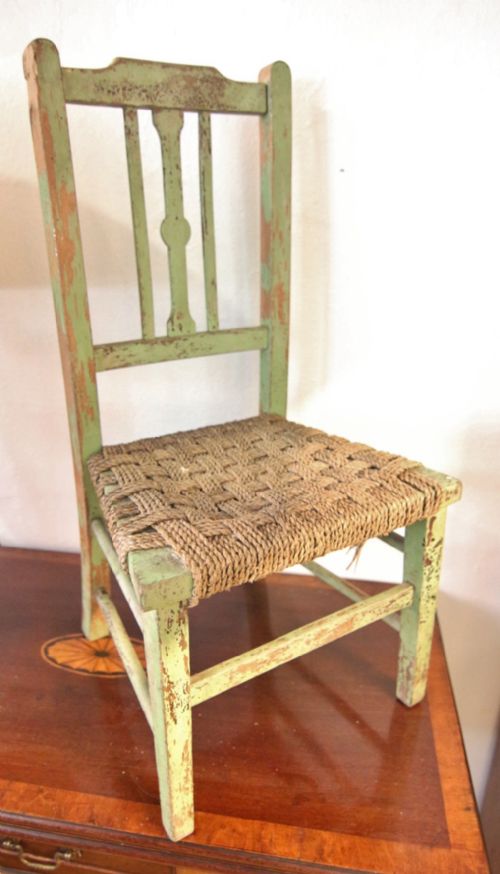
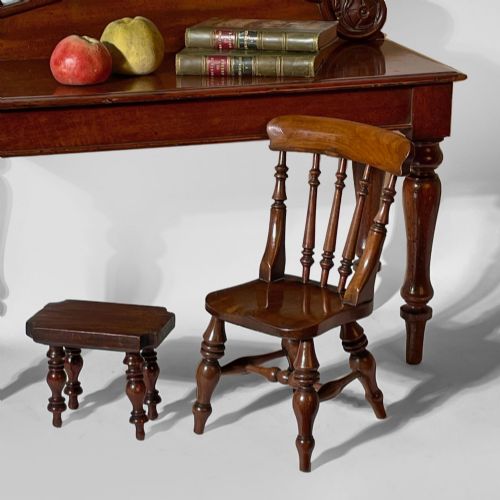
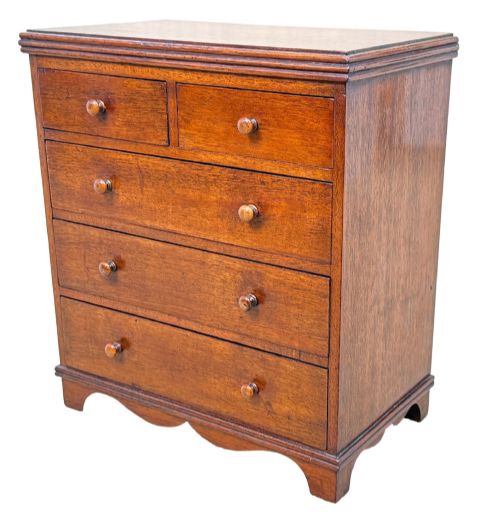
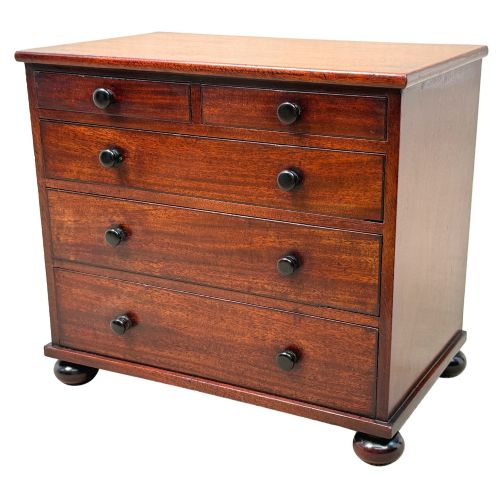
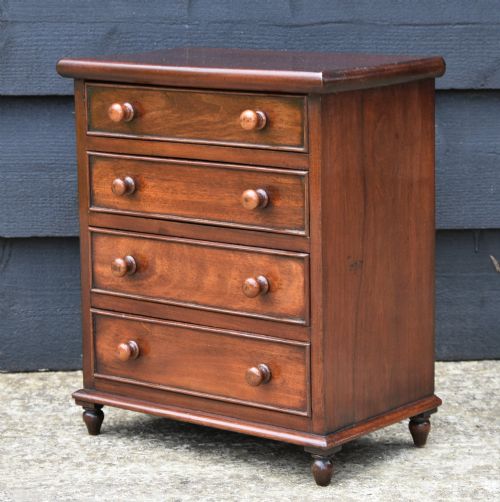
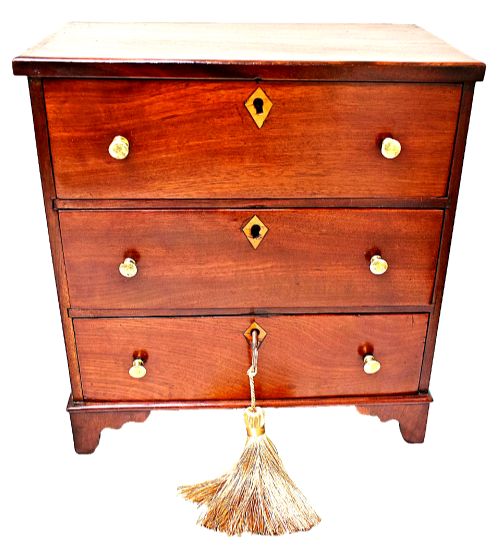
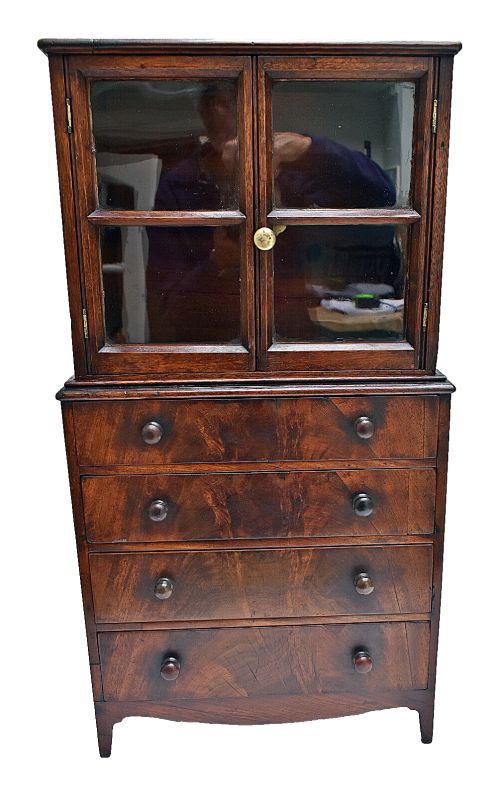
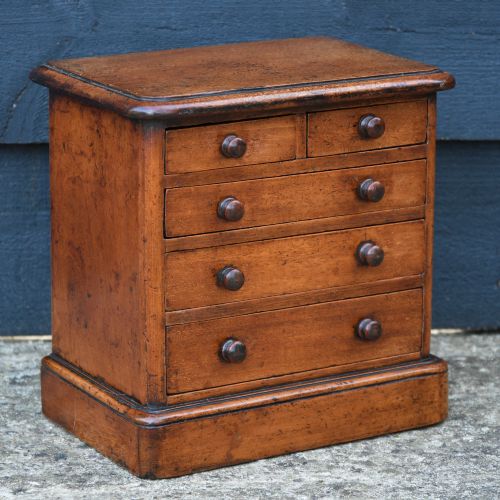
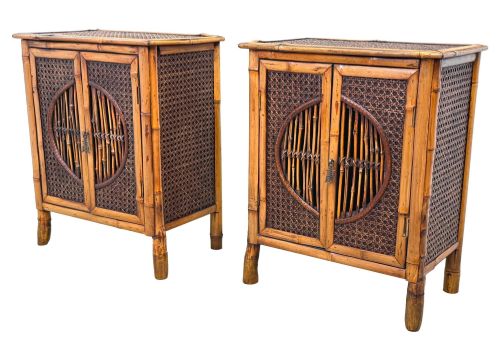
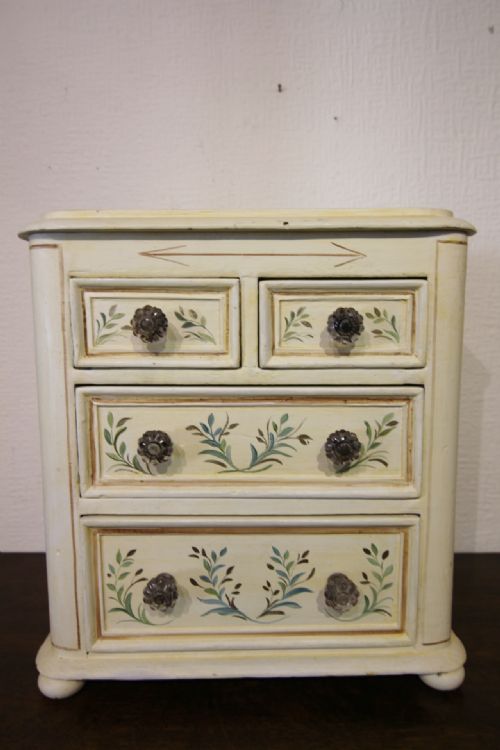
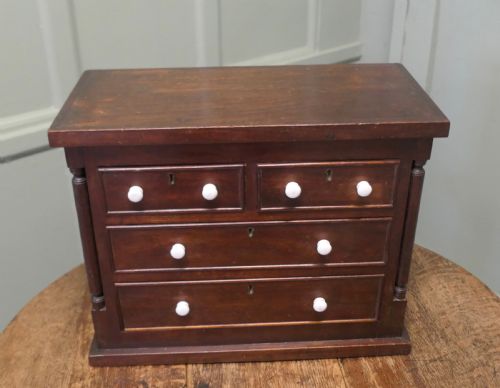
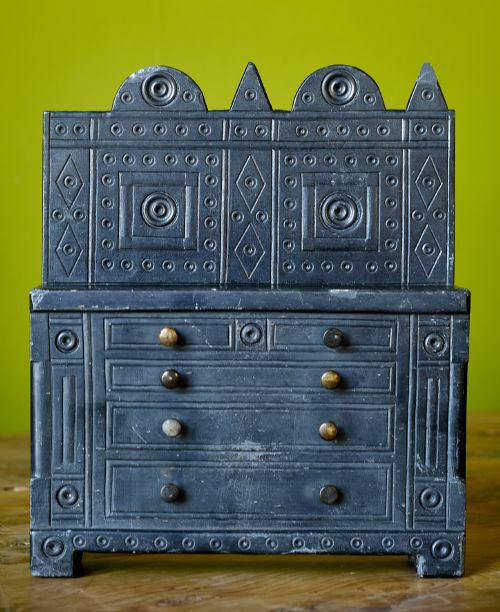
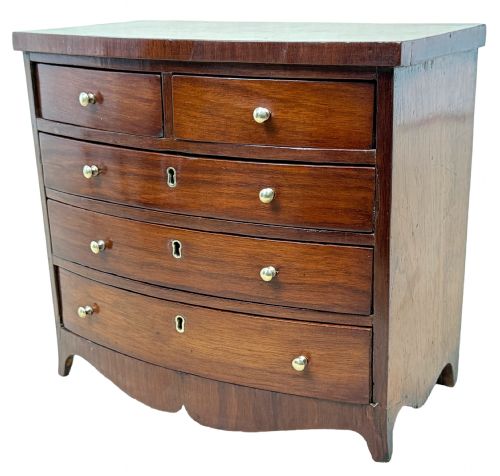
When you search for 19th century miniature furniture, you encounter a diverse array of small-scale items created during the 19th century, including the Victorian, Regency, and Georgian periods. The selection on this page centres heavily on chests of drawers, often referred to as apprentice pieces, alongside miniature chairs, cabinets, and dressers.
Makers produced these smaller objects in various regional styles, spanning English country, Scottish, Welsh folk art, and continental European traditions. Formats range from tabletop chests and campaign pieces to miniature seating and display cabinets.
Materials and Construction Techniques
Cabinetmakers utilised dense timbers such as mahogany, rosewood, oak, pine, yew wood, and fruitwood to construct the frames and carcases of these small objects. Many pieces incorporate decorative elements like brass fittings, mother-of-pearl inlay, glass panels, and painted finishes or lacquer work.
Joinery techniques mirror full-scale furniture production of the period, employing dovetail joints for drawer construction and turned elements for legs and spindles. Certain seating forms also integrate cane work, leather upholstery, and carved wooden details.
19th Century Miniature Furniture Retail Price Guide 2026
Typical asking prices for 19th century miniature furniture among the pieces listed under this phrase on Sellingantiques today, from the lower quarter to the upper quarter. They describe what is for sale here now, not the wider market.
Listings feature woods such as mahogany, yew, fruitwood, and pine, alongside decorative touches of brass, glass, and mother-of-pearl.
Factors That Determine Quality
The standard of these small items rests on the precision of the joinery and the selection of figured timber veneers. Superior examples display careful attention to proportion, clean drawer construction, and original hardware rather than later replacements.
Surface finish and patina heavily influence the overall character of a piece. Items retaining their original polish, paint, or lacquer demonstrate greater integrity than those stripped or heavily restored in subsequent eras.
The 19th Century Miniature Furniture Glossary
- Apprentice piece
- A small-scale model traditionally made by a woodworker to demonstrate skill or master the craft before gaining full guild membership. These items frequently replicate full-size chests of drawers and cabinets.
- Bowfront
- A curved front convex in shape, commonly found on miniature chests of drawers from the Regency and Victorian periods. This design requires advanced woodworking skill to shape the timber and drawers accurately.
- Bergere
- An enclosed armchair featuring a wooden frame with cane panels set into the back and sides. Miniature versions replicate full-scale French and English seating styles from the Georgian and Victorian eras.
- Campaign chest
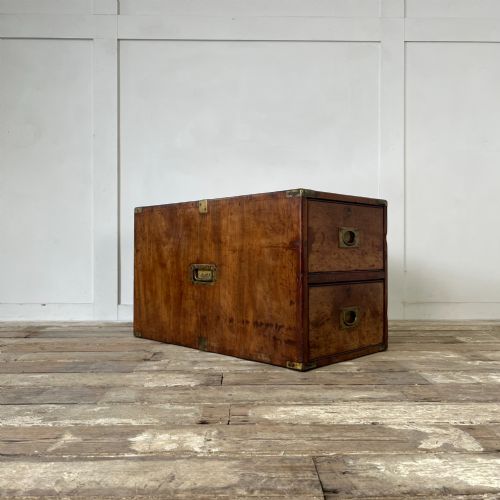
- A portable cabinet or chest designed in sections for ease of travel, typically fitted with brass corner brackets and flush carrying handles. Smaller desktop variants appear in nineteenth-century collections.
- Secret drawer
- A concealed compartment built into a cabinet or chest, often hidden behind decorative moulding or within the secondary framework. Makers utilised these hidden spaces for storing small valuables.
19th Century Miniature Furniture: Frequently Asked Questions
What is an apprentice piece?
An apprentice piece is a small-scale prototype or demonstration item created by a trainee woodworker to prove competency in joinery and design.
These items allowed craftsmen to practise complex techniques such as dovetailing and curved drawer construction on a manageable scale before building full-sized furniture.
How were these miniature items used?
Makers constructed these small pieces as working models, salesman samples to display to prospective clients, or decorative objects for parlour display.
Some items also served as children's toys or dollhouse furnishings, particularly the smaller chairs and dressers.
How do I date a miniature chest?
Dating relies on examining the secondary woods, construction methods, and prevailing stylistic traits of the period. Georgian and Regency pieces typically show different timber choices and hardware compared to later Victorian examples.
Hand-cut dovetails and original handles help establish a reliable timeframe for manufacture.
Where should I place them at home?
These small objects fit well on tabletops, mantelpieces, bookshelves, and designated display cabinets where their detail remains visible.
Keep them away from direct sunlight and dramatic temperature fluctuations to protect sensitive veneers and polished wood surfaces.