


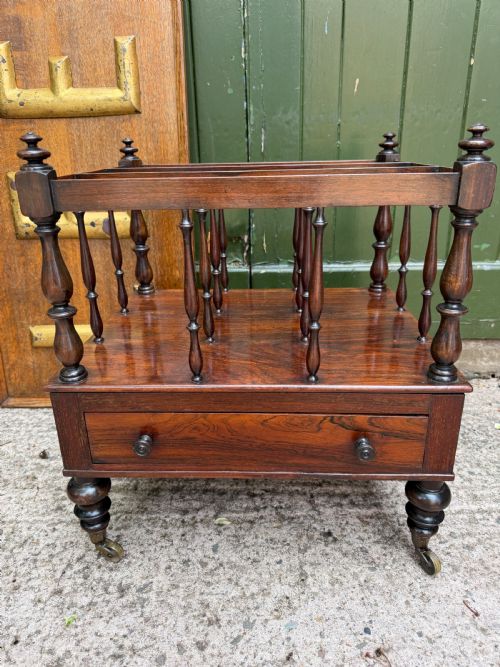


19th Century Magazine Rack
A 19th century magazine rack organises periodicals and broadsheets with architectural grace, offering the collector a functional piece of period furniture.
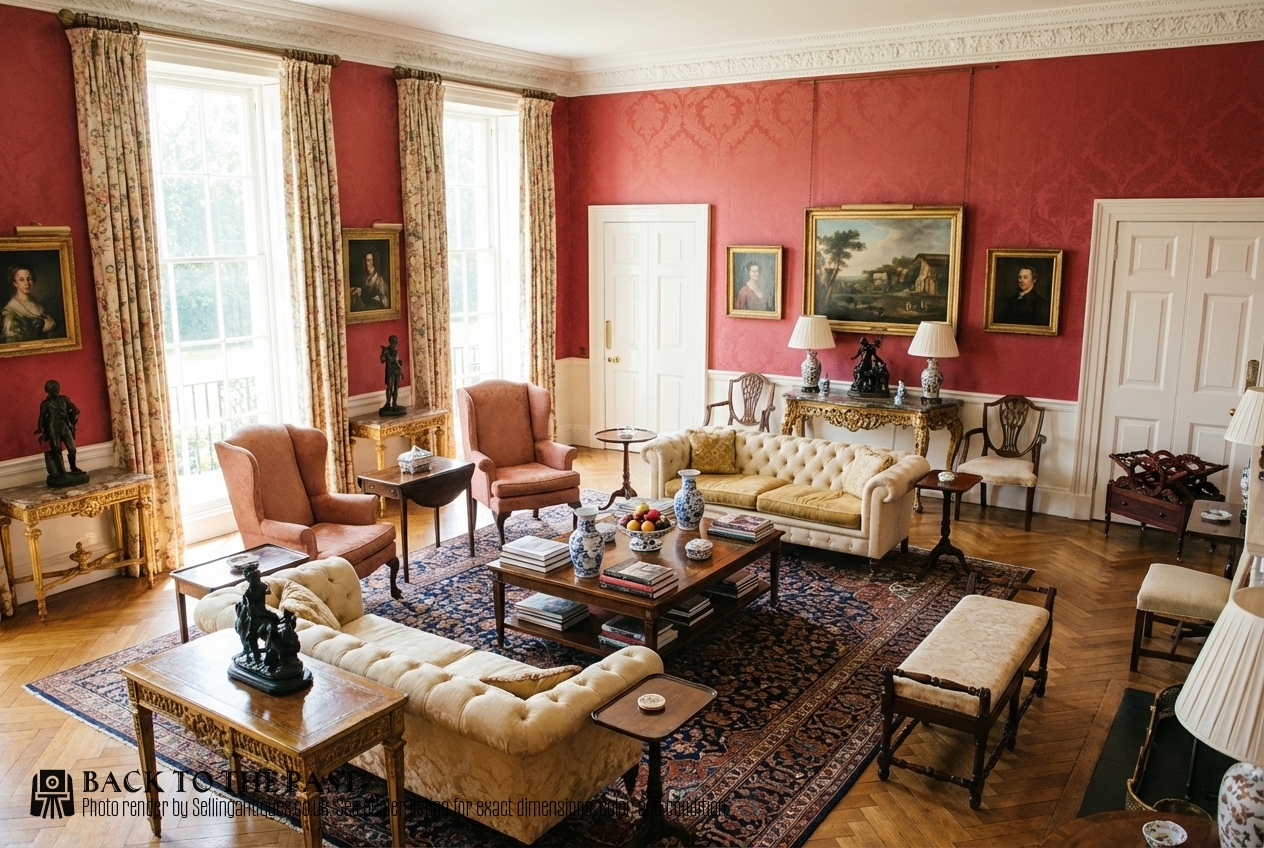
19th Century Magazine Rack
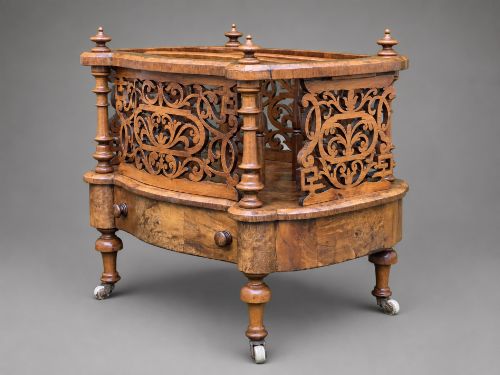
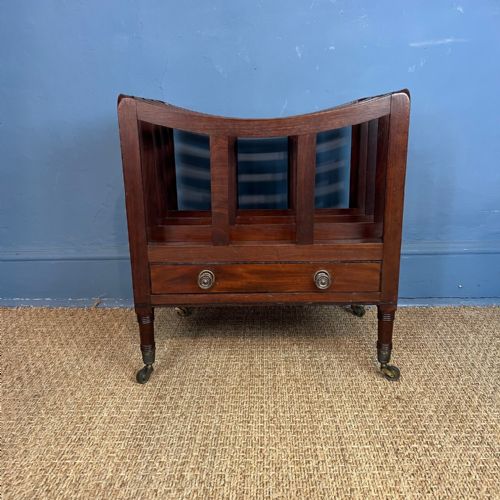
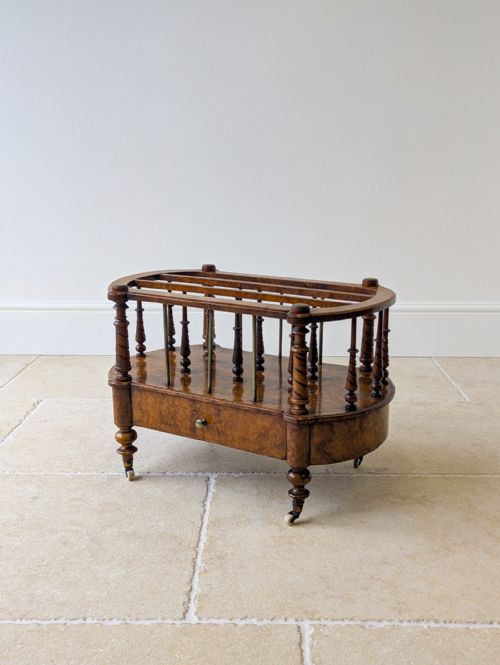
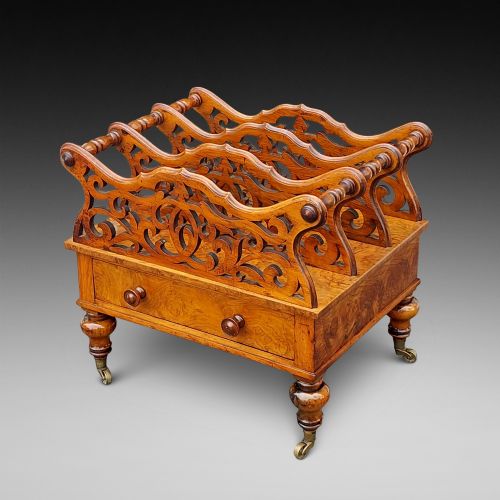
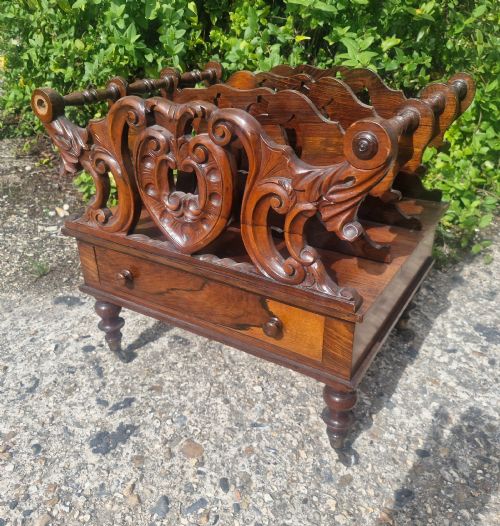
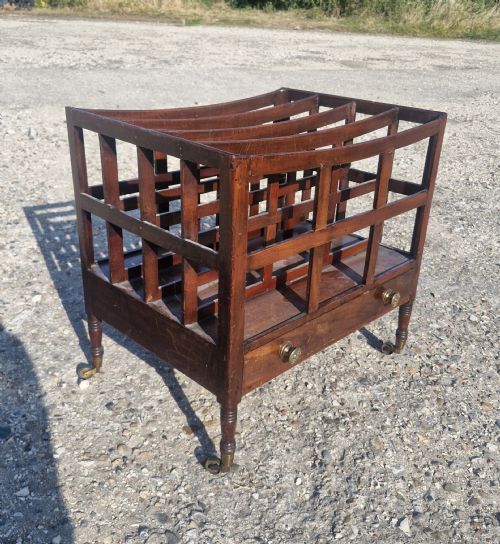
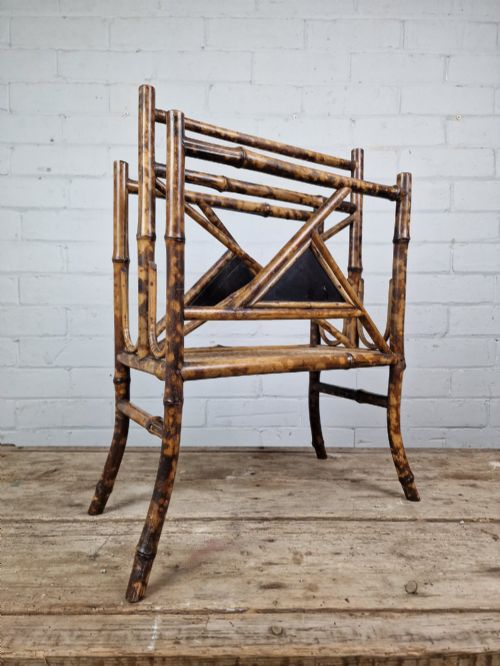
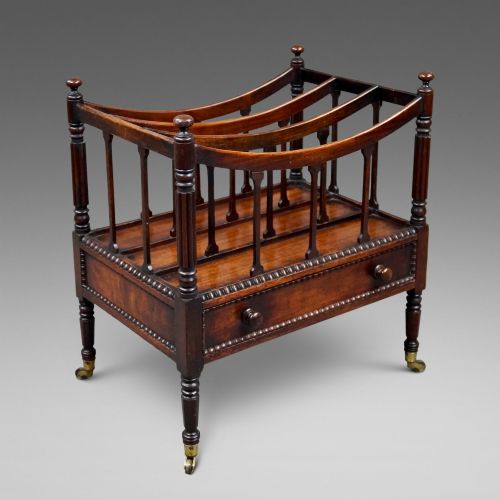
A 19th century magazine rack typically takes the form of a Canterbury, designed with slatted compartments to hold papers, sheets of music and folios upright. These pieces span the Georgian, Regency, William IV and Victorian eras, shifting from rectilinear mahogany frames to more ornate burr walnut and exotic bamboo structures.
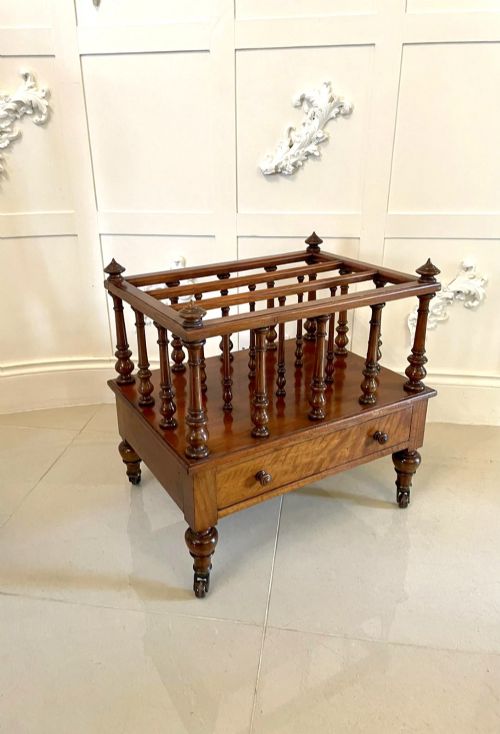
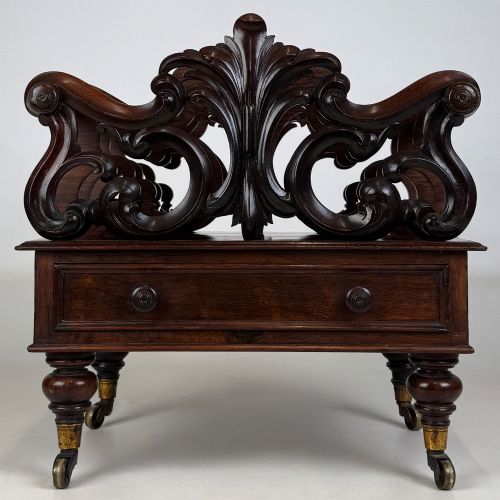
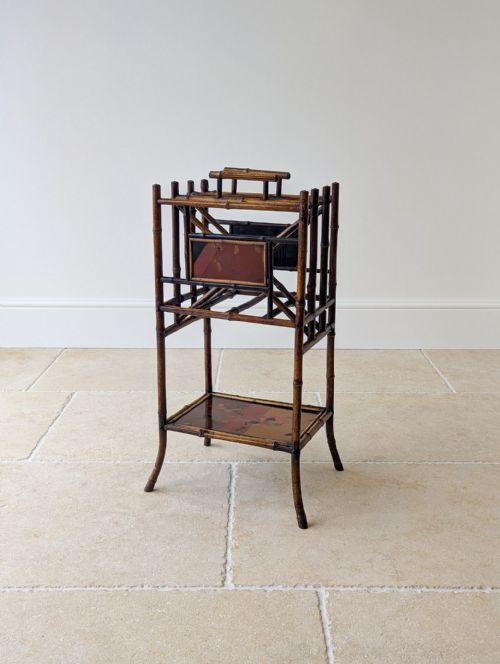
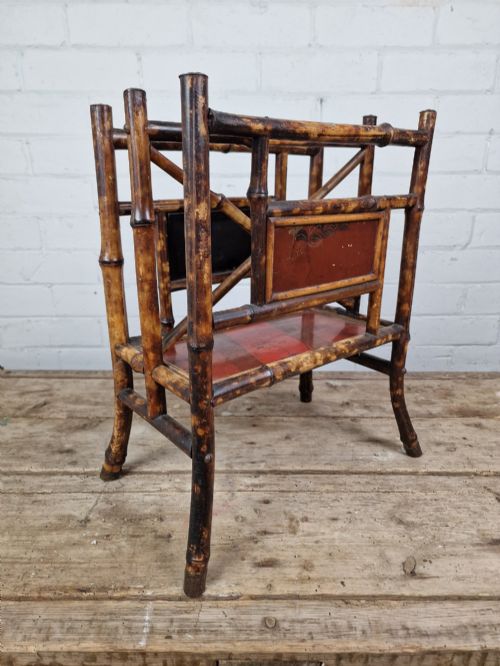
The traveller on this page will most frequently encounter the Victorian walnut or rosewood Canterbury, often fitted with a low drawer beneath the partitions and mounted on turned legs with castors. Alongside these traditional designs, the later decades introduce Aesthetic Movement bamboo frames and japanned lacquer finishes intended for lighter drawing-room use.
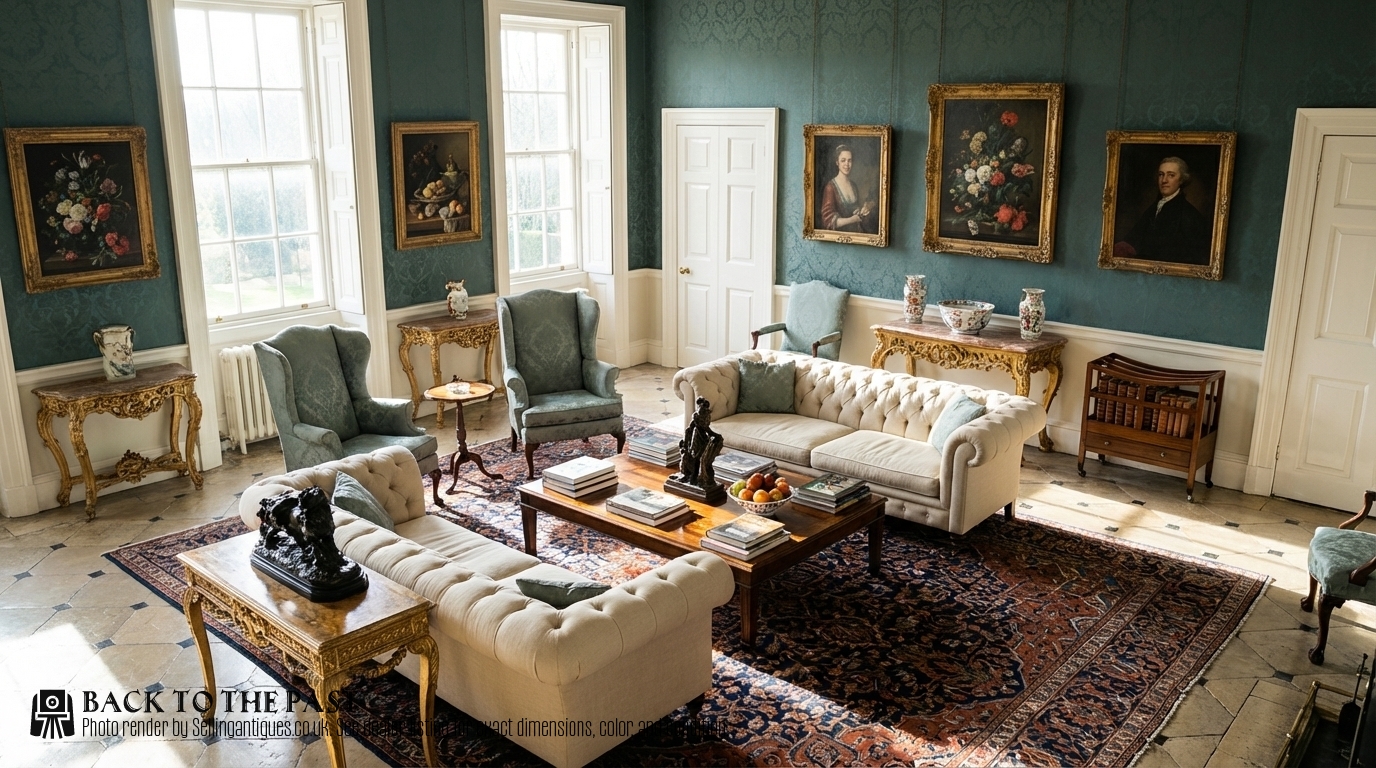
Materials and Construction
Cabinetmakers utilised rich timbers such as rosewood, mahogany and burr walnut, selecting figured veneers to display depth and grain across the flat panels and drawer fronts. Brass fittings, ormolu mounts and copper accents appear on select pieces, reinforcing structural dividers and joint corners.
Lighter alternatives rely on natural or tiger bamboo secured with traditional bindings, while specific examples incorporate hand-painted details or ceramic components. Joinery ranges from precise dovetail drawers to turned spindle assemblies supporting the characteristic partition racks.
19th Century Magazine Rack Retail Price Guide 2026
Typical asking prices for 19th century magazine rack among the pieces listed under this phrase on Sellingantiques today, from the lower quarter to the upper quarter. They describe what is for sale here now, not the wider market.
Several pieces double as music stands and work tables, proving that 19th-century occupants loved multitasking furniture just as much as we do.
Craftsmanship and Proportion
The distinction between standard examples and exceptional work rests on timber selection, figuration and the subtlety of carved detailing such as Prince of Wales feathers or Gothic revival tracery. Pieces combining multiple functions, such as a Canterbury surmounted by a reading desk or work top, demand greater joinery skill.
Proportion and stability dictate enduring value, with finer specimens maintaining tight joints in the slatted dividers and retaining their original castors and turned finials without replacement timber.
Gillow s
The 19th Century Magazine Rack Glossary
- Canterbury
- A low stand with partitions for holding loose papers, music sheets or magazines, often fitted with a drawer at the base. It originated in the late 18th century and remained popular throughout the Victorian period.
- Folio
- A large sheet of paper folded once, or a collection of such sheets forming a volume. Regency variants often provided deep compartments specifically sized for architectural drawings and large newspapers.
- Japanned
- A style of European lacquerwork that imitates East Asian decorative finishes. It appears on select bamboo and wooden frames from the later decades of the period.
- Ormolu
- Gilded bronze mounts applied to furniture for decorative effect. French pieces from the era frequently employ these metallic accents to highlight structural corners and legs.
- Aesthetic Movement
- A late 19th-century design style emphasising visual beauty over narrative content. Pieces from this era often utilise bamboo and Japonisme motifs.
19th Century Magazine Rack: Frequently Asked Questions
How do I date a 19th century magazine rack?
Earlier pieces from the Regency and Georgian periods typically feature clean mahogany lines and brass inlay, whereas mid-Victorian examples favour heavily figured burr walnut and carved details.
Late-century items often shift entirely to bamboo or incorporate Aesthetic Movement influences, reflecting changing domestic tastes as the decades progressed.
What is the difference between a Canterbury and a magazine rack?
A Canterbury is a specific form of compartmentalised stand developed to hold sheet music and newspapers off the floor, usually featuring upright spindles and a low drawer.
While the terms are often used interchangeably in modern listings, traditional Canterburys possess a distinct joinery structure that sets them apart from open wire or bamboo stands.
Can I use these pieces for modern magazines?
Most 19th century magazine racks accommodate standard contemporary periodicals within their slatted wooden or bamboo partitions without difficulty.
Heavier folios and oversized art publications fit comfortably in grand-scale Regency versions, though delicate bamboo dividers require care with heavy loads.
How do I care for rosewood and walnut furniture?
Maintain the timber by keeping the piece away from direct heat sources and sudden humidity changes that can cause veneer to lift.
Apply a microcrystalline wax occasionally to nourish the polished surface and preserve the natural grain of the wood.