


19th Century Glass Vessel
A 19th century glass vessel brings tactile weight and rich colour to a room, offering functional beauty crafted through historic domestic and continental workshops.
19th Century Glass Vessel
A 19th century glass vessel spans practical drinking vessels, grand display pieces and utilitarian pharmacy containers from the Georgian, Regency and Victorian eras. Buyers seeking this category encounter sturdy tavern rummers, delicate cut-to-clear vases, and large apothecary carboys designed for shop windows or dispensary shelves.
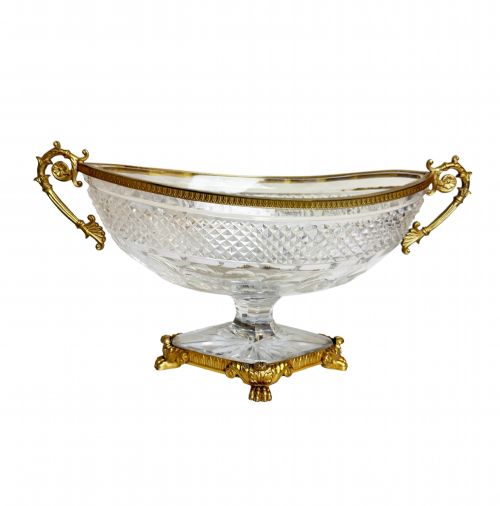
The selection here encompasses English lead crystal, French decorative glass, Bohemian cased goblets, and Venetian curiosities. Forms range from everyday celery vases and wine jugs to elaborate gilt-bronze mounted centrepieces and painted Bohemian tankards.
Originating across Britain, France, Bohemia, and Venice, these items reflect both domestic tavern life and ornate Victorian parlour display. Each form serves as a tangible record of period glassblowing and engraving techniques.
Materials and Method
Makers utilised lead crystal, clear glass, and coloured ground metals such as cobalt blue, cranberry, and amber glass. Molten material was hand-blown into iron moulds or free-blown before undergoing intricate cutting, wheel engraving, or surface etching.
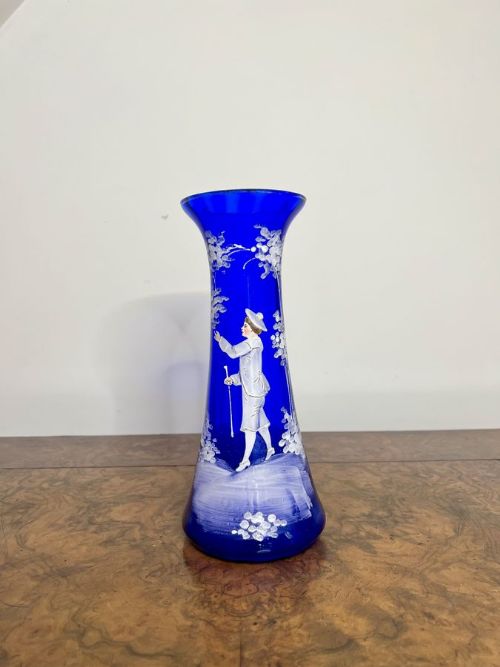
Decoration often involved applied gold leaf, polychromatic enamelling, and paint, seen particularly in Bohemian cased pieces and Mary Gregory style vases. Specialised techniques like intaglio engraving and decalcomania created layered imagery on vases and decanters.
Structural elements incorporated bronze, ormolu stands, and silver plating, particularly in French centrepieces and decanters. Lead-glass vessels relied on heavy bases, such as lemon squeezer feet, to provide stability to hand-formed drinking glasses.
Listings feature items spanning the Georgian, Regency, and Victorian periods, utilising clear glass, lead crystal, gold leaf, and enamel.
Judging Quality
Quality rests upon the crispness of wheel engraving and the depth of cut-to-clear glass layers. Superior pieces display precise motifs, such as hop and barley patterns or fruiting vines, executed without blur or surface dragging.
The purity of the metal and consistency of hand-blown thickness distinguish masterwork pieces from standard utilitarian ware. Heavier lead crystal and evenly saturated colours throughout cased layers indicate superior workshop standards.
Integration of secondary materials, such as ormolu mounts and gilt bronze, dictates the tier of decorative vessels. Finely chased metalwork paired with flawless glass elevates a centrepiece or decanter far above basic production items.
Stevens and Williams·Moser
The 19th Century Glass Vessel Glossary
- Carboy
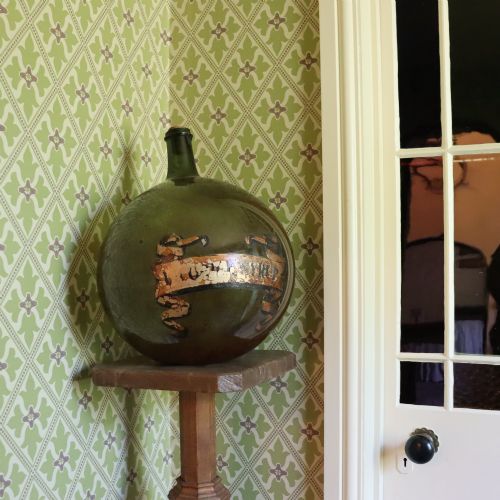
- A large, globular glass bottle traditionally used for holding corrosive liquids or displayed in apothecary windows. They frequently feature heavy blown walls and substantial proportions.
- Rummer
- A large, heavy-stemmed drinking glass popular in Georgian and Victorian taverns and homes. These typically served ale, wine, or punch.
- Cased glass
- Glassware formed of two or more distinct layers of different colours fused together before blowing. Artisans then cut through the outer layer to reveal the contrasting colour underneath.
- Lemon squeezer base
- A square, pressed glass foot found on Georgian and Regency drinking vessels. The distinctive stepped shape resembles a domestic kitchen tool.
- Mary Gregory
- A style of glass decoration depicting white enamel silhouettes of children amidst foliage. This technique appeared on Victorian coloured glass vases and jugs.
19th Century Glass Vessel: Frequently Asked Questions
How were apothecary jars used?
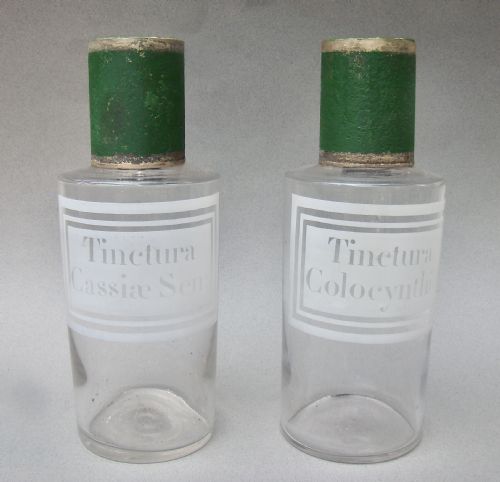
Apothecary jars stored dry drugs, herbs, and chemical compounds in nineteenth-century dispensaries and pharmacies. Their tight-fitting lids protected contents from moisture and air degradation.
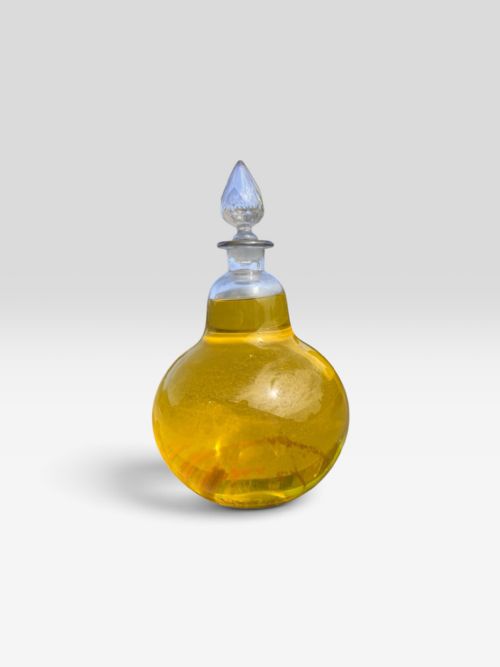
Larger carboys often sat in shop windows filled with coloured water to signal a chemist's premises to the public. Today, these vessels function purely as decorative interior display pieces.
What is a rummer glass?
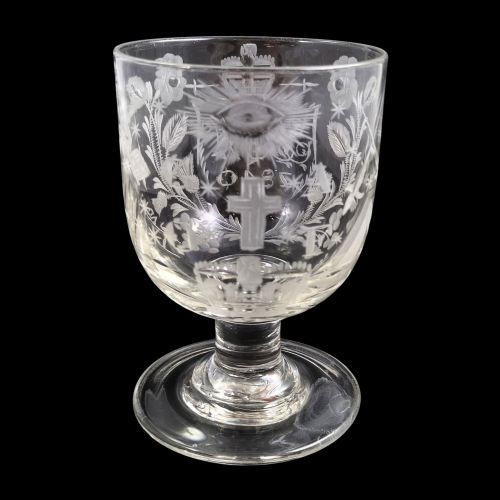
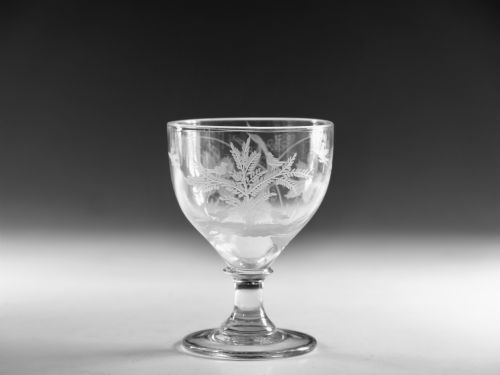
A rummer is a sturdy, thick-walled drinking glass designed for hearty ales, wines, and spirits during the Georgian and Victorian periods. Their low centres of gravity helped prevent tipping on crowded tavern tables.
Many surviving examples feature wheel-engraved agricultural motifs like hops and barley. Collectors prize them for their satisfying weight and robust hand-blown character.
How do I identify Bohemian glass?
Bohemian glass is characterised by vibrant colour palettes, heavy gilding, and intricate multi-layered cased construction. Workshops in the region excelled at producing deep ruby, amber, and cobalt vessels.
Look for deep wheel-cut panels and rich enamel work depicting floral or scenic motifs. These pieces often possess a heavier physical presence than their English counterparts.
Can these vessels hold liquids?
Most decanters, jugs, and carboys remain structurally sound for holding liquids, provided they are handled with care. Hand-blown antique glass is sensitive to thermal shock and requires careful room-temperature washing.
Fragile items with painted enamel or gilt leaf should be washed by hand without harsh detergents. Many collectors prefer to keep decorative vases and delicate engraved goblets as dry display objects.