

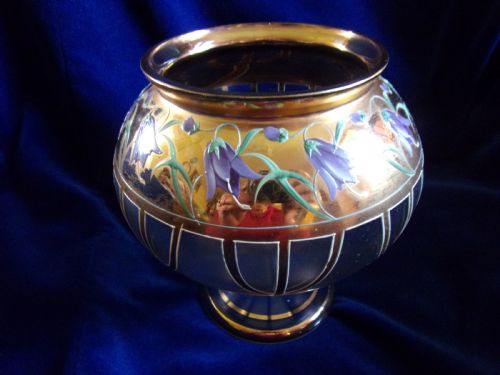


Gold Gilded Glass Vase
These gold gilded glass vases are brilliant decorative vessels finished in gleaming metal leaf, bringing radiant nineteenth and twentieth century surface brilliance into any room.
Gold Gilded Glass Vase
When you search for a gold gilded glass vase, you encounter a striking array of nineteenth and twentieth century decorative objects designed to catch the light. The selection spans distinct historical periods including Victorian and Art Nouveau, alongside later twentieth century expressions.
Most pieces you meet on this page take the form of traditional vases, supplemented by decorative bowls and scent bottles. They originate primarily from French and Bohemian workshops, reflecting prominent decorative movements like the Belle Epoque and Art Deco.
How they were made
Maker workshops utilised clear crystal glass, opal glass, and coloured bases such as Peachblow or hyalite, shaping them through traditional blowing and moulding techniques. Artisans then applied intricate hand painting alongside paste enamel and raised metal leaf to build rich surface relief.
Engraving often provides a textural ground beneath the metal layers, while enamel colours like red and white add botanical and abstract detail. The resulting pieces combine molten transparency with opaque metallic embellishment.
A painted still life canvas of flowers joins the glassware, offering a flat painted garden to keep the vases company.
What varies in quality
Quality rests upon the precision of the surface decoration and the clarity of the underlying glass body. Pieces featuring detailed hand painted floral motifs or deep wheel engraving stand apart from simpler production methods.
The durability and lustre of the metal leaf application dictate the visual impact of each vessel. Better examples display crisp contours in the enamel work and harmonious integration between the glass form and its gilded ornamentation.
Legras·St Louis glassworks·Jean Francois Robert·Daum·Paul Heller for Booms glass
The Gold Gilded Glass Vase Glossary
- Crystal glass
- A clear, high quality glass composition known for its brilliance and weight. It allows light to pass through and interact with internal engraving.
- Paste enamel
- A thick, opaque vitreous paint applied in raised dots or lines. It creates tactile surface patterns beneath or alongside metal leaf.
- Peachblow
- A shaded art glass type transitioning in colour from pink to cream. It provides a soft, warm background for exterior gilding.
- Hyalite
- An opaque black glass developed in the nineteenth century. It serves as a stark, dramatic canvas for bright metallic decoration.
- Palmette
- A decorative motif resembling a fan shaped palm leaf. It appears frequently in stylized Art Nouveau and classical designs.
Gold Gilded Glass Vase: Frequently Asked Questions
How do I clean a gilded glass vase?
Dust these vessels gently with a soft, dry cloth to protect the delicate surface finishes. Avoid liquid cleaners and immersion in water, as moisture can damage historical gilding and enamel work.
Display them away from direct sunlight to preserve the original colours and prevent the metal leaf from tarnishing over time.
Were these vases used for flowers?
Many examples served as ornamental mantelpiece displays rather than practical utility items for holding water and fresh stems. The delicate nature of applied metal leaf means they were primarily prized for their visual splendour.
Smaller bottles and jars were utilised for scents and vanity powders, functioning as personal accessories in period boudoirs.
How do I identify Art Nouveau examples?
Look for flowing botanical motifs such as lotus flowers, thistles, and poppies integrated into the surface design. The overall aesthetic favours asymmetrical natural forms over rigid classical symmetry.
Signatures or characteristic glass colours from makers like Daum and Legras often accompany these organic shapes.
What is the difference between crystal and glass?
Crystal glass contains specific mineral additives that increase its weight, refractive index, and clarity compared to standard soda-lime glass. This purity allows engraved and gilded details to appear sharper and more luminous.
Objects fashioned from crystal tend to produce a resonant tone when gently struck, setting them apart from ordinary vessels.