


Bohemian Cut Glass Vase
These bohemian cut glass vase pieces bring heavy crystal, rich colour and sharp wheel-cut detail to a room, exactly what a serious collector of decorative glass desires.
Bohemian Cut Glass Vase
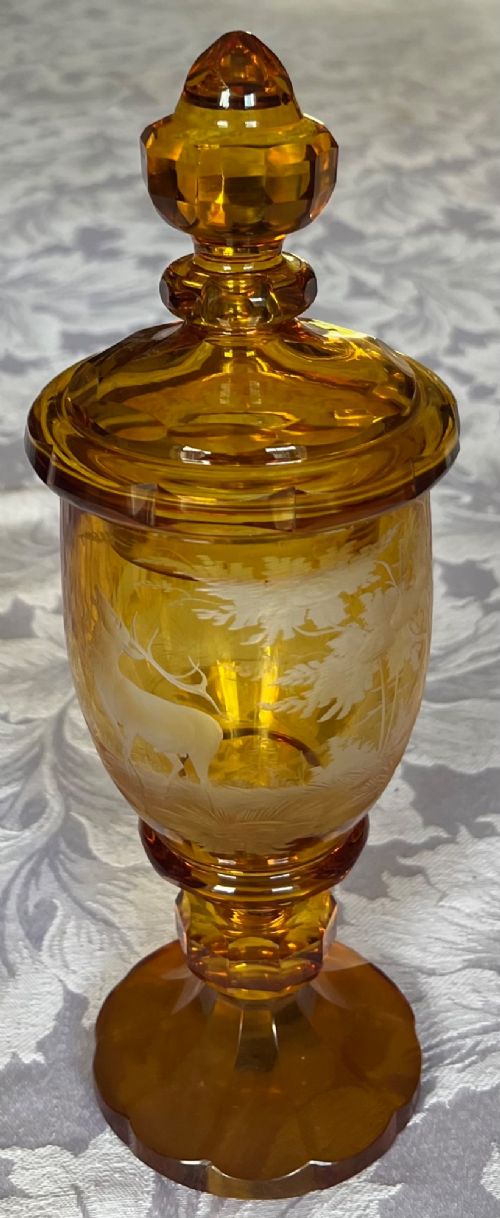
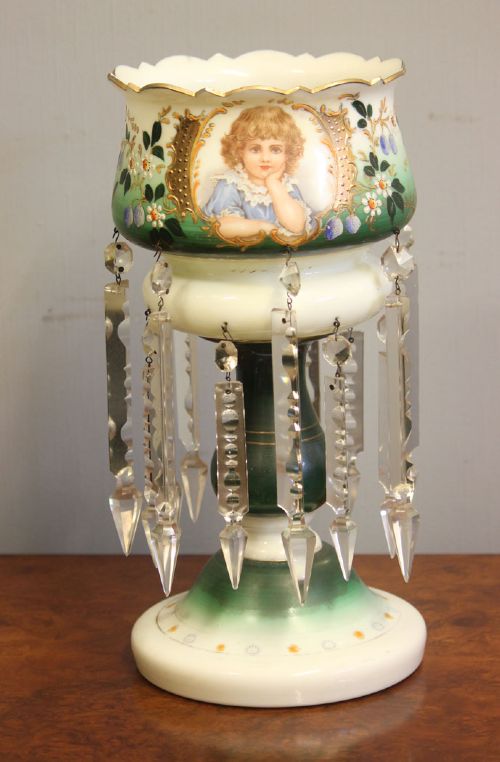
When you search for a bohemian cut glass vase, you encounter heavy decorative vessels originating from Central Europe during the Victorian period, the nineteenth century and the Art Deco era. The selection includes mantle lustres, lidded urns, ovoid vessels, goblets and tall display vases.
You are most likely to meet Victorian and nineteenth-century examples featuring deep cobalt blue or ruby glass cut back to clear crystal. Overlay glass and panelled bodies appear frequently alongside paired mantle lustres hung with glass prisms.
How they were made
Makers utilised heavy lead crystal and glass, often casing one coloured layer over a clear or contrasting base layer before applying wheel-cutting techniques. This subtraction method exposed the underlying colour to create crisp geometric or floral patterns.
Surface decoration frequently involved hand engraving, acid etching, enamel work and applied gold leaf gilding. Lustres incorporate separately cast or blown elements fitted with dangling crystal prisms suspended from the rim.
Mantle lustres double as miniature wind chimes when a passing draft sets their dangling crystal prisms into gentle motion.
What varies in quality
Depth and crispness of the wheel-cut facets separate superior vessels from simpler productions, with finer pieces showing sharp, clean edges and brilliant clarity in the crystal. The precision of the overlay layers matters immensely, as does the balance of the cut-to-clear contrast.
Hand-applied gilding, detailed enamel work and intricate engraving elevate certain examples far above standard moulded wares. Completeness also dictates standard, particularly regarding the presence of original matching covers and undamaged hanging crystal prisms on lustres.
Karl Palda
The Bohemian Cut Glass Vase Glossary
- Overlay glass
- A technique where a layer of coloured glass is fused over a clear or contrasting body before being cut away in patterns. This creates a striking contrast between the surface colour and the exposed base material.
- Mantle lustre
- A decorative vase fitted with a ring of hanging glass prisms designed to catch the light on a fireplace mantel. These pieces typically date from the Victorian era and often appear in pairs.
- Cut to clear
- A method where a cased layer of coloured glass is deeply carved through to reveal the clear crystal beneath. The resulting pattern stands out sharply against the vibrant outer hue.
- Flash glass
- A very thin layer of coloured glass applied over a clear glass body to permit easy cutting through to transparency. It provides the visual depth of solid coloured glass with less weight.
- Enamel
- Opaque glass paint applied to the surface of a vessel and fired for permanence. It frequently appears alongside gilding on pieces from the later nineteenth and early twentieth centuries.
Bohemian Cut Glass Vase: Frequently Asked Questions
What is a bohemian cut glass vase?
These are heavy decorative glass vessels produced in Central Europe, known for rich ruby or cobalt colours and deep wheel-cut facets.
They span periods from the nineteenth-century Victorian era through to Art Deco designs, taking forms such as mantle lustres, lidded urns and goblets.
How do you style mantle lustres?
Mantle lustres sit traditionally on a fireplace mantel or a side cabinet where their hanging crystal prisms catch the surrounding light.
Because they often come in matched pairs, they work well to create symmetrical arrangements in traditional or eclectic interiors.
How do I identify a Victorian piece?
Victorian examples typically show deep ruby or cobalt overlay glass, heavy lead crystal construction and elaborate wheel-cut or engraved floral motifs.
Many incorporate gilt highlights and hand-enamelled details characteristic of nineteenth-century Bohemian glasshouses.
What makes overlay glass different?
Overlay glass involves fusing a distinct layer of coloured glass over a clear or contrasting base before artisans cut decorative panels into the surface.
This technique creates a bold visual contrast between the rich exterior colour and the transparent crystal beneath.