
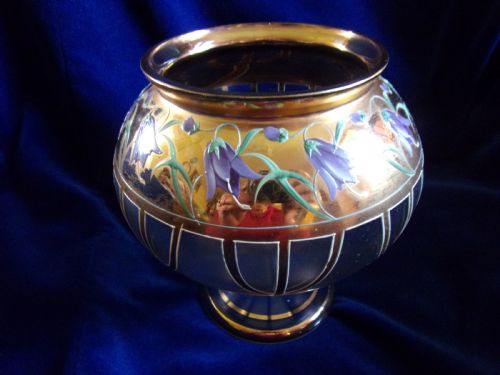


Gilded Floral Glass Vase
These gilded floral glass vase examples bring together delicate enamel work and brilliant metal leaf across Victorian and turn-of-the-century interiors.
Gilded Floral Glass Vase
When you search for a gilded floral glass vase, you encounter decorative vessels fashioned during the Victorian period, the Art Nouveau era, and around 1900. These pieces range from substantial three-handled crystal glass bowls to slender cabinet vases and opaline vessels.
The most common form you meet on this page is the nineteenth-century Victorian or Bohemian glass vase, often featuring raised designs, hand-painted details, and botanical motifs. French origins also appear prominently among these listings, alongside English and continental examples.
How they were made
Makers shaped these vessels using traditional glassblowing techniques, producing clear crystal, opaline glass, and cameo glass. Artisans then applied rich surface details including gold leaf and paste gilt decoration.
Botanical and floral motifs were rendered through hand-painting and paste enamel, sometimes combined with delicate wheel engraving. This union of molten glass forming and meticulous surface gilding defines the physical nature of these pieces.
Current listings feature Victorian, Art Nouveau, and 1900 periods, utilising materials including gold leaf, cameo glass, and paste enamel.
What varies in quality
The distinction between ordinary and exceptional work lies in the precision of the hand-painting and the depth of the gilding. Superior pieces display crisp enamel application and finely detailed botanical engraving that remains sharp across curves and handles.
The choice of glass body also dictates overall refinement, where heavy crystal or layered cameo glass denotes a higher grade of production than standard opaque glass. Artisanal control over the gold leaf and floral raised design separates standard decorative items from finer studio outputs.
The Gilded Floral Glass Vase Glossary
- Gilt
- Covered thinly with gold leaf or gold paint. This metallic layer catches the light and highlights raised floral designs.
- Opaline glass
- An opaque or translucent glass developed in France. It often exhibits delicate pastel colours and serves as a smooth ground for hand-painted botanical scenes.
- Cameo glass
- A luxury technique involving at least two fused layers of contrasting glass. Carvers cut away the outer layer to reveal the design in relief against the background.
- Peachblow
- A nineteenth-century art glass type known for its shaded colour gradient, typically transitioning from pink to white or yellow. It provides a soft backdrop for gilded decorations.
- Paste enamel
- A thick, opaque vitreous composition applied to glass surfaces. When fired, it creates raised tactile patterns that stand proud of the vessel body.
Gilded Floral Glass Vase: Frequently Asked Questions
What periods do these vases come from?
These decorative glass pieces primarily date from the nineteenth century, encompassing the Victorian era, the French Belle Epoque, and around 1900. You will also find examples associated with the Art Nouveau style and the Victorian Aesthetic Movement.
Most items are linked to European glassmaking centres in France and Bohemia. Their production dates span several decades of rapid industrial and artistic development in decorative glassware.
How were gilded floral designs applied?
Decorations were applied using gold leaf, paste gilt, and enamel paints directly onto the glass substrate. Artisans hand-painted botanical motifs or built them up in raised relief using enamel before applying gold accents.
Some vessels also incorporate fine wheel engraving beneath or around the gilding to add texture and depth to the floral imagery.
How do I care for antique glass?
Antique glass requires gentle handling and should be cleaned manually using lukewarm water and a mild detergent. Avoid harsh scrubbing pads or chemical cleaners that might damage the delicate gold leaf and enamel surface decorations.
Display these vessels away from direct sunlight and areas subject to sudden temperature fluctuations to protect both the glass body and the metallic gilding.
Are all pieces signed by makers?
Many nineteenth-century and turn-of-the-century glass pieces remain unsigned, as makers often relied on distinctive styles, forms, and decorative techniques rather than factory stamps. Unsigned items from known manufacturing regions like Baccarat or Bohemia still display distinct craftsmanship.
Attribution typically relies on characteristic materials, colour palettes such as peachblow or opaline, and specific combinations of engraving and gilding.