



19th Century Glass Bowls
These 19th century glass bowls include everything from table centrepieces to delicate finger bowls that bring period elegance to any room.
19th Century Glass Bowls
When you search for 19th century glass bowls, you encounter a diverse array of utilitarian and decorative tablewares produced across Britain and continental Europe. The selection spans grand table centrepieces intended for formal dining to smaller finger bowls and dishes used in domestic settings.
The objects originate from notable manufacturing regions such as Bohemia, France, and England, reflecting varied regional tastes from the Georgian and Regency eras through to the late Victorian period. Table centrepieces and decorative bowls form a significant portion of the pieces available.
Domestic glassware such as finger bowls, sugar bowls, and punch bowl sets also appear frequently, often demonstrating the versatility of glass production in the 1800s. These vessels served practical dining functions while acting as ornamental centerpieces.
How they were made
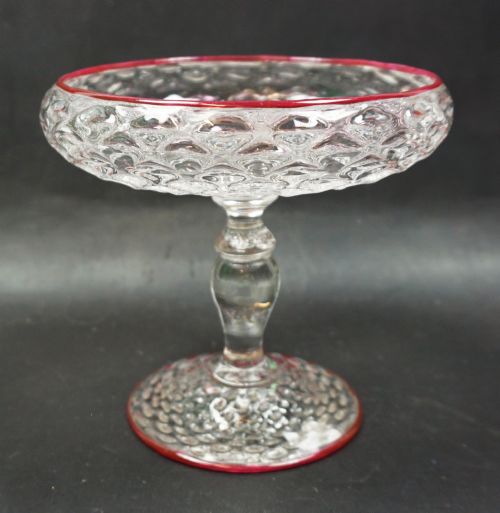
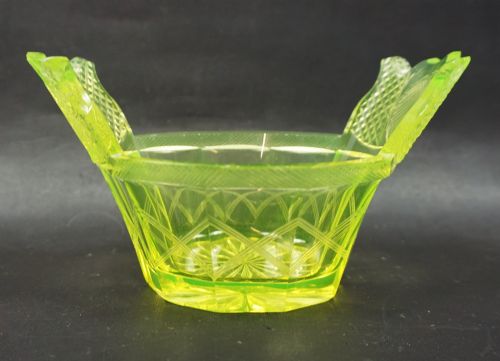
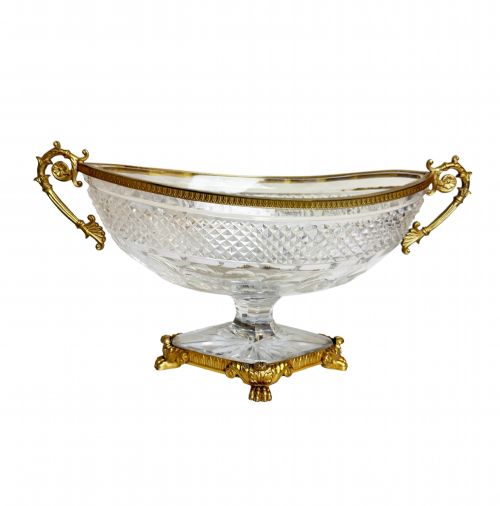
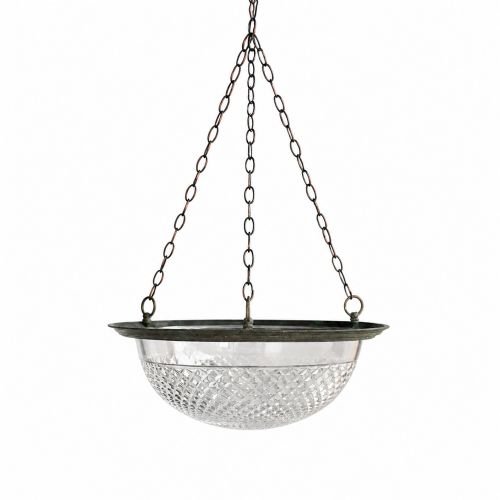
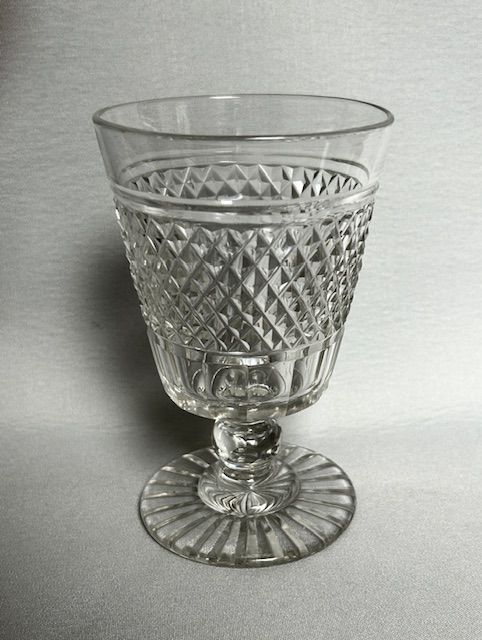
Makers utilised free-blowing, mould-blowing, and hand-cutting techniques to shape clear, lead, and coloured crystal. Many pieces feature deep geometric wheel-cutting such as hobnail patterns, which required immense precision from the glasscutter.
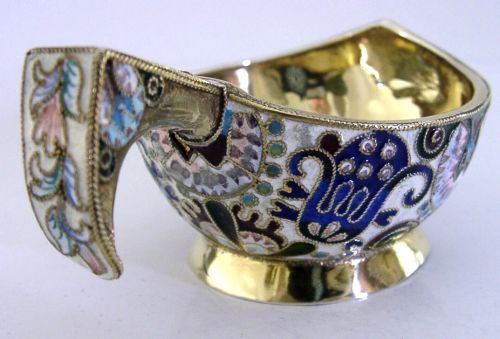
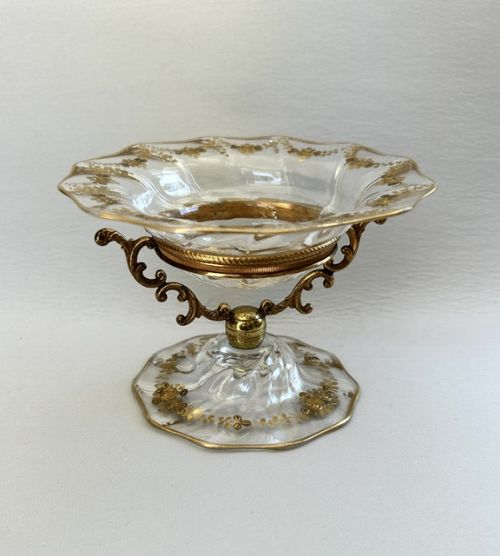
Colour was introduced through metallic oxides, resulting in ruby, amber, green, amethyst, and cranberry glass. Some items received additional surface treatment through gilding, enamel decoration, or overlaid glass layers that were partially cut away to reveal contrasting colours beneath.
Listings feature 19th century glass bowls in Victorian, Georgian, and Regency styles, alongside materials such as cut crystal, gilt bronze, and enamel.
What varies in quality
The standard of execution in cutting and engraving separates simpler utilitarian vessels from high-end display pieces. Crisp, deep faceting and refined wheel engraving indicate superior craftsmanship compared to soft or shallow surface work.
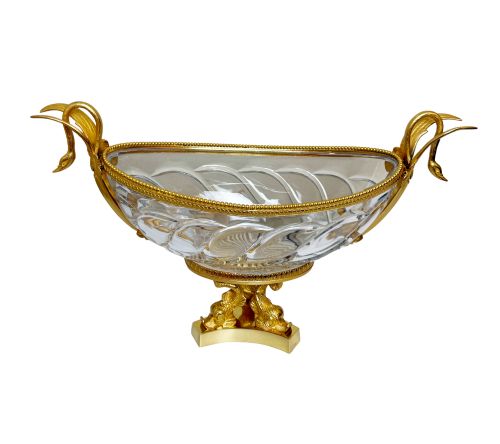
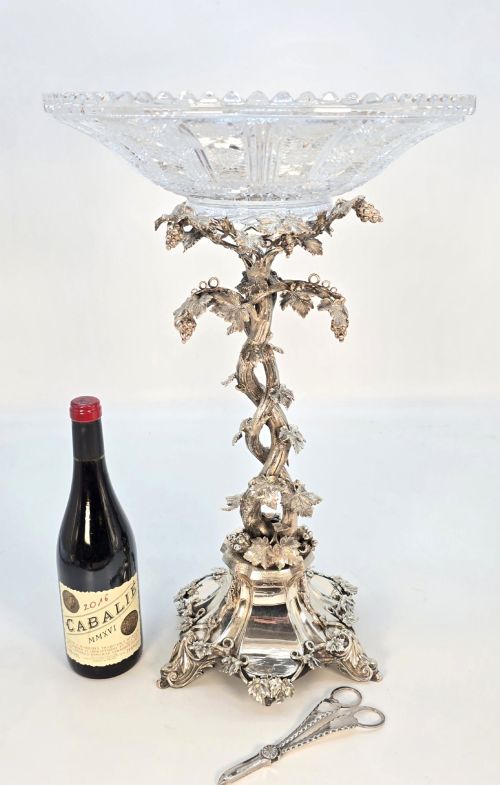
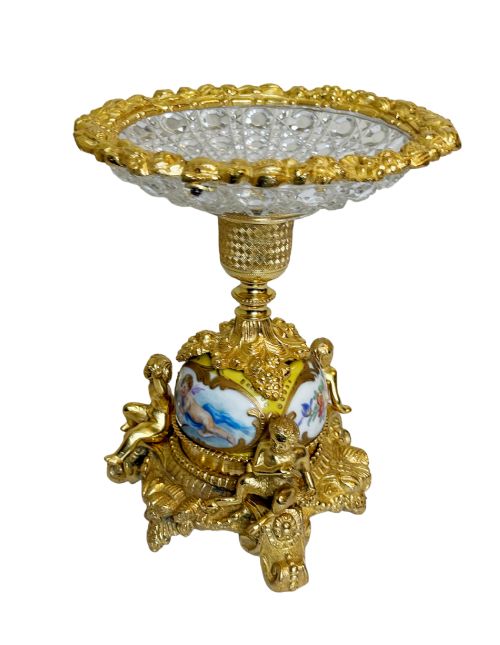
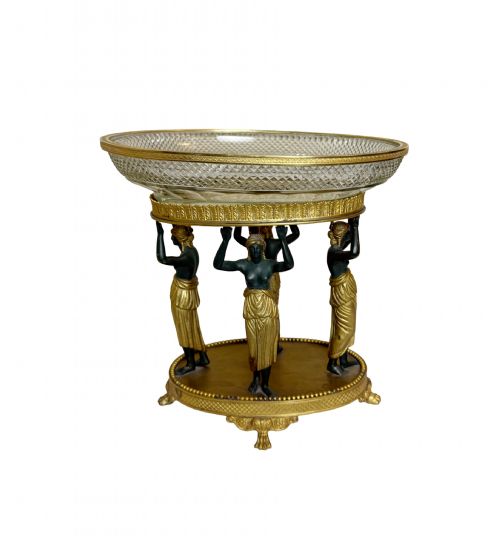
The integration of secondary materials such as gilt bronze, ormolu, and silver plate also dictates quality. Finer centrepieces combine high-purity crystal with meticulously cast metal mounts featuring detailed figural work.
Salviati Venice·Baccarat·Richardson
The 19th Century Glass Bowls Glossary
- Tazza
- A shallow bowl or cup mounted on a stem and foot, often used for serving fruit or sweets at the table.
- Centrepiece
- A large decorative vessel placed in the middle of a dining table for display during meals.
- Latticinio
- A glass-making technique featuring fine opaque white or coloured glass threads embedded within clear glass.
- Roemer
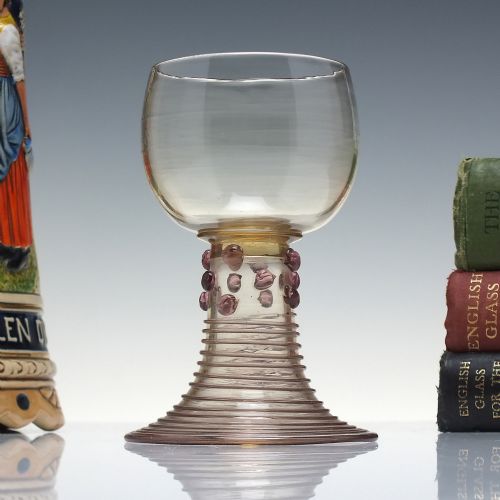
- A traditional Germanic wine glass featuring a large bowl set on a cylindrical stem decorated with raspberries or prunts.
- Hobnail
- A raised, faceted pattern cut into the surface of glassware that resembles the iron nails used on heavy boots.
19th Century Glass Bowls: Frequently Asked Questions
How were 19th century glass bowls used?
These vessels served various functions depending on their scale and form. Large centrepieces and tazzas dominated formal dining tables to display fruit or confectioneries, while smaller finger bowls sat at individual places for hand-cleansing between courses.
Domestic settings also utilised specialised vessels such as sugar bowls and punch bowl sets for serving beverages and dry goods during social gatherings. Their dual role as practical tableware and decorative objects made them central to 19th-century hospitality.
What colours are common in antique glass bowls?
Colours vary widely due to the experimental techniques of 19th-century glasshouses. Ruby, cranberry, emerald green, and deep amethyst appear frequently, alongside amber and uranium glass that glows under specific light.
Clear lead crystal and opaline glass also feature prominently, sometimes enhanced with gold leaf, enamel painting, or layered colour overlays that created striking visual contrasts.
How do you identify a Georgian glass bowl?
Georgian pieces, produced roughly between 1714 and 1830, often display heavy lead crystal composition with characteristic pontil marks on the base. Their cutting tends to be broad and hand-finished rather than mechanically uniform.
Forms from this period frequently include hobnail cutting or simple fluting, reflecting the Regency and late Georgian preference for substantial, light-catching tableware.
Where were these glass bowls manufactured?
Production was centered around major European glass-making hubs, notably in Britain, Bohemia, and France. English glasshouses specialised in heavy lead crystal and intricate cutting, while Bohemian factories excelled in coloured and overlaid glass.
French makers often combined high-grade crystal with ornate gilt bronze and ormolu mounts, reflecting continental tastes for elaborate decorative metalwork.