
19th Century Full Mirror
A 19th century full mirror provides a sweeping reflection framed in period timber or gilded plaster, offering both practical utility and decorative presence.
19th Century Full Mirror
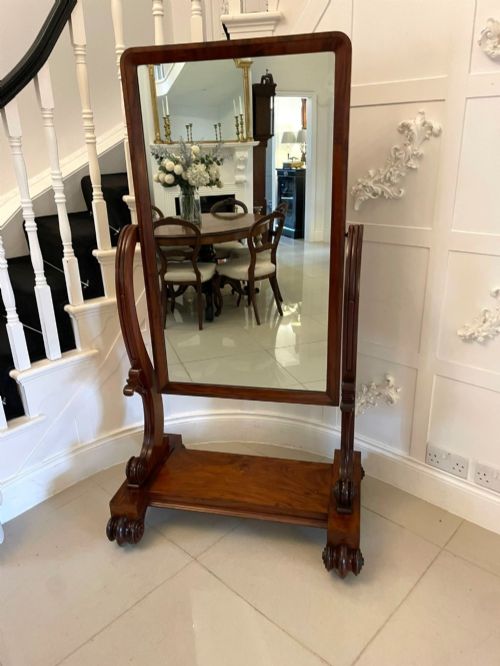
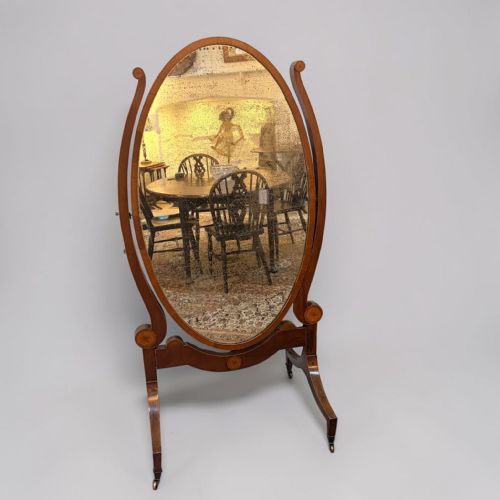
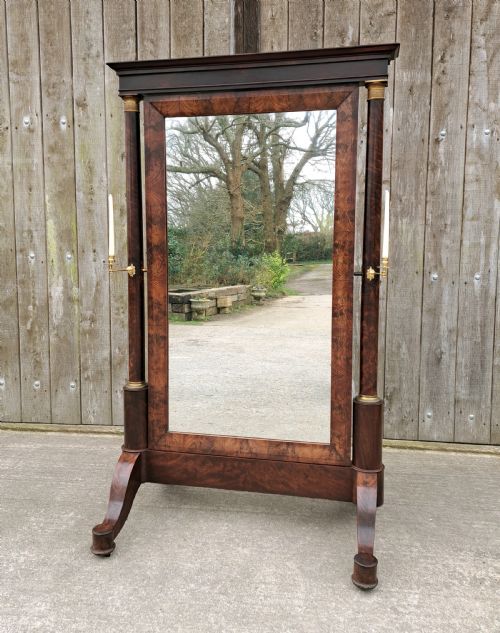
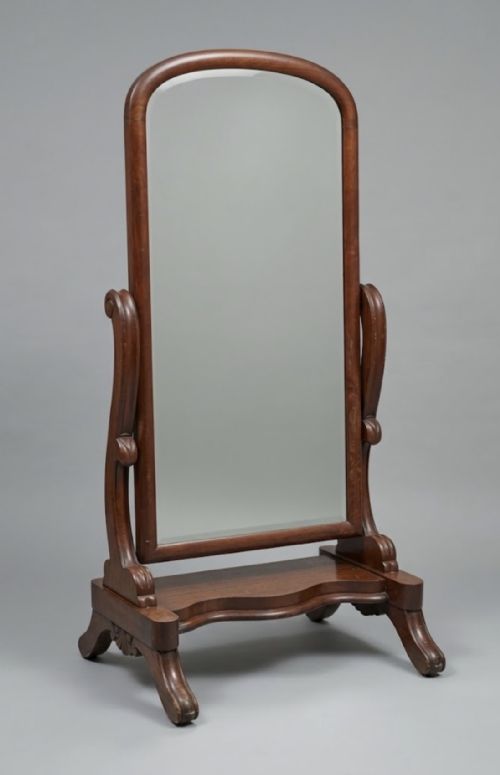
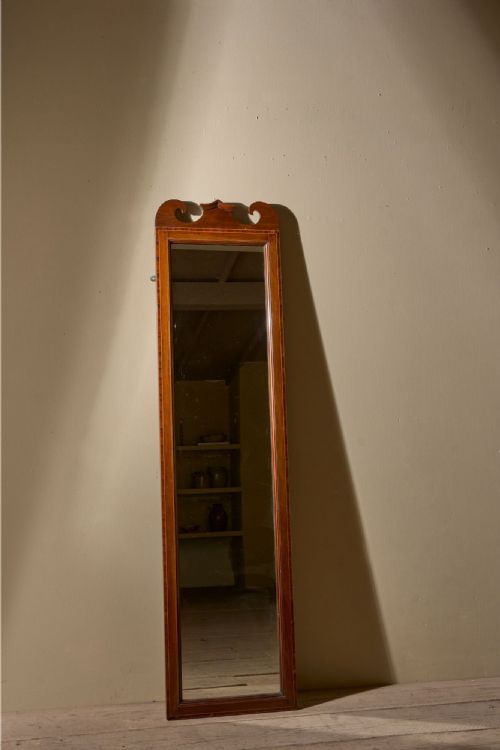
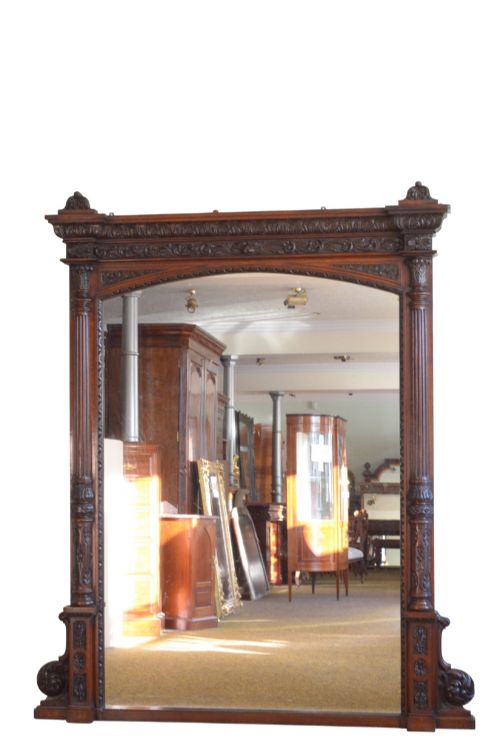
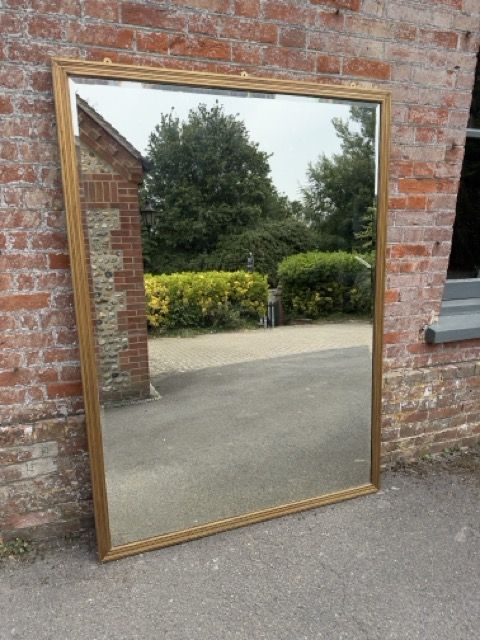
A 19th century full mirror encompasses tall floor-standing cheval glasses, leaners, and large wall-hanging formats designed to capture a full-length reflection. These pieces emerge from periods spanning the Regency era through the Victorian decades and into late-century revival styles.
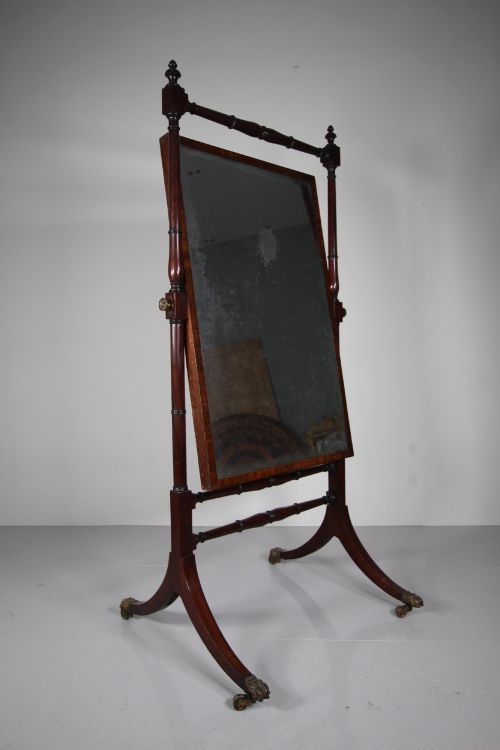
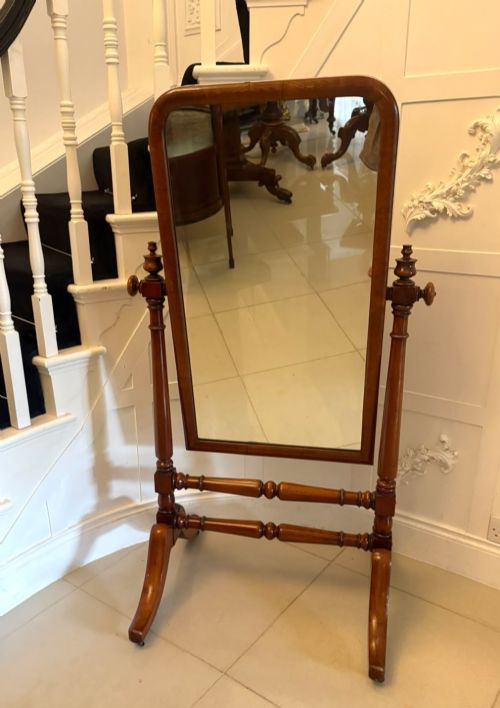
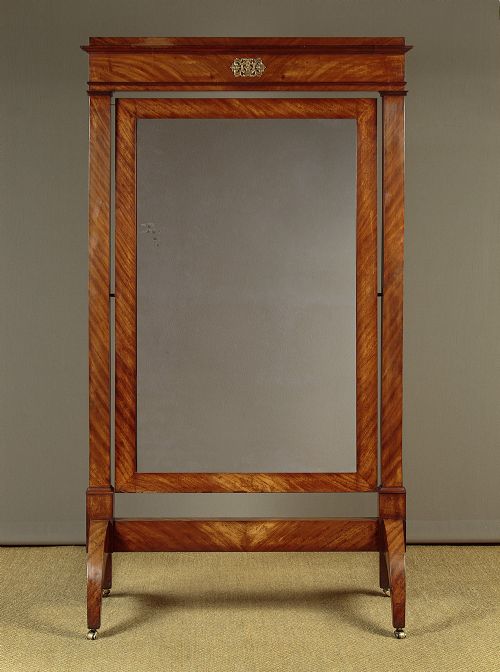
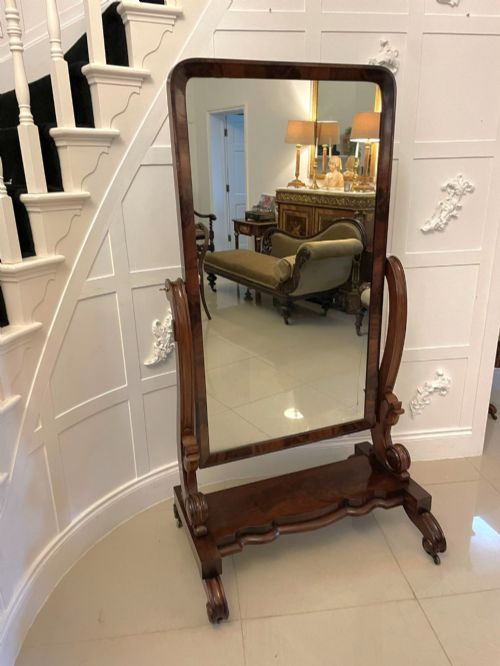
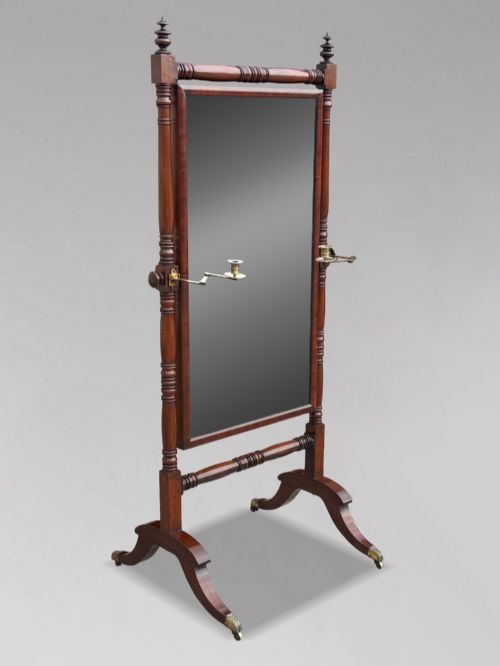
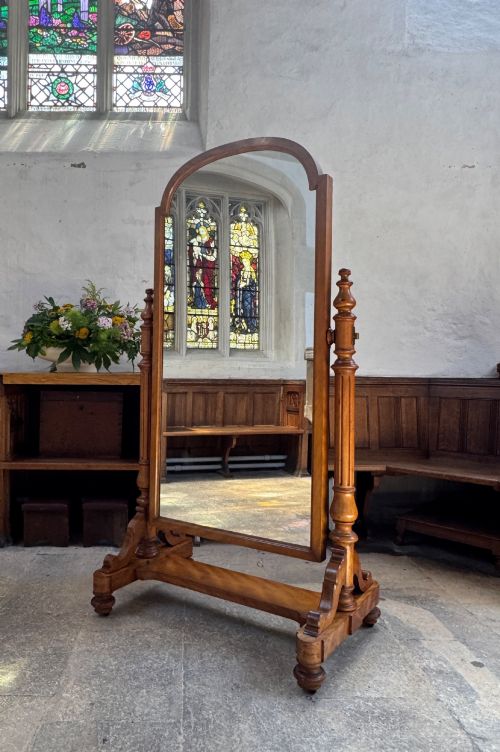
The version most frequently met on this page is the mahogany cheval mirror, typically constructed with a swing frame that tilts on upright supports. Alongside these freestanding dressing glasses, wall-mounted pier mirrors and overmantels appear regularly to fulfill the domestic need for vertical vertical reach.
Originating from English, French, and Italian workshops, these items reflect the distinct aesthetic preferences of the nineteenth century, ranging from the architectural restraint of the Neoclassical style to the ornate curves of French Rococo Revival.
Materials and construction
Cabinetmakers relied heavily on mahogany, walnut, and satin birch for structural frames, frequently selecting flame veneers to add depth to the timber surfaces. Brass fittings, including sabots, castors, and pivot pins, provided functional articulation for swinging cheval frames.
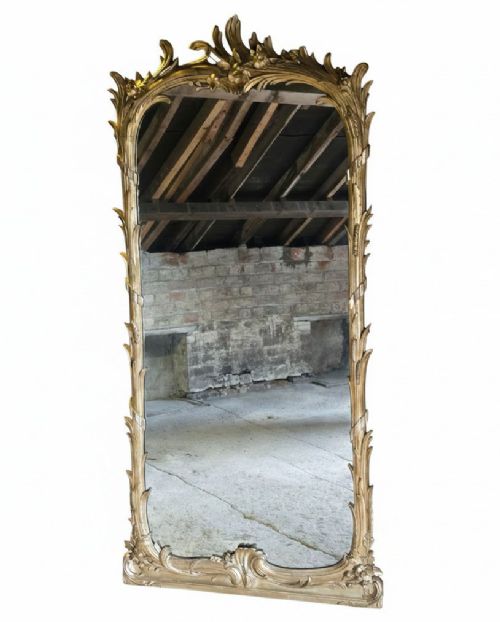
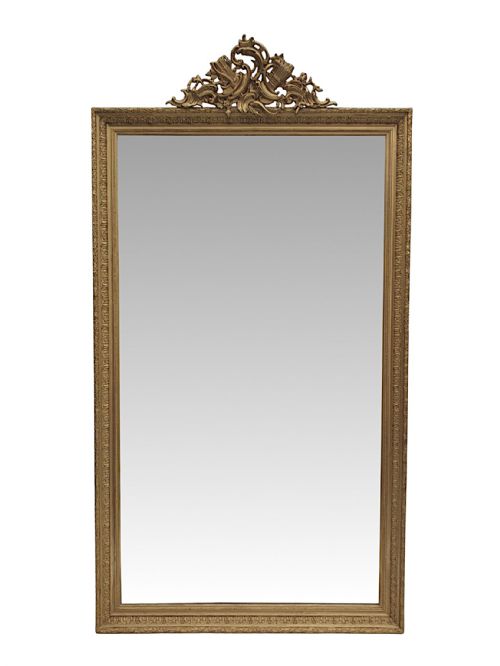
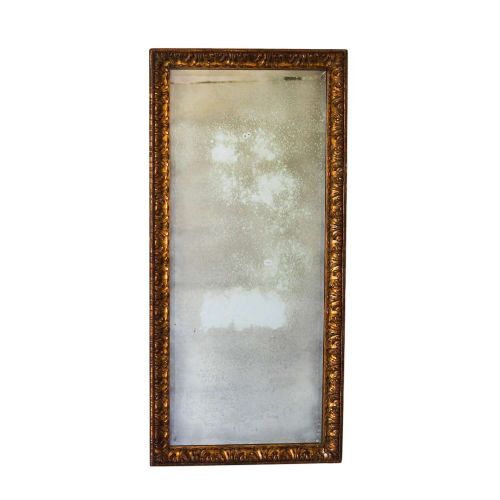
Giltwood and gesso surfaces required meticulous hand-carving on wood bases before the application of gold leaf or silver leaf to achieve a brilliant reflective border. Mirror glass of the era was held within rabbeted frames, sometimes backed with original timber panels secured by handmade screws.
Judging quality and craftsmanship
The standard of carving and the crispness of applied gesso ornamentation separate exceptional examples from standard production pieces. Deeply undercut foliage, balanced proportions, and substantial timber thickness distinguish finer workshops from simpler domestic cabinetry.
The integrity of the reflective plate and the complexity of the frame's mechanical parts, such as smoothly operating tilt mechanisms on floor-standing mirrors, indicate the original tier of manufacture. Integrated brass mounts and secondary woods like oak or pine further evidence the care taken during construction.
The 19th Century Full Mirror Glossary
- Cheval mirror
- A freestanding full-length mirror mounted on a frame with vertical pivots that allow the glass to swing. It typically stands upon four legs or a robust trestle base.
- Pier mirror
- A tall, narrow mirror designed to be hung on the wall between two windows or placed over a low pier table. They often extend downward to floor level.
- Overmantel mirror
- A wide mirror specifically designed to be positioned on the wall directly above a fireplace mantel. These pieces frequently feature landscape proportions or tall architectural framing.
- Gesso
- A plaster-like mixture applied to wood frames as a smooth base for gilding. Skilled artisans carved intricate relief patterns directly into this hardened material.
- Sabot
- A decorative metal sleeve or cap fitted to the foot of a furniture leg. They are commonly cast in brass and protect the base while adding visual contrast.
19th Century Full Mirror: Frequently Asked Questions
What is a cheval mirror?
A cheval mirror is a floor-standing dressing glass supported by a frame with side pivots, allowing the user to tilt the angle of the reflection.
First popularized in the eighteenth century, these large mirrors remained essential bedroom and dressing room furnishings throughout the nineteenth century.
Where were these mirrors placed?
Wall-mounted examples typically hung between tall windows on pier walls or directly above fireplace mantelpieces to bounce light around Victorian and Regency interiors.
Freestanding versions stood in bedrooms, dressing chambers, or hallways where occupants needed to check full-length attire.
How do I date a 19th-century mirror?
Dating relies on identifying the underlying timber, secondary woods, framing style, and assembly methods characteristic of specific decades.
For instance, heavier classical architectural lines point toward the Regency period, while slender proportions and ornate carved gesso often indicate later Victorian production.
Are the mirror plates original?
Many surviving pieces retain their original mercury or silvered glass plates, which often display characteristic light foxing and age spots.
Replacements occurred over time due to damage, so inspecting the backing boards and silvering provides clues to the glass plate's history.